
Surge Protection and Accessories for Magnetostrictive Sensors
Selection meetings cover range, accuracy and output type, rarely accessories. When a sensor is taken out by a lightning surge or a switching transient, repair takes two to four weeks and the downtime bill dwarfs the sensor price. This article sets out what belongs around the sensor, in three layers.
Layer one: protection, and the three paths a surge takes
Supply lines. A 24 V feed is the easiest entry point, especially when shared with drives or contactors. The reverse EMF from an inductive load switching off travels straight into the electronics head.
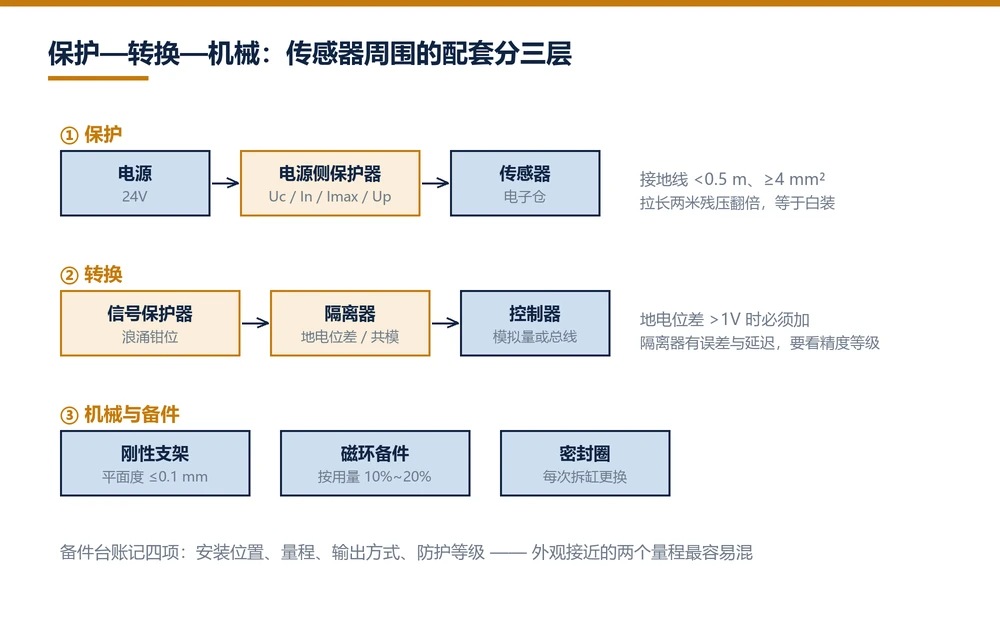
Signal lines. Analogue and bus cables often run long distances through trays, conduits and up masts, which makes them an aerial. Lightning induction and nearby switching both induce voltage here.
Ground conductors. Ground potential rise is the most concealed path. Where separate earth points sit at different potentials, surge travels in through the shield or signal ground.
Three paths need three protection points. A common half-measure is a protector on the supply only, with the signal side unprotected; equipment still fails in storms.
Three parameters that settle protector selection
Maximum continuous operating voltage Uc. Above the circuit's working voltage with margin. For a 24 V circuit, specify Uc of 30 V or higher; a 4-20 mA loop runs lower, so match the actual circuit voltage.
Nominal and maximum discharge current In and Imax. These express surge handling capacity. Mounted inside a cabinet, In around 5 kA is typical; outdoors, on masts or exposed coastal sites, specify 10 kA or above.
Voltage protection level Up. The residual voltage seen by the equipment after the protector operates, and it must sit below the withstand voltage of the sensor electronics. Lower is better, though very low residual usually means lower current capacity, so Up and In are chosen together.
One installation rule matters more than the datasheet: keep the protector's earth conductor short and thick, under 0.5 m and at least 4 mm squared. Two metres of earth conductor doubles the residual voltage and the protector does nothing.
Layer two: conversion, when a signal isolator is genuinely needed
An isolator solves a different problem from a surge protector: ground potential difference and common-mode interference, not transients. Three situations justify one.
The controller and sensor sit on separate earthing systems, for example a sensor on site steelwork and a controller in an electrical cabinet, with more than 1 V between the earths.
Analogue readings fluctuate when drives start and separation plus shielding have already been applied. Interference arriving through the ground path is common-mode and an isolator breaks that path.
Multiple measurement loops interact, so a fault on one channel appears on others. Isolation confines it.
Isolators add error and delay. Check accuracy class and bandwidth against the sensor; a cheap module in front of a precision sensor returns the savings at calibration time.
Layer three: mechanical items and spares
Mounting brackets. External sensors depend on the bracket for stability. A flexible bracket lets the rod follow machine vibration, adding mechanical noise to the reading. Flatness of the mounting face and parallelism to the rod are both specified; a folded sheet-metal bracket is the usual failure.
Magnet rings. Rings are consumable spares and can be damaged during handling. Hold 10 to 20 percent of the installed count, and stock them by model rather than dimension.
Seals and fasteners. Rod-style sensors inside cylinders rely on seals that are consumables. Replace them every time the cylinder is opened; reuse is the usual cause of a leak.
Configuration table by site condition
| Condition | Supply protection | Signal protection | Isolator | Other |
|---|---|---|---|---|
| Indoor, same cabinet as controller | Optional | Not needed | Not needed | Bracket, magnet spares |
| Plant floor, long cable runs | Recommended | Recommended | Depends on noise | Shielded twisted pair, separate tray |
| Outdoor, masts, port cranes | Required | Required | Recommended | IP67 or better, sealed glands |
| Coastal, chemical, corrosive media | Required | Required | Recommended | Corrosion-resistant rod, periodic checks |
| Drive-dense, multi-axis servo | Required | Required | Required | Dedicated supply, separation, right-angle crossings |
The table is a starting point, adjusted for earthing conditions, cable length and local storm frequency. A few hundred saved on protection buys a two to four week repair cycle, which rarely looks like a saving once downtime is priced in.
One item easily overlooked: a spares register by model
A magnetostrictive position sensor is defined by range, output, construction and IP rating. Two units from the same series with different ranges look alike, so mixed storage guarantees a wrong swap. Record four fields per installed unit: location, range, output type, IP rating. With those four, a replacement can be pulled without going back to the drawings.
Frequently Asked Questions
Q: Does a magnetostrictive sensor need surge protection
Recommended for outdoor, mast-mounted, coastal, drive-dense or long-cable installations. Surge enters through supply, signal and ground paths, so a protector on the supply alone is a half measure. Keep the earth conductor under 0.5 m and at least 4 mm squared.
Q: Which protector parameters matter
Three: maximum continuous operating voltage Uc above the circuit voltage with margin; nominal and maximum discharge current In and Imax, around 5 kA indoors and 10 kA or above outdoors; voltage protection level Up below the equipment withstand voltage.
Q: When is a signal isolator required
When controller and sensor sit on separate earthing systems with more than 1 V between them; when analogue readings fluctuate on drive start-stop after separation and shielding; or when multiple channels share a module and interfere. Isolators add error and delay.
Q: What accessories and spares should be kept
Magnet rings at 10 to 20 percent of installed count, stocked by model. Seals for rod-style sensors, replaced whenever a cylinder is opened. A rigid mounting bracket for external sensors. Record location, range, output type and IP rating for each unit.
Related Products
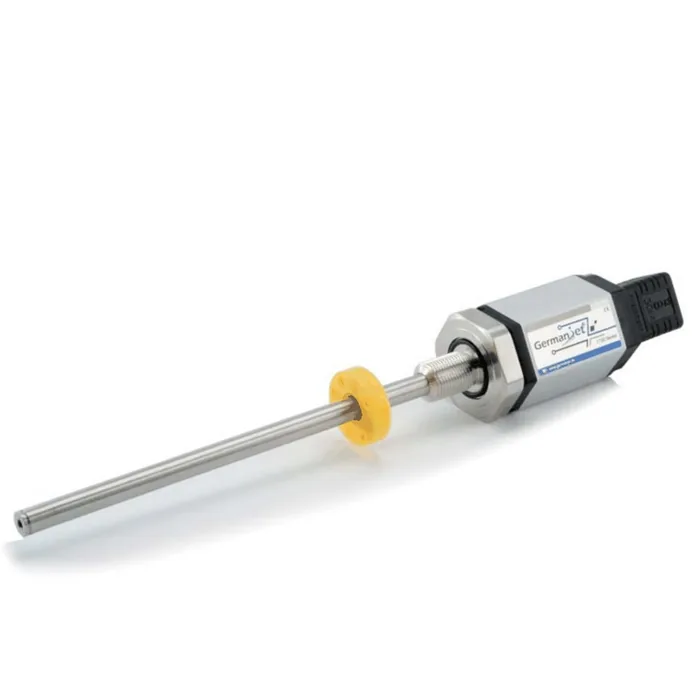
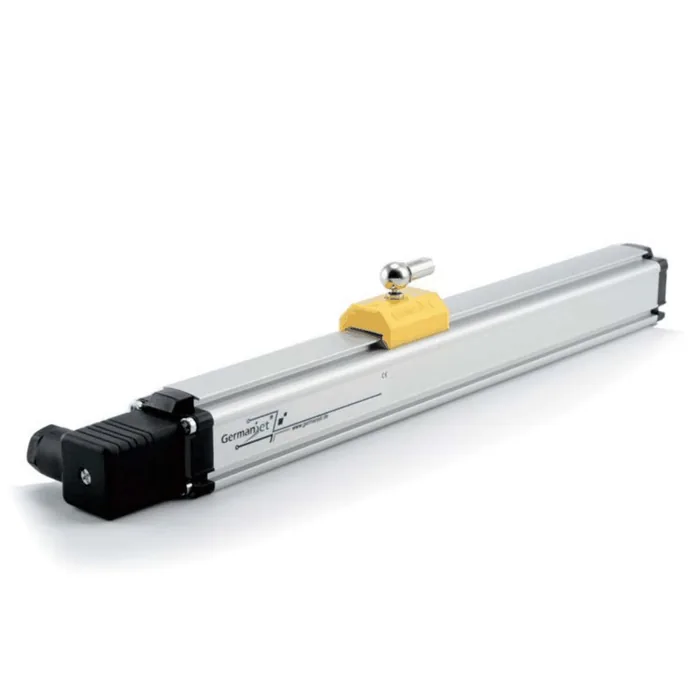
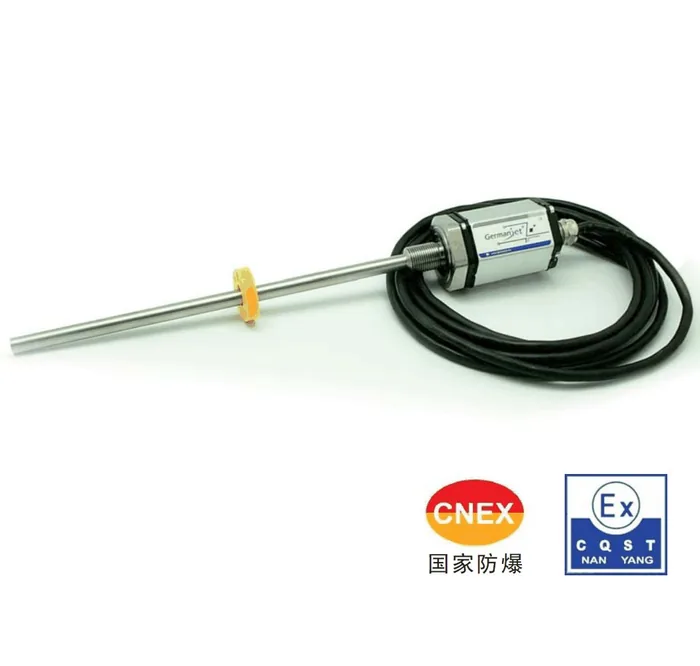
Whatever the question above, it comes back to the same device.magnetostrictive displacement sensorThe product range lists every series by stroke, mounting style and output interface, which is the quickest way into a selection.
← Back to News