
Hydraulic Cylinder Displacement Sensor Faults: Three-Step Test and Solutions
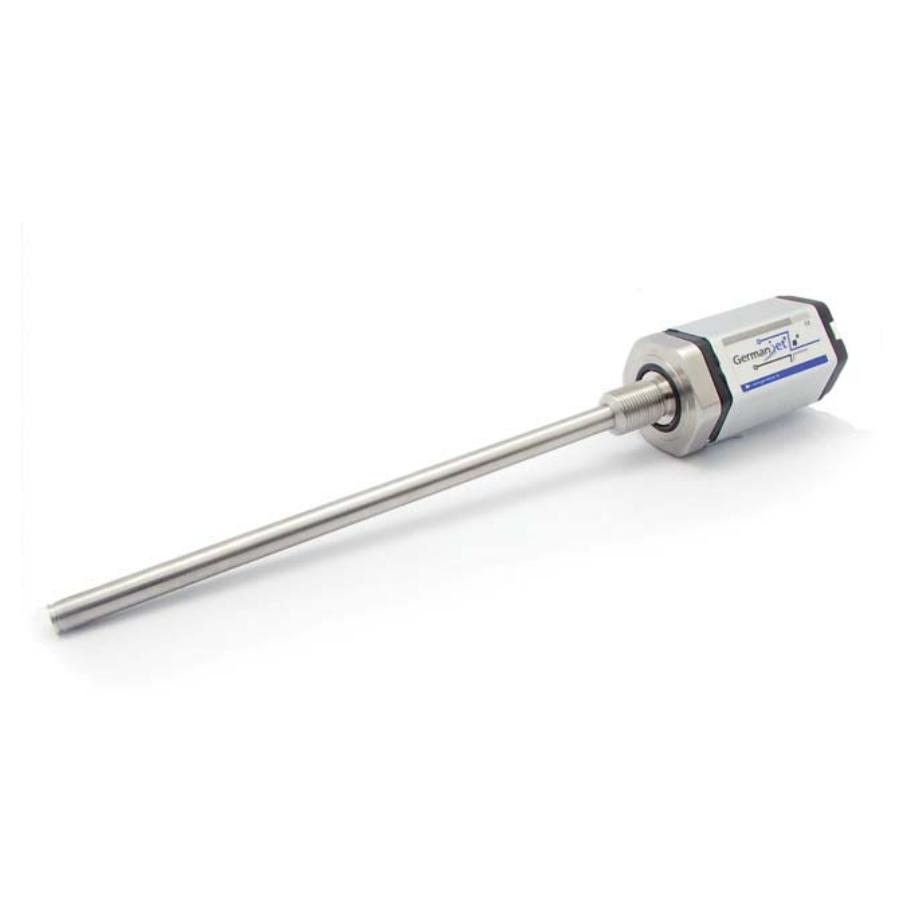
When a hydraulic cylinder displacement sensor misbehaves, test it before you replace it: supply, signal and insulation with a multimeter are usually enough to find the fault. This article gives the three-step test, a fault-and-fix table, and the replacement procedure for when the sensor really is dead.
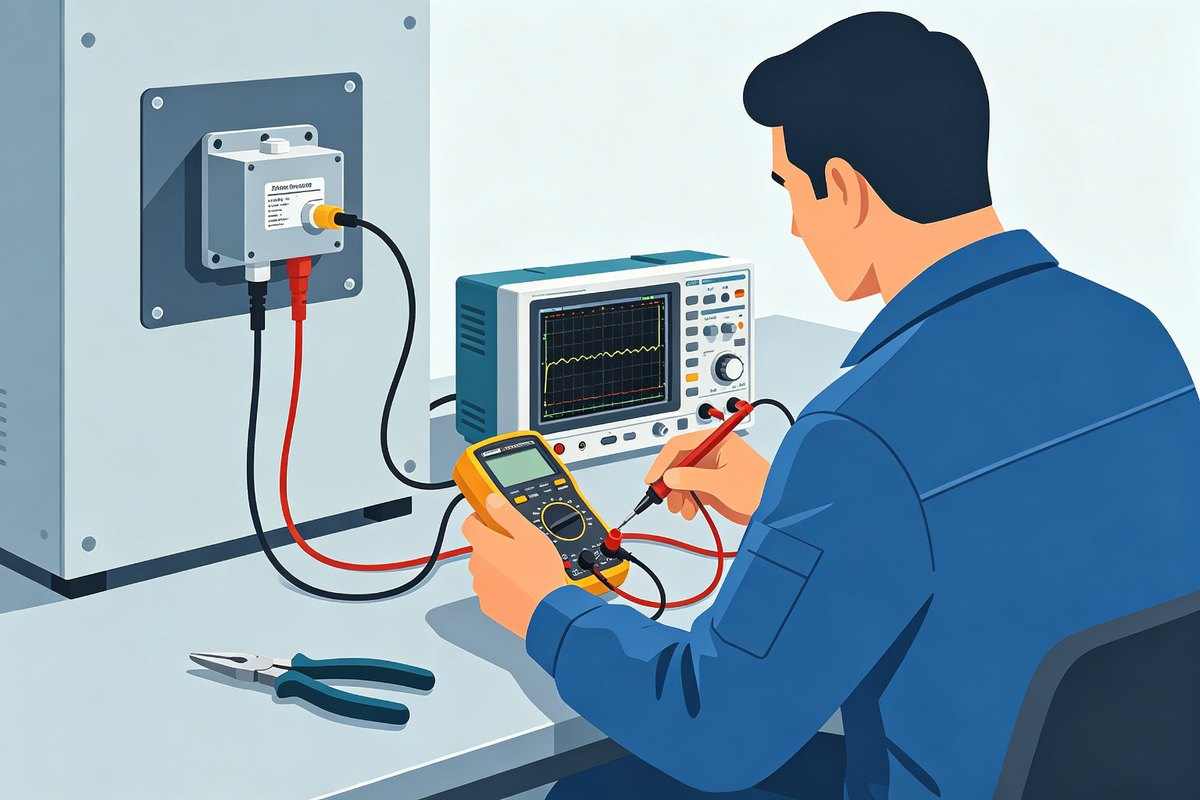
The three-step test (a multimeter is enough)
- Supply — measure 24 V at the sensor terminals while the machine runs. It must stay stable; a dipping supply makes an analogue output wander exactly like a fault.
- Signal — move the ring (or the piston) and watch the output change. For 4-20 mA, a steady movement should give a steady current; use the dry battery method to separate ruler, cable and controller. Disconnect the sensor end and inject a 1.5 V or 9 V dry battery instead: a steady reading means the ruler is at fault, a reading that still jumps means the cable or the controller is.
- Insulation — measure between the signal wire and the screen / housing. A short here causes a shifted or noisy reading, not a dead one.
Faults and fixes
| Symptom | Likely cause | Fix |
|---|---|---|
| No output at all | supply or wiring | check 24 V and the pin table first |
| Reading jumps | interference, ferrous debris, supply ripple | clean the rod, fix supply, check shield |
| Reading drifts (zero) | temperature, ring moved | re-set zero; check ring clamp |
| Wrong direction | direction setting | invert direction, do not rewire |
| Dead band at the end | stroke out of range | keep the ring inside the calibrated stroke |
Servo cylinders and air cylinders — same logic
The test sequence is identical for a servo-cylinder sensor and an air-cylinder sensor: supply, signal, insulation. What changes is the environment — a servo cylinder is faster and tighter, so check the zero more often; an air cylinder is usually cleaner, so a jump there points at the cable or the controller first.
Replacement (only after the test says dead)
- Power off and record the current settings (zero, span, node ID).
- Disconnect the cable and remove the sensor from the cylinder.
- Fit the new sensor — same rod length, same ring position, same bore seal.
- Rewire per the pin table and restore the recorded settings.
- Run the cylinder slowly and verify the reading end to end.
Pros and cons in one line
Magnetostrictive gives high precision and no wear but costs more than a potentiometer ruler and needs a clean field — the test above keeps the expensive replacement for when it is really needed.
Mounting and parameter setting are covered in hydraulic cylinder displacement sensor guide.
Frequently Asked Questions
Q: Should I replace the sensor first when it misbehaves?
No. Test supply, signal and insulation with a multimeter first. Most cylinder sensor faults are wiring, supply or debris, not the sensor.
Q: The reading drifts after a while. What is it?
Temperature shift or a moved ring. Re-set zero and check the ring clamp before considering replacement.
Related Products
Related Applications
Series 16 Hydraulic Rod Magnetostrictive Displacement Sensor Application Cases
View Details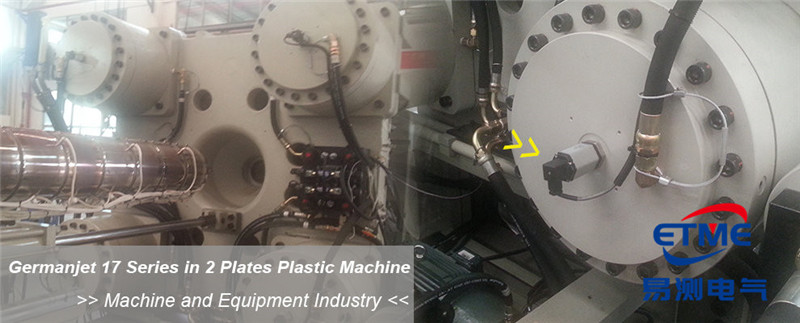
Series 17 Hydraulic Cylinder Integrated Magnetostrictive Displacement Sensor Application Cases
View Details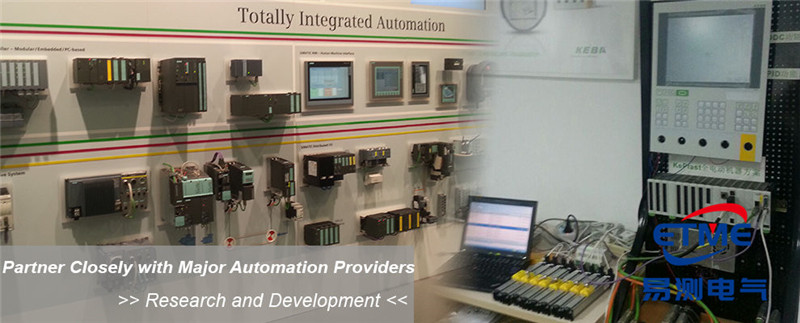
Multi-Industry Application Cases for Magnetostrictive Displacement Sensors
View Details