
Can Magnetostrictive Sensors Measure Rotation Angle
The short answer: a magnetostrictive position sensor cannot measure rotation angle. It measures position along a single straight axis. This is not a configuration issue or a wrong model number; the measurement principle itself does not support angle output. Sites that try it on valve position or turntable angle end up with erratic readings and usually blame the sensor.
What the sensor actually measures
The assembly has three parts: a waveguide wire sealed inside a stainless tube, a permanent magnet ring that slides along the outside of the rod, and an electronics head at one end. A current pulse is sent down the wire. Where the pulse meets the magnet's field, a torsional strain wave is generated and travels back to the head. The elapsed time converts to the distance between the magnet and the head.
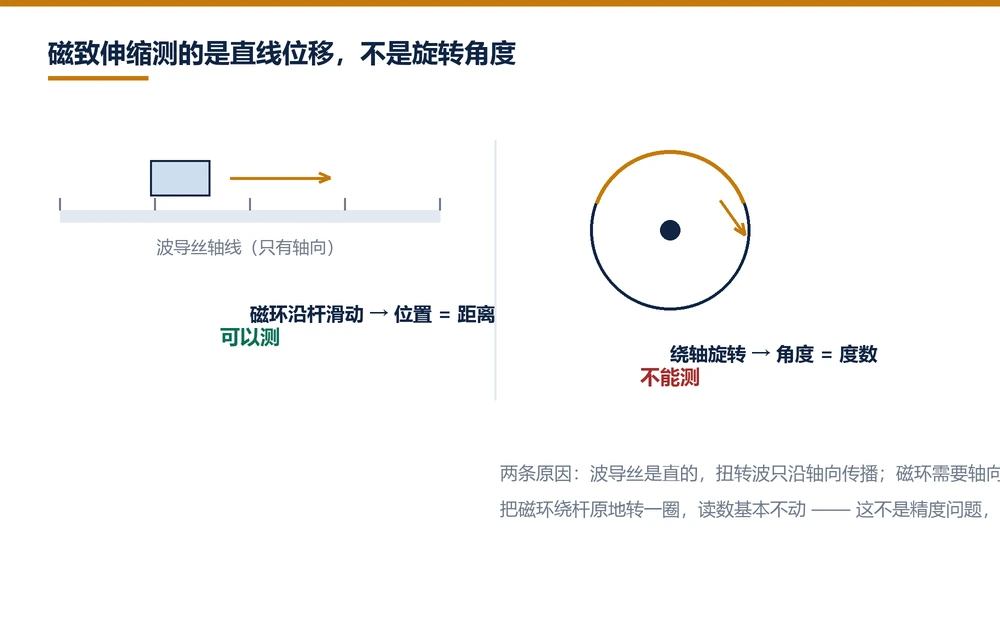
Everything in that chain assumes one condition: the magnet travels along the rod, and distance is a single scalar. Angle measurement asks for how far something rotated about an axis, which is a different quantity.
Three reasons rotation does not work
The waveguide is straight. The wire sits on the rod axis. It has an axial direction and nothing in the circumferential direction. Position is defined as millimetres from the head, with no mapping to rotation.
The torsional wave travels axially. If the magnet spins in place, the magnetic field rotates with it, but the resulting mechanical wave still propagates along the same axis. Round trip time depends on the magnet's axial coordinate, not on its angle. Turning the magnet a full revolution barely moves the reading.
The magnet is designed for an axial ring field. A standard magnet ring is radially magnetised so its field crosses the rod axis. That geometry suits sliding motion. Force it into a rotating role and the coupling between field and wire changes with every degree, so the output oscillates with rotation. On a trend chart it looks like noise; physically it is the principle failing.
Combined, these say the mismatch is in the object being measured, not in accuracy. No brand changes this.
Four alternatives when angle is required
Rotary encoder. Incremental or absolute, mounted directly on the shaft. Accuracy and resolution are adequate; the weak points are mounting alignment and environmental protection, so match the IP rating to the site.
Cable extension sensor with a linkage. Convert angular motion into linear travel through a lever arm and cable, then measure length. Existing linear sensors can be reused. The penalty is backlash and hysteresis in the linkage, which limits repeatability.
Inclinometer. Measures tilt relative to gravity rather than full rotation. Suitable for booms, platforms and flaps that move within roughly ±90 degrees.
Combine both measurements. On machines that need stroke and angle, the usual arrangement is a magnetostrictive sensor inside the cylinder for rod extension plus an encoder on the pivot, with the two signals combined in the controller. Each device is used on the quantity it handles well.
Three checks before quoting
Check the motion direction. Does the measured object travel along a track, or rotate about an axis? Along a track is a fit; rotation is not.
Check the mechanical interface. Magnetostrictive sensors interface through a rod plus magnet ring. If the customer drawing shows a shaft end with a coupling, the application was never a fit for this principle.
Check the output unit. Displacement sensors output millimetres and are calibrated in millimetres; angle measurement outputs degrees. Settling this before quoting removes most of the rework later.
One common misunderstanding: the float on a level gauge turns
A magnetostrictive level gauge has a float that rides up and down with the liquid surface and may also rotate slightly as it moves. That rotation is passive and unrelated to the reading. The gauge still reports how many millimetres the float sits below the flange, converted to level height. Rotation is noise in this measurement, not signal.
Configuring stroke and angle on the same machine
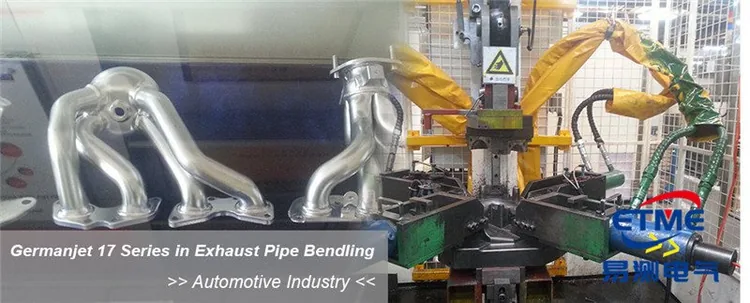
Common on construction equipment and test stands. Rod extension is measured by a rod-style sensor built into the cylinder end cap, supplied with the cylinder. Pivot angle is measured by an encoder or inclinometer at the joint. Both signals enter the controller and are combined into position coordinates. This pairing has run for years on hydraulic fixtures, tube benders and press brakes, and is far more reliable than forcing one sensor to report two quantities.
Where only a coarse end-of-travel signal is needed, a magnetostrictive sensor for stroke plus a few proximity switches at fixed angles is the cheapest option. It reports whether the axis arrived, not how far it turned.
Frequently Asked Questions
Q: Can a magnetostrictive position sensor measure rotation angle
No. It measures linear displacement along the rod axis. The waveguide has only an axial direction, the torsional wave propagates axially, and the magnet requires an axial ring field. Use a rotary encoder, an inclinometer, or a linkage that converts angle into linear travel.
Q: What happens if the magnet is rotated in place
The reading barely changes. Position depends on the magnet's axial coordinate, not its angular position. If the reading oscillates with rotation, the magnet is tilted relative to the rod axis, so coupling strength varies. That is an installation defect, not angle output.
Q: Is there a magnetostrictive sensor that outputs position and angle
No. The principle responds only to one-dimensional linear displacement. Machines needing both typically use a magnetostrictive sensor for rod extension and a separate encoder on the pivot, with both signals combined in the controller.
Q: Can a magnetostrictive sensor measure valve position
Indirectly. Add a linkage that converts stem travel into a linear stroke, measure that stroke with an external sensor, and derive opening from the ratio. Mounting the sensor directly on the valve shaft to read rotation does not work.
Related Products
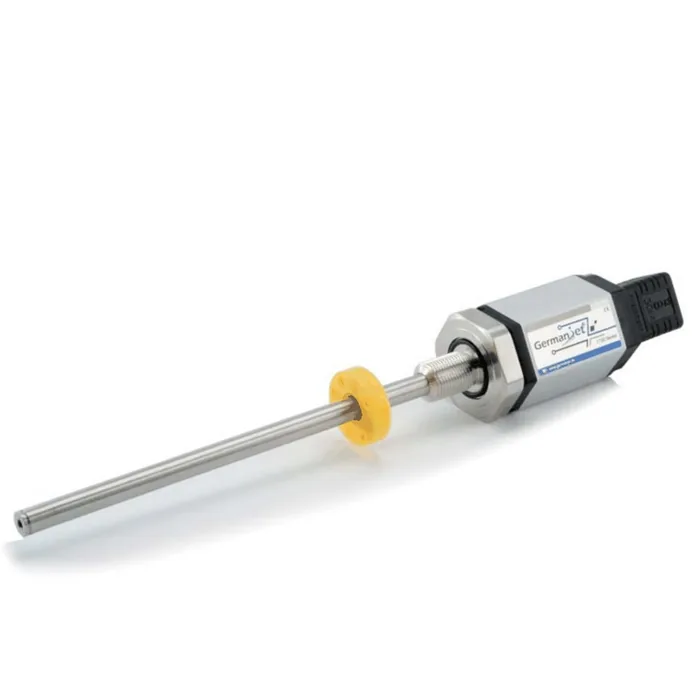
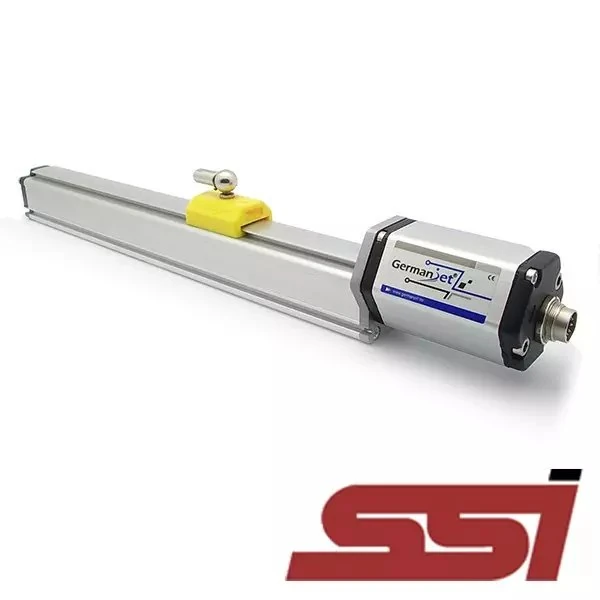
Whatever the question above, it comes back to the same device.magnetostrictive displacement sensorThe product range lists every series by stroke, mounting style and output interface, which is the quickest way into a selection.
← Back to News