
How Does a Magnetostrictive Displacement Sensor Measure Position? Magnetostriction and the Wiedemann Effect Explained
If magnetostriction and the Wiedemann effect are two terms you keep mixing, this walks through both on the waveguide, magnet and electronics head. Magnetostrictive displacement sensors are widely used in hydraulic cylinders, injection molding machines and wind power, but many engineers only know that "they can measure position" without being able to explain how. This article unpacks the operating principle, focusing on two concepts that are most often confused — the magnetostrictive effect and the Wiedemann effect — so that you are not led astray by supplier jargon when specifying a sensor.
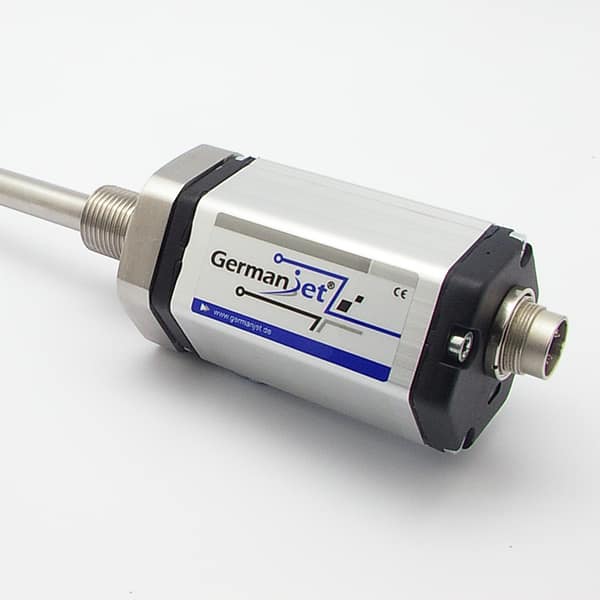
Core structure: a waveguide that ties the whole measurement together
Inside the sensor is a slender waveguide wire (typically a nickel–iron magnetostrictive alloy), enclosed by a measuring rod. One end of the waveguide is connected to the electronics head; the other end is fixed. A permanent magnet (position magnet) rides on the outside of the rod and moves with the object being measured. The essence of the measurement is to determine how long a current pulse takes, once launched from the electronics head, to reach the location of the magnet.
The magnetostrictive effect: a material's strain response to a magnetic field
Start with the magnetostrictive effect itself: certain ferromagnetic materials undergo a minute change in length or volume when a magnetic field is applied. That is magnetostriction. It is an intrinsic physical property of the material, distinct from a magnet attracting iron — it is lattice deformation inside the material as it magnetises.
In the sensor, the electronics head sends a current pulse along the waveguide. The pulse produces a circumferential (hoop) magnetic field around the wire. When this field meets the axial static magnetic field of the position magnet, the material at the superposition undergoes local strain.
The Wiedemann effect: that is how the torsional wave is generated (the key distinction)
This is where most people mix the two up. The torsional wave is not produced directly by the magnetostrictive effect; it is the result of the Wiedemann effect.
The Wiedemann effect states that when a magnetostrictive material is subjected simultaneously to an axial magnetic field and a circumferential current (magnetic field), the material undergoes torsional deformation. The sensor exploits exactly this: the current pulse (circumferential field) superimposed on the magnet's axial field causes the waveguide to "twist" at the overlap, launching a torsional wave (ultrasonic wave) that propagates in both directions.
In one sentence: the magnetostrictive effect is "the material's strain response to a magnetic field"; the Wiedemann effect is "torsion of the material under the combined action of axial and circumferential fields". Converting the electrical pulse into a mechanical wave relies on the latter.
Time-of-flight ranging: why timing yields position
The torsional wave travels along the waveguide at a constant speed of sound (approximately 2830 m/s) and is captured by the detection circuit when it reaches the electronics head. The electronics records the time difference t between "pulse launched" and "echo received", then uses distance = speed of sound × t to obtain the distance from the magnet to the fixed end — that is, the current position. There is no need to divide by 2 — the torsional wave travels one way from the magnet location back to the electronics head, unlike ultrasonic ranging which involves a round trip; the excitation current pulse itself propagates along the waveguide at near the speed of light, which is negligible relative to the speed of sound.
Because the speed of sound is constant, sufficiently accurate timing (nanosecond class) yields micrometre-class resolution, and the output is an absolute position that is not lost on power-down — far less trouble than an incremental encoder.
Why it is non-contact, and why it lasts
There is no mechanical contact between the position magnet and the waveguide; the magnet merely applies a magnetic field to the waveguide across a gap. With no friction and no wear, this is the fundamental reason its service life is an order of magnitude longer than a contacting potentiometer or resistive scale with its wearing brushes, and why it can run stably for years inside a hydraulic cylinder.
How magnetostrictive measurement is described
The same magnetostrictive method (cover trade name Absopos). The first magnetic field comes from the permanent magnet moving along the sensor housing; the second is generated by the pulse generator. When the two fields interact, a position signal returns at ultrasonic speed; the electronics analyse the waveform and output a high-resolution absolute value. Because the reading is absolute, the machine has a valid position as soon as it is powered — no homing move is required, unlike an incremental encoder.
The catalogue highlights the same product bounds as this article: non-contact measurement, absolute output, harsh-environment capability and relatively simple mounting. Closed-loop wall-thickness control is the worked example: the sensor measures the gap and feeds a voltage back to the thickness controller.
EMC and environmental tests listed in the catalogue
Germanjet’s laboratory tests to ISO/IEC 17025; products are CE EMC tested. Standards (confirm on the series page you are buying):
| Standard | What it covers |
|---|---|
| EN 61000-6-3 | Emission, residential / commercial / light industrial |
| EN 61000-6-2 | Immunity, industrial |
| EN 61000-4-2 | ESD immunity |
| EN 61000-4-3 | Radiated immunity |
| EN 61000-4-4 | EFT / burst immunity |
| EN 61000-4-6 | Conducted immunity |
| EN 61000-4-8 | Power-frequency magnetic field immunity |
These tests check immunity and emissions near inverters and welders, not accuracy. The catalogue also covers temperature, ingress, shock and vibration tests. Field wiring rules are in EMC.
Frequently Asked Questions
Q: What is the difference between the magnetostrictive effect and the Wiedemann effect?
The magnetostrictive effect is the material's strain response to a magnetic field, an intrinsic physical property of the material. The Wiedemann effect is the torsion of that material under the combined action of an axial field and a circumferential current field. Converting the electrical pulse into a mechanical wave relies on the latter: the torsional wave is not produced directly by the magnetostrictive effect, it is the result of the Wiedemann effect.
Q: Does timing really give the position, and is the distance divided by two?
Yes to timing. The torsional wave travels along the waveguide at a constant speed of sound, approximately 2830 m/s, and the electronics head records the time difference t between launching the pulse and receiving the echo, giving distance = speed of sound x t. There is no division by two: the wave travels one way from the magnet back to the electronics head, unlike ultrasonic ranging with its round trip. The excitation pulse itself travels at near the speed of light, which is negligible against the speed of sound.
Q: Is position lost on power-down? Does the machine need homing?
No. The output is an absolute position, so a valid reading is available as soon as the system is powered and the machine does not need to home before production. That is the essential difference from an incremental encoder, which has to find its reference.
Q: Is there any contact between the magnet and the rod, and why does it outlast a potentiometer?
There is no mechanical contact at all. The magnet applies its field to the waveguide across a gap, so there is no friction and no wear. That is the fundamental reason its service life is an order of magnitude longer than a contacting potentiometer or resistive scale, and why it runs stably for years inside a hydraulic cylinder.
Q: Is immunity to interference backed by testing?
Products are CE EMC tested, covering EN 61000-6-3 emission and EN 61000-6-2 industrial immunity, plus ESD, radiated, EFT/burst, conducted and power-frequency magnetic field immunity. Note that these verify the sensor neither suffers from nor causes interference near inverters and welders; they are not accuracy specifications.
Related Products
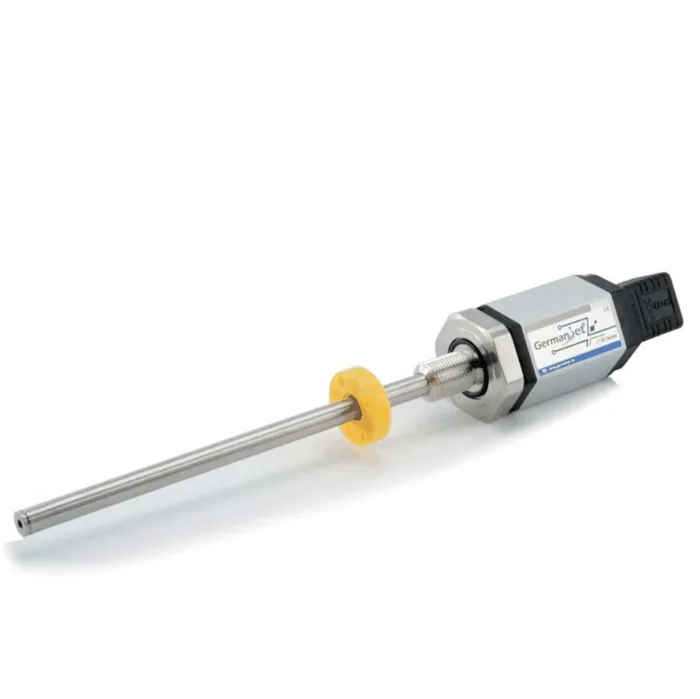
Series 17 Hydraulic Cylinder Integrated
View Product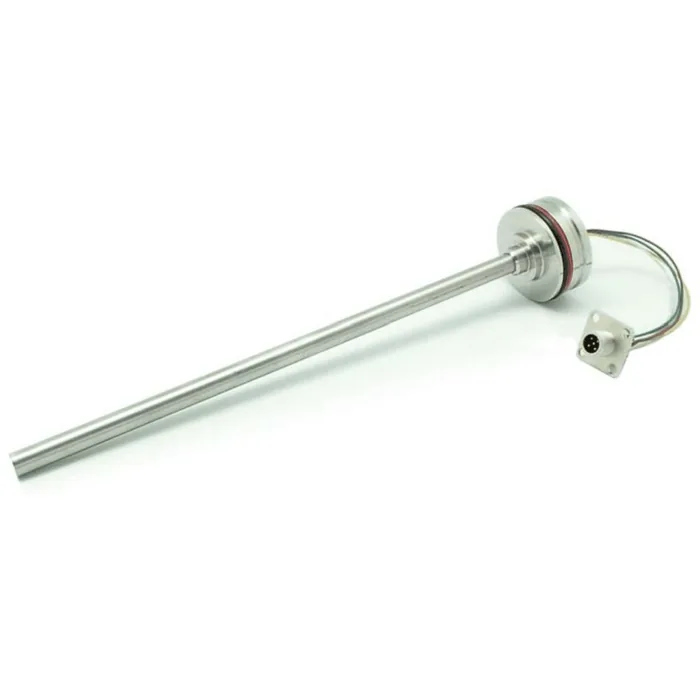
Series 13 Mobile Hydraulic
View Product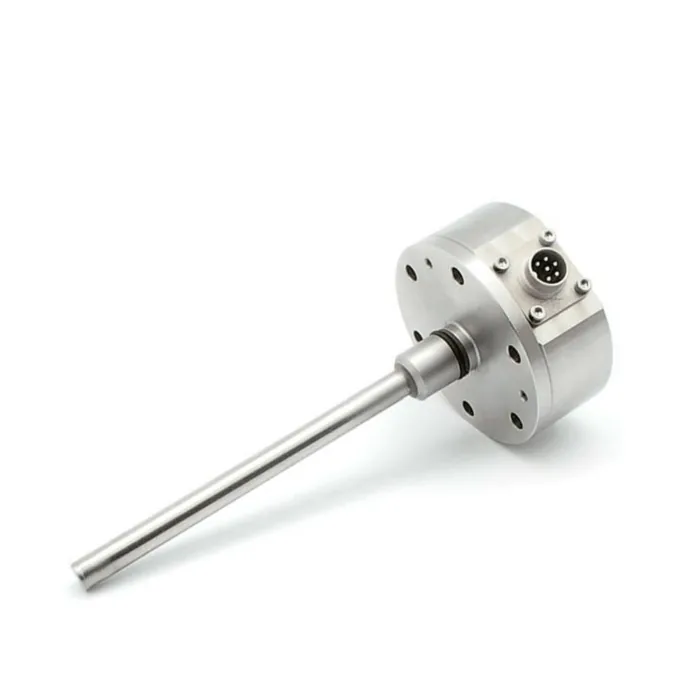
Series 16 Hydraulic Cylinder Built-in
View Product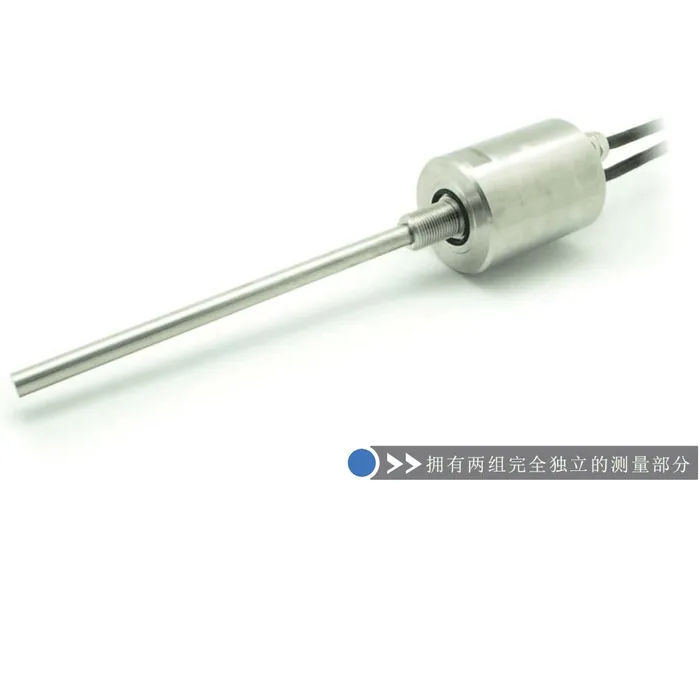
Series 16R Redundant Design Built-in
View ProductRelated Applications
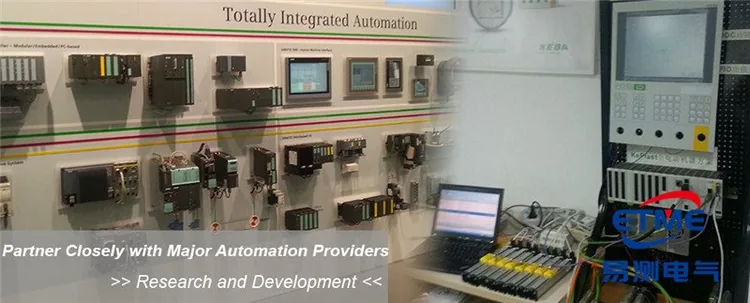
Multi-Industry Application Cases for Magnetostrictive Displacement Sensors
View Details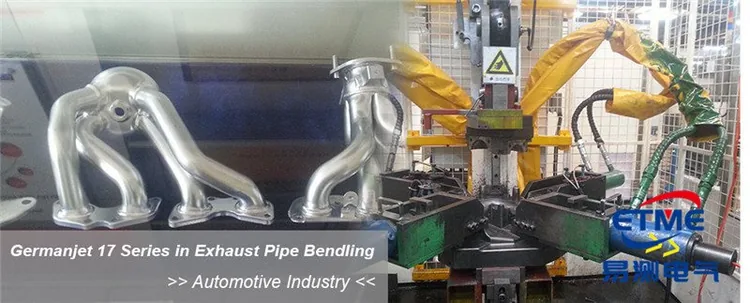
Series 16 Hydraulic Rod Magnetostrictive Displacement Sensor Application Cases
View Details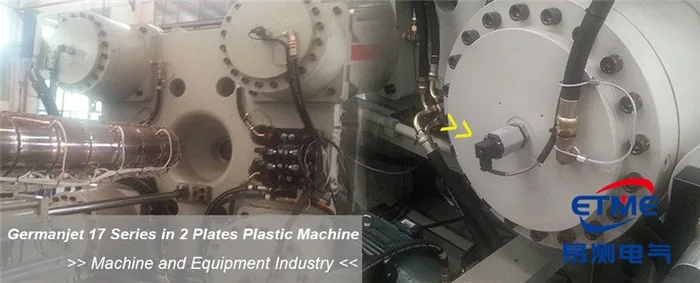
Series 17 Hydraulic Cylinder Integrated Magnetostrictive Displacement Sensor Application Cases
View Details