Why Waveguides Use Iron-Nickel Magnetostrictive Alloy: The Art of Material Selection
The waveguide is the slender "ruler" inside a magnetostrictive displacement sensor; position measurement is essentially measuring the time a torsional wave takes to run along it. Waveguide material directly decides speed-of-sound stability, temperature-drift coefficient and long-term fatigue life. The mainstream choice is an iron–nickel magnetostrictive alloy; the core is an engineering trade-off among magnetostrictive coefficient, speed-of-sound temperature coefficient and mechanical strength.
Why iron–nickel alloy
- High magnetostrictive coefficient: sensitive to magnetic field, so the torsional-wave echo launched by the Wiedemann effect is strong enough to detect readily;
- Moderate speed of sound: about 2830 m/s, giving a sensible timing window; nanosecond-class timing then reaches micrometre-class resolution;
- Stability: magnetic and mechanical properties are stable over a given temperature band, supporting long-term maintenance-free use.
Material-parameter trade-offs
- A higher magnetostrictive coefficient gives a stronger echo, but often a larger speed-of-sound temperature coefficient (temperature drift);
- A lower speed-of-sound temperature coefficient gives less temperature drift, but melting and processing of the material become harder;
- Fatigue life requires that the material does not degrade under long-term alternating stress — non-contact measurement itself has no mechanical wear, and waveguide stress amplitude is also low, so life depends mainly on the material's own stability.
How material properties relate to sensor performance
| Material property | Performance affected | Engineering trade-off |
|---|---|---|
| Magnetostrictive coefficient | Echo strength, detectability | Higher → more stable signal |
| Speed-of-sound temperature coefficient | Temperature drift (see temperature drift) | Lower → accurate across the full temperature band |
| Mechanical strength/fatigue | Life (see the maintenance-free advantage) | Higher → long life |
The measuring principle is in the magnetostrictive effect and the Wiedemann effect; selection of the position magnet that works with the waveguide is in permanent-magnet (position magnet) selection; the practical magnitude of temperature effects is in sensor warm-up and thermal equilibrium.
Frequently Asked Questions
Q: Why do waveguides use iron–nickel alloy?
High magnetostrictive coefficient, moderate speed of sound and good stability make it suitable as a ranging waveguide.
Q: Does the material affect temperature drift?
Yes. Different materials have different speed-of-sound temperature coefficients, which are the underlying source of temperature drift.
Q: Can the waveguide break?
Non-contact use means no mechanical stress and long life; it depends mainly on the material's long-term stability.
Related Products
Related Applications

Series 12 General-Purpose Magnetostrictive Displacement Sensor Application Cases
View Details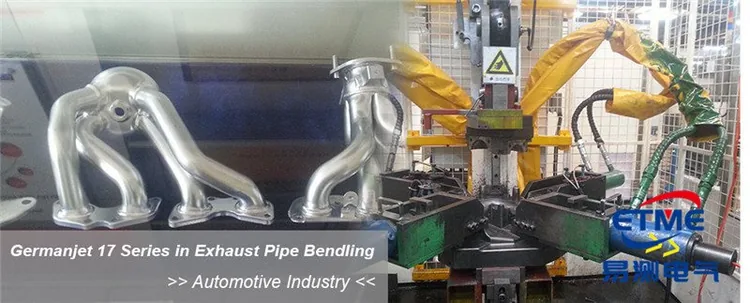
Series 16 Hydraulic Rod Magnetostrictive Displacement Sensor Application Cases
View Details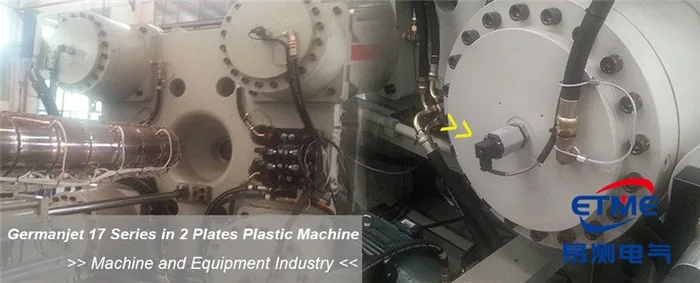
Series 17 Hydraulic Cylinder Integrated Magnetostrictive Displacement Sensor Application Cases
View Details