Do Magnetostrictive Displacement Sensors Need Warm-Up? Self-Heating and the Real Temperature Effect
Warm-up is not universally required; it depends on the accuracy grade you specify. On the effect of temperature on magnetostrictive displacement sensors, site experience and paper estimates often fail to match. Linearly extrapolating a material temperature coefficient yields the alarming conclusion that "a 50°C rise drifts by more than ten millimetres"; yet on real machines, readings are often quite stable after the sensor has run continuously for half an hour. The reason is that the sensor electronics head is itself a continuous heat source: after power-up, internal temperature rises to an equilibrium and then stays there, after which temperature is no longer the main error source. What really needs to be handled is the warm-up period after switch-on and duty with violent ambient-temperature change, not temperature drift in steady running.
The sensor heats itself
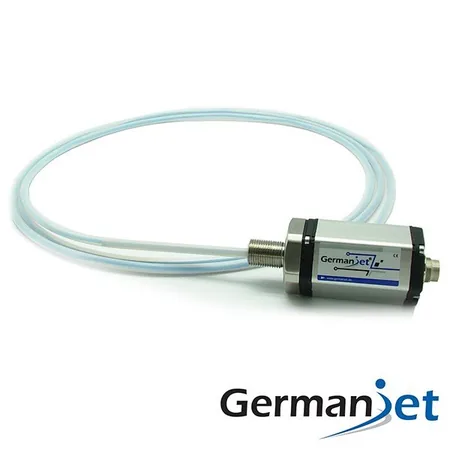
The waveguide excitation circuit, echo detection and nanosecond-class timing, the main controller chip and the output driver inside the electronics head all consume power continuously, and that power all becomes heat. Heat leaves through the housing and mounting flange, forming a fixed heat path. At the instant of power-up, heat generation exceeds heat dissipation and internal temperature keeps rising; as the internal–external temperature difference grows, the dissipation rate rises in step until heat generation equals heat dissipation, internal temperature stops rising and thermal equilibrium is reached — from here temperature stops being the dominant measurement error.
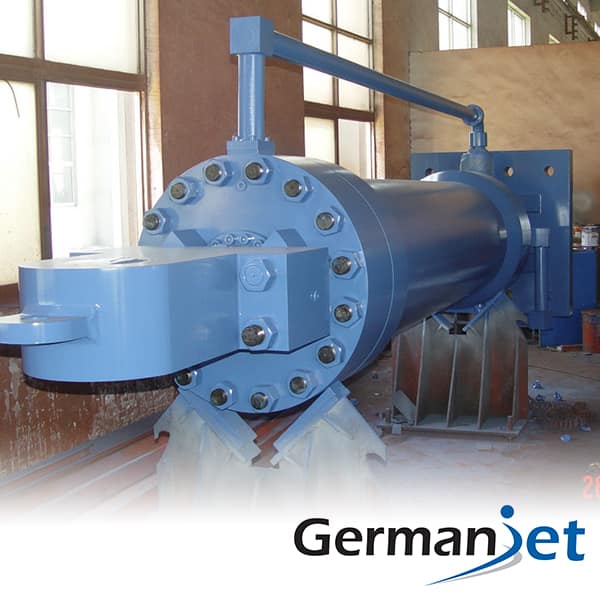
This process takes about 30 minutes on most models; the exact time depends on electronics-head power, housing material and volume, thermal conduction at the mounting face, and ambient temperature. In-cylinder integrated types, because the rod sits in oil with large thermal mass and good dissipation, usually have more controllable settling time and settling temperature.
Why temperature effects are relatively manageable after thermal equilibrium
Three reasons combine so that the practical effect of temperature on readings in steady running is far smaller than theoretical extrapolation; even so, use across temperature zones (for example switching between a room-temperature shop and hot-oil duty) must still be accepted against the full-temperature accuracy specification, and compensation-free performance should not be assumed:
- Internal temperature is constant. After thermal equilibrium the temperature environment of the waveguide is essentially unchanged, so the speed of sound is essentially unchanged and there is no continuously changing drift;
- Factory calibration already includes correction. At despatch, data are taken at multiple position points and multiple temperatures, compensation parameters are calculated and written into the electronics head, and deviation in the normal temperature band is already corrected by firmware into the specified band; see factory calibration and linearisation;
- A closed-loop system absorbs slow offset. Most hydraulic/servo loops return to a mechanical datum each working cycle and re-zero, so slow zero offset is cancelled at system level.
Set zero only after this equilibrium, following the installation steps in installation in practice. Multiplying a material temperature coefficient by ambient temperature rise to estimate site error is a serious overestimate — it assumes the sensor has no compensation and that internal temperature follows the ambient through violent change; neither premise holds on real machines.
The two cases that really need attention
| Case | Behaviour | Cause | Action |
|---|---|---|---|
| Switch-on warm-up (about 0–30 minutes) | Reading at the same physical position drifts slowly in one direction and then converges | Electronics-head self-heating; internal temperature has not yet reached equilibrium | Run continuously for more than 30 minutes before setting zero and accepting accuracy |
| Violent ambient-temperature change | Zero and span shift with duty as a whole; winter/summer or day/night disagree | An external heat source has changed the waveguide temperature beyond the normal compensation band | Choose a temperature-compensated model; calibrate on site in the hot state; if needed use a split design and move the electronics head out of the hot zone |
Typical duty in the second class includes: hydraulic oil temperature climbing from a cold machine to working temperature, day–night difference on outdoor construction machinery, and mounting near high-temperature radiation sources such as die-casting and curing presses. These are the occasions that need dedicated temperature selection and calibration; methods are in selection for high-temperature environments.
Physical mechanism of speed-of-sound temperature drift
As background: waveguides are mostly iron–nickel magnetostrictive alloy; the torsional-wave speed of sound approximately satisfies v ≈ √(G/ρ), where shear modulus G falls as temperature rises and speed of sound falls with it. A typical temperature coefficient is of the order of −0.02%/°C; the exact value depends on the alloy. The material-selection trade-off is in waveguide materials.
This effect exists objectively and is why temperature compensation exists; but it is the object of compensation, not a formula for predicting site error directly. What accuracy a given model can reach in a given temperature band should follow the full-temperature accuracy stated on the datasheet, not a self-made extrapolation. Warm-up drift settles by itself; rapid ambient-temperature swing drift is the case that needs compensation or on-site calibration.
For a recap of the measuring principle see the magnetostrictive measuring principle; for a correct reading of accuracy figures see accuracy, resolution and repeatability; for the full selection method in high-temperature duty see selection for high-temperature environments. Temperature constraints in intrinsically safe / explosion-protected duty are covered by the Series 17EX intrinsically safe explosion-protected range.
Frequently Asked Questions
Q: Do magnetostrictive displacement sensors need warm-up?
Yes. After power-up, run continuously for about 30 minutes before zero calibration and accuracy acceptance. The electronics head itself heats continuously; after about half an hour, heat generation and dissipation reach equilibrium, internal temperature becomes constant, and the reading no longer drifts slowly in one direction. Calibrating on a cold machine and running hot is the most common man-made cause of site zero error.
Q: Is the temperature effect still large after thermal settling?
Not large. After thermal equilibrium the sensor's internal temperature is essentially constant; combined with factory multi-point calibration and built-in temperature compensation, temperature is no longer the main error source in steady running. What does need dedicated temperature consideration is duty where ambient temperature itself changes violently: sudden hydraulic-oil temperature rise, day–night difference on outdoor equipment, and proximity to high-temperature radiation sources.
Q: Does speed-of-sound temperature drift actually exist?
Physically, yes. Waveguide shear modulus changes with temperature and torsional-wave speed of sound changes with it; a typical temperature coefficient is of the order of −0.02%/°C. Temperature-compensated models already correct this in firmware; full-temperature accuracy follows the datasheet and must not be linearly extrapolated from the theoretical coefficient, which seriously overestimates the actual deviation.
Q: If the reading drifts slowly after switch-on, is the sensor faulty?
Slow one-way drift within 30 minutes of switch-on is a normal thermal-equilibrium process and settles after warm-up. If the reading still drifts continuously after thermal settling, check supply fluctuation, poor screen earthing, mechanical looseness of the magnet and bracket, and debris in the oil; do not blame temperature drift in every case.
Related Products
Related Applications
Multi-Industry Application Cases for Magnetostrictive Displacement Sensors
View Details
Series 17 Hydraulic Cylinder Integrated Magnetostrictive Displacement Sensor Application Cases
View Details
Series 19D Split-Type Process Displacement Sensor Application Cases
View Details