Magnetostrictive vs. Capacitive / Eddy Current: How to Choose for Short-Range High Accuracy
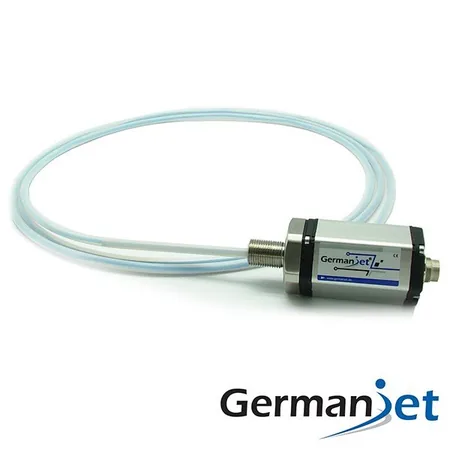
A gap versus an absolute stroke position is the first split: capacitive and eddy-current sensors are not in direct competition with a magnetostrictive displacement sensor. The first two measure the gap between the probe face and a conductive target or dielectric, typically over a millimetre-scale range, and the probe must remain aligned with the same target surface; the magnetostrictive side measures the travel of a position magnet along the sensing rod, with ranges covering several metres. The real criterion for “how to choose in a short-range, high-accuracy application” is therefore whether the measurand is a change in a minute gap or an absolute position along a stroke. Choose capacitive or eddy-current for the former; even when the stroke is short, choose a short-range magnetostrictive sensor for the latter. How to read the accuracy parameters themselves is covered in The Three Accuracy Terms of Magnetostrictive Sensors: Resolution, Repeatability and Non-Linearity; a technology overview is in Magnetostrictive vs. LVDT vs. Potentiometer: How to Choose a Displacement Measurement Solution.
The three principles measure different quantities
A capacitive sensor forms a parallel-plate capacitor with the target surface; a change in gap changes capacitance. The target must be a conductor (or a dielectric of known, stable permittivity), remain parallel to the probe, and the intervening medium must be clean and stable — air humidity, oil films and condensate all change permittivity and appear directly as reading error.
An eddy-current sensor induces eddy currents in the target conductor with a probe coil; the reaction of those currents changes the coil impedance, from which the gap is derived. The method is sensitive to the target material’s conductivity and permeability, so a change of material requires recalibration; the target surface must be large enough and flat, or edge effects will distort the reading. Its strengths are oil tolerance, high-temperature capability and the ability to measure through non-conductive contamination, which is why it has long dominated shaft-vibration and shaft-displacement monitoring on steam turbines and compressors.
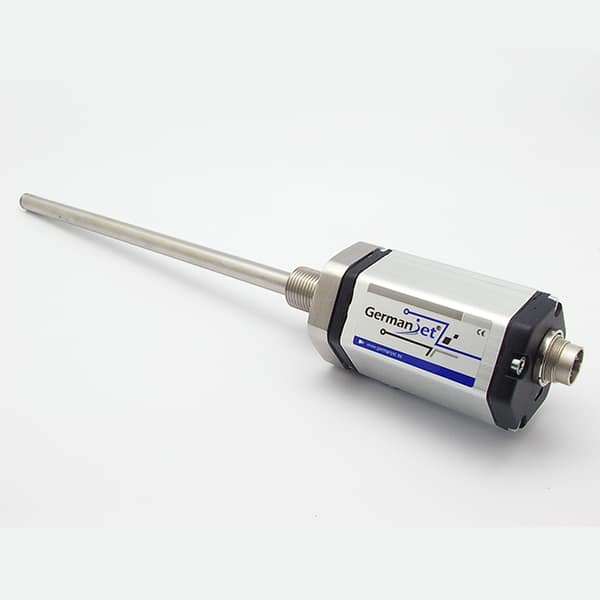
Magnetostrictive sensing measures the absolute distance of the position magnet from a fixed end. It is independent of target material, medium and gap, and requires only that the magnet and rod remain within the specified coaxiality. The principle is explained in Magnetostriction and the Wiedemann Effect.
Accuracy of short-range magnetostrictive sensors
A common misconception is that “short-range high accuracy is only possible with capacitive or eddy-current sensors”. In fact Germanjet magnetostrictive displacement sensors are not weak on short ranges: resolution is offered in 1 / 2 / 5 / 10 / 20 / 50 / 100 μm steps; repeatability can reach the order of ±0.002 mm; typical non-linearity is <0.02% FS. Because non-linearity is stated as a percentage of full scale, the shorter the range the smaller the absolute error — which is also the origin of the selection rule “compress the range first in high-accuracy applications”, discussed further in High-Accuracy Applications: Specifying Sensors for μm-Level Closed Loops.
Comparison of the three approaches
| Aspect | Magnetostrictive | Capacitive | Eddy current |
|---|---|---|---|
| Measurand | Absolute position along a stroke | Gap from probe to target surface | Gap from probe to conductor surface |
| Typical range | Millimetres to several metres | Sub-millimetre to millimetre scale | Millimetre scale |
| Target-material dependence | None (a position magnet is required) | Conductor or stable dielectric required | Conductor required; recalibrate for each material |
| Medium sensitivity | Insensitive | Sensitive to humidity, oil films and dust | Insensitive to oil; can see through non-conductive layers |
| Mounting requirements | Magnet coaxiality; no radial load | Probe strictly parallel to the target | Flat target surface; keep clear of edges |
| Absolute / relative | Absolute position; retained on power loss | Relative gap; a datum must be set | Relative gap; a datum must be set |
| Resolution | 1–100 μm in selectable steps | Can be extremely high, range-dependent | High, depending on probe diameter and range |
| Non-linearity | Typically <0.02% FS | Depends on model and medium stability | Depends on the material calibration curve |
| High-temperature capability | Remote-electronics types can separate the electronics head | Limited, model-dependent | Good; probes can tolerate high temperature (model-dependent) |
| In-cylinder mounting | Yes; pressure rating by series: Series 16/16R is 350 bar working / 530 bar peak, Series 17/17EX is 350/600 bar, Series 19 in-cylinder is 300/600 bar | No | No |
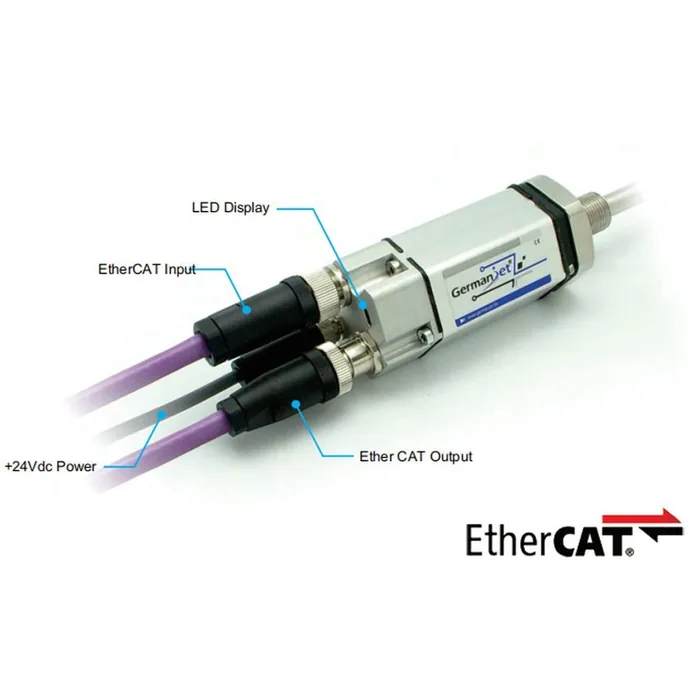
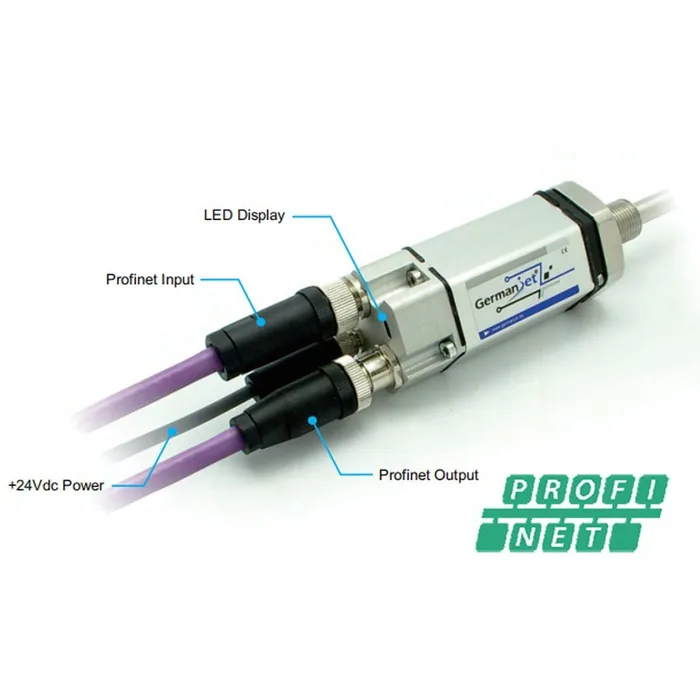
| Output interfaces | 4-20 mA / 0-10 V / SSI / CANopen / Profibus / EtherCAT / PROFINET / IO-Link | Mostly analog plus a dedicated controller | Mostly analog plus a proximitor |
| Typical applications | Cylinder stroke, press position, multi-axis synchronisation | Laboratory metrology, precision-stage gaps | Shaft vibration / displacement, high-speed rotating machinery |
How to decide which type to use
- Stroke greater than about ten millimetres, and you need to know “where it is”: choose a short-range magnetostrictive model. Capacitive and eddy-current sensors do not have the range for this need; forcing them sacrifices the linear region.
- You only care about a gap change of tens of micrometres to a few millimetres, and the probe can be fixed in alignment: choose capacitive or eddy current. Magnetostrictive sensing would then need an extra mechanical conversion, which itself introduces gap error.
- The target rotates or vibrates at high speed: eddy current is the established solution; a magnetostrictive sensor cannot mount a position magnet on a rotating surface.
- Absolute position is required, with no homing after power loss: only magnetostrictive sensing provides this natively; a gap-type sensor reads the present gap after power-up, and the mechanical datum still has to be established by calibration.
- Oil mist, cutting fluid or condensate is present: capacitive sensors are most at risk, eddy-current next, magnetostrictive least sensitive (IP65/67/68/69K available).
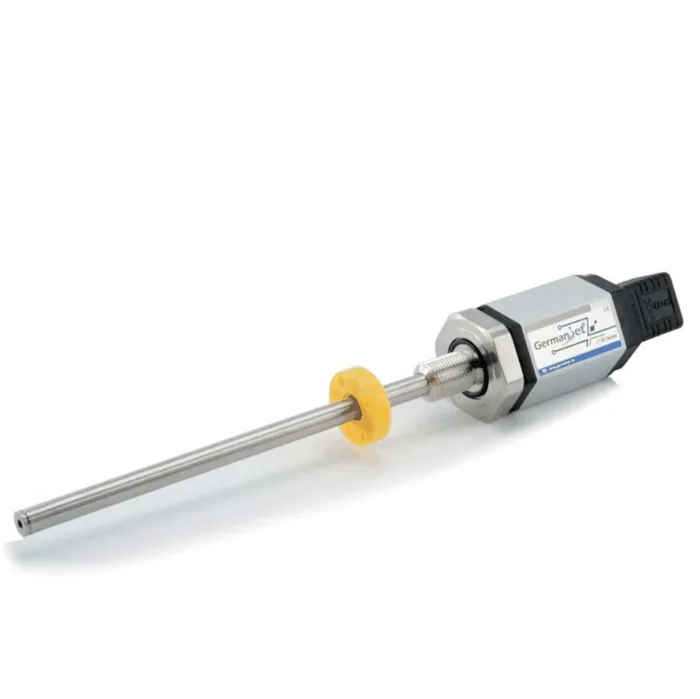
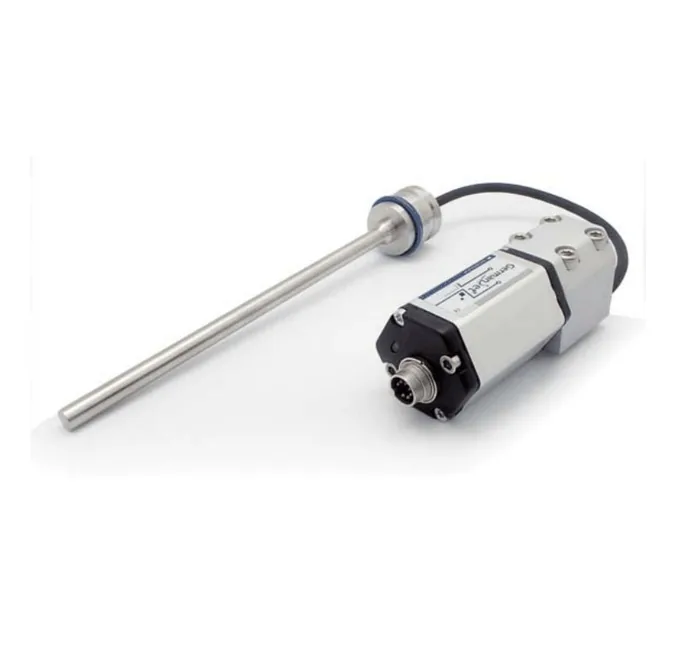
A typical short-stroke, high-accuracy combination is: Series 12 general-purpose for general applications, Series 17 hydraulic-cylinder integrated for cylinder integration, and Series 197 EtherCAT when a real-time bus is shared with the servo. Factory calibration and dead-zone compensation are covered in Factory Calibration and Linearisation.
Practical tips for engineers
- Series 19F front dead zone: 50 mm for stroke <8000 mm, 130 mm for stroke >8000 mm. Always deduct this when calculating the usable measuring stroke.
- Overall sensor length tolerance: +8 mm for stroke <8000 mm, +15/−5 mm for stroke >8000 mm; this tolerance does not affect the measuring stroke.
- Series 19F minimum stroke is 250 mm; for shorter strokes choose another series.
Frequently Asked Questions
Q: Is short-range high accuracy only possible with capacitive or eddy-current sensors?
No. Short-range magnetostrictive models offer resolution of 1/2/5/10/20/50/100 μm, repeatability of the order of ±0.002 mm, and typical non-linearity of <0.02% FS. Because non-linearity is a percentage of full scale, the shorter the range the smaller the corresponding absolute error, so short-stroke applications fully cover most high-accuracy needs.
Q: Does an eddy-current sensor need recalibration if the target material changes?
Yes. Eddy-current sensing is sensitive to the conductivity and permeability of the target conductor, so the same probe has a different output curve on different materials. Replacing a shaft-sleeve material during overhaul while keeping the old curve is a typical hidden source of error.
Q: How can I quickly decide which type of sensor to choose?
Answer one question first: are you measuring a gap or a stroke? If you only care about a gap change of tens of micrometres to a few millimetres and the probe can be fixed in alignment, choose capacitive or eddy current; if the stroke exceeds about ten millimetres and you need absolute position, choose a short-range magnetostrictive model.
Q: In micrometre-level applications, is the sensor specification the only bottleneck?
Usually not. Stiffness of the mechanical support, structural thermal expansion with temperature, and the controller’s AD resolution often reach their limits first. An accuracy budget must include these three items together with the sensor specification.
Related Products
Related Applications
Multi-Industry Application Cases for Magnetostrictive Displacement Sensors
View Details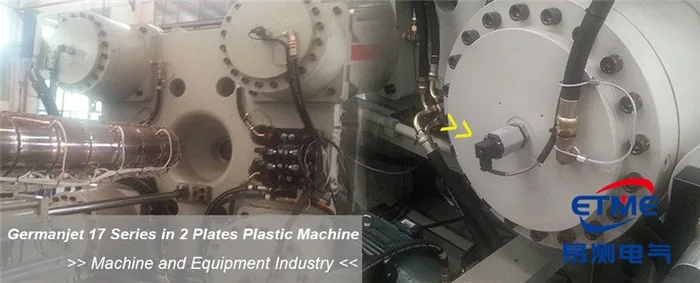
Series 17 Hydraulic Cylinder Integrated Magnetostrictive Displacement Sensor Application Cases
View Details
Series 19D Split-Type Process Displacement Sensor Application Cases
View Details