Magnetostrictive vs. Potentiometer / Resistive Scale: Life, Failure Modes and Total Cost of Ownership
Contact wear is inevitable on a potentiometric scale, while a magnetostrictive displacement sensor stays friction-free and non-contacting. The fundamental difference is not nominal accuracy but failure mechanism: the former takes a voltage-divider value by a wiper sliding on a resistive film — contact measurement, with wear accumulating inevitably with stroke count; the latter locates by non-contact magnetic coupling between a permanent-magnet ring and a waveguide wire, with no mechanical friction between moving parts. That difference drives the split in service life, maintenance frequency and total cost of ownership (TCO) — under high-frequency reciprocating, oily-dust or continuous-production duty, the replacement-part cost and downtime loss of a resistive scale usually cancel the purchase-price difference within a few maintenance cycles. This article compares the two objectively on four dimensions: how the value is taken, failure modes, figures, and TCO structure. The overall technology-route framework is in Magnetostrictive vs. LVDT vs. external magnetostrictive (long stroke): how to choose a displacement measurement solution.
How the value is taken: sliding contact versus non-contact magnetic coupling
Inside a potentiometer-type resistive scale is a resistive film (conductive plastic or cermet) and a wiper that moves with the rail type. The wiper slides on the film, converting mechanical position into a voltage-divider ratio and outputting a voltage proportional to position. The whole signal chain depends on stable physical contact between wiper and resistive film.
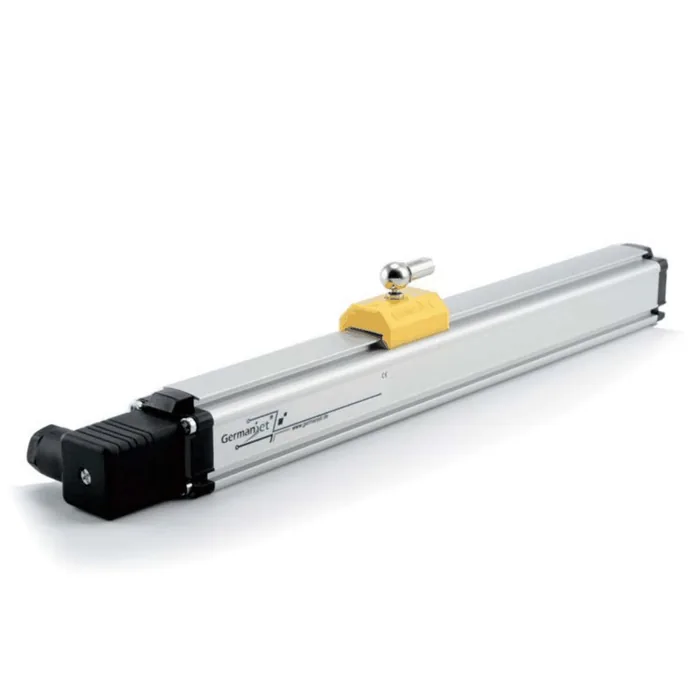
A magnetostrictive displacement sensor issues a current pulse from the electronics head. The annular field formed by the pulse in the waveguide wire superimposes on the axial field of the magnet ring, exciting a torsion stress wave (Wiedemann effect) at the magnet-ring position; the electronics head measures the travel time of that returning wave and converts it into position. A mechanical gap is kept between magnet ring and sensing rod; the two do not contact. The measuring principle is set out in Magnetostriction and the Wiedemann effect.
Four typical failure modes of a resistive scale
- Local wear of the resistive film: the machine reciprocates at high frequency over a small section of stroke for long periods (for example the hold-pressure section of an injection molding machine, or the fine-adjustment section of a press); the wiper repeatedly grinds the same region, the resistance characteristic of that section leaves the original value, appearing as “reading deviation grows or jumps near a particular position” while the rest of the stroke is still normal — easily misdiagnosed as a controller problem.
- Contact-resistance drift: after the wiper oxidises, carbon builds up or oil mist adheres, contact resistance rises, the output shows slow zero drift and gain change, and recalibration is needed; a calibration interval that keeps shortening is often a precursor of replacement.
- Momentary loss of contact from vibration: under vibration or shock the wiper may bounce off the resistive film for an instant, producing a narrow spike or a momentary missing value; a closed-loop controller that reads it may trigger a false action. Investigation of this kind of jump is covered in Common fault finding: inaccurate readings, jumps, no output.
- Ingress of liquid and particles: water, oil and metal swarf cannot be tolerated between resistive film and wiper; once the seal fails the whole unit is scrap, with no repair value.
Magnetostrictive is not “infinite life”, but it has no accumulating wear term
Objectively, a magnetostrictive displacement sensor also has life limits: ageing of components in the electronics head, flex fatigue of cable in a drag chain, loosening of magnet-ring fasteners, and deformation of the sensing rod from external mechanical impact will all cause failure. But these are random or installation factors not linearly related to stroke count, and can be avoided by selection and installation practice; wiper wear is a deterministic consumption tied directly to reciprocation count. When assessing life, the two should therefore not be compared on the same “count” basis: a resistive scale talks mechanical life in cycles; magnetostrictive talks reliability of electronics and structure.
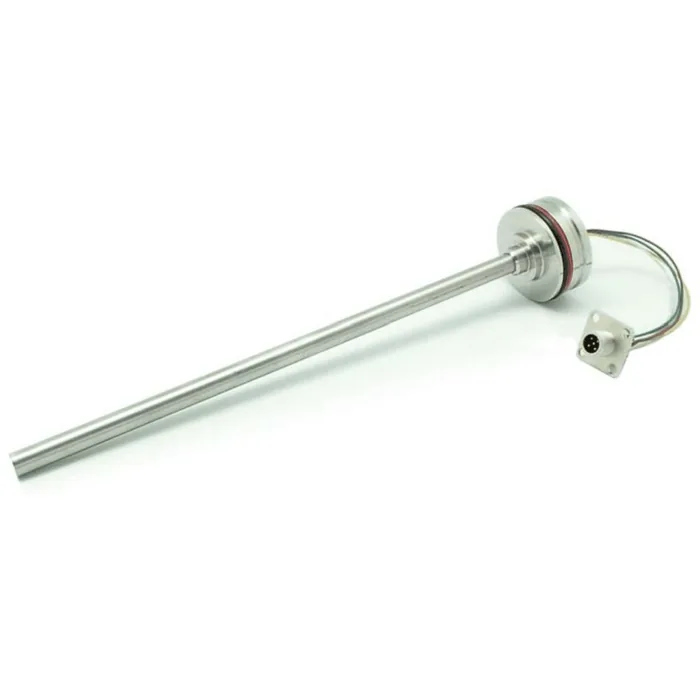
Another practical difference is protection capability. Germanjet magnetostrictive displacement sensors can provide IP65 / IP67 / IP68 / IP69K protection in several grades. The Series 13 mobile hydraulic type is aimed at severe duty such as construction machinery, with rated 25 g vibration resistance, 100 g shock resistance and protection to IP69K, able to withstand high-pressure hot-water wash-down. A contact resistive scale cannot work stably for long under the same wash-down and vibration conditions.
Comparison on key dimensions
| Dimension | Potentiometer-type resistive scale | Magnetostrictive displacement sensor |
|---|---|---|
| How the value is taken | Wiper sliding voltage divider, contact | Magnet ring and waveguide-wire magnetic coupling, non-contact |
| Main failure mechanism | Resistive-film wear, contact-resistance drift | Electronics ageing, cable fatigue, external mechanical damage |
| Life versus stroke count | Strongly related; the more frequent the reciprocation, the shorter | No direct wear correlation |
| Local high-frequency reciprocating section | Liable to “bad-spot” local jumps | Consistent over the whole stroke; no local degradation |
| Typical resolution | Limited by resistive film and downstream AD, depending on model | 1 / 2 / 5 / 10 / 20 / 50 / 100 μm steps optional |
| Repeatability | Degrades progressively with wear | Of the order of ±0.002 mm (better on short ranges), stable over life |
| Non-linearity | Depends on resistive-film process; large model-to-model difference | Typical <0.02% FS |
| Protection class | Commonly lower; fears water, oil and swarf | IP65 / 67 / 68 / 69K optional |
| Cylinder-integrated | Cannot be placed directly in a pressure-containing cavity | Can be cylinder-integrated; pressure rating by series: Series 16/16R is 350 bar working / 530 bar peak, Series 17/17EX is 350/600 bar, Series 19 in-cylinder is 300/600 bar |
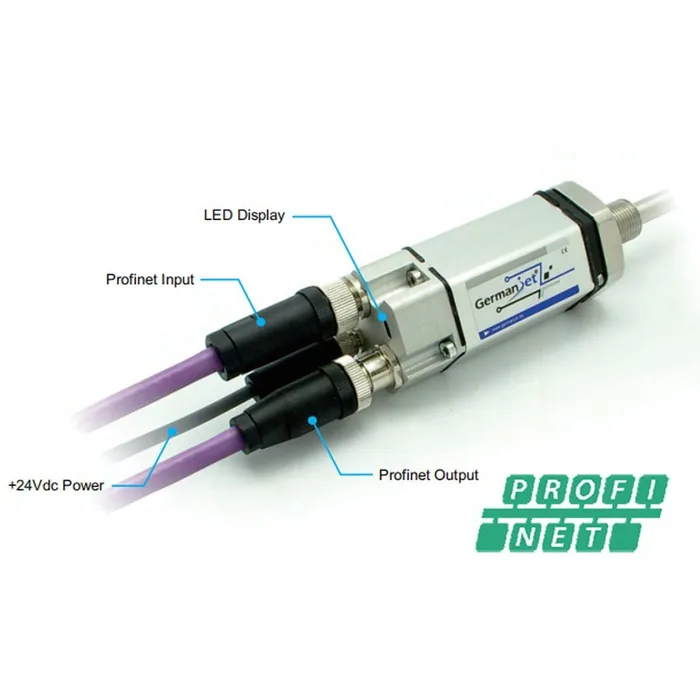
| Output form | Mainly divider voltage | 4-20 mA / 0-10 V / SSI / CANopen / EtherCAT / PROFINET etc. |
| Position held on power-down | Held (purely resistive divider) | Held (absolute position output) |
What makes up total cost of ownership (TCO)
Comparing purchase unit price alone produces a misleading conclusion. TCO of the displacement-sensing link should include at least the following six items, of which the last three on a continuous production line are often an order of magnitude above the first three:
- Purchase cost: sensor body + cable + connectors;
- Installation cost: bracket machining, boring, routing, calibration hours;
- Calibration and maintenance cost: hours for periodic recalibration; as a resistive scale wears, the calibration interval shortens, and this item rises year by year;
- Replacement-part cost: number of units to be replaced over life × unit price;
- Unplanned downtime loss: output value lost per hour of the line, usually the decisive item;
- Quality loss: out-of-tolerance product, scrap and rework from drifting position readings.
The judgement method is simple: estimate the machine’s annual reciprocation count and the required maintenance-free interval. If the resistive scale needs replacing more than once in that interval, plus the loss of one unplanned stop, the price difference is usually already wiped out. If a resistive scale needs replacement within the maintenance period plus one downtime visit, the price gap is usually gone. Conversely, if machine motion is low-frequency, stroke is short and shutdown for replacement is easy, a resistive scale is still a reasonable choice. This boundary is discussed specifically in Cost-sensitive selection: when a potentiometer is actually enough.
Aligning the interface when replacing a resistive scale
How much the control side must change when an existing machine replaces a resistive scale with magnetostrictive depends on the original signal form. If the original controller reads a divider voltage, the 0-10 V output of the Series 191 analog can connect directly, with the least change; if the original signal chain already suffers from interference, a 4-20 mA current loop or a digital fieldbus is recommended, with greater immunity margin. The trade-off is in 4-20 mA analog or CANopen fieldbus. If the mechanical side cannot conveniently change the cylinder, the Series 18 external type can be mounted in parallel; the conversion path is in Selecting for retrofit of existing plant: adding displacement sensing without touching the cylinder.
Practical tips for engineers
- IP65 means a 6.3 mm nozzle spraying water from any direction causes no harmful effect; IP67 means no harmful ingress when immersed at 1 m water depth.
- Contact-based sensor-type sensors are typically only IP40/50, whereas non-contact magnetostrictive types can reach IP65 or even IP67 — for high-dust, high-humidity environments, choose a non-contact type.
Frequently Asked Questions
Q: Why does a potentiometer-type resistive scale suddenly jump at a particular position?
Most often it is local wear of the resistive film. The machine reciprocates at high frequency over a small section of stroke for long periods; the wiper repeatedly grinds the same region; the resistance characteristic of that section leaves the original value, appearing as growing deviation or a jump near a particular position while the rest of the stroke is still normal — easily misdiagnosed as a controller fault.
Q: Is a magnetostrictive displacement sensor infinite-life?
No. Ageing of electronics-head components, cable flex fatigue, a loose magnet ring and external impact on the sensing rod will all cause failure. The difference is that these are random or installation factors not linearly related to stroke count, whereas wiper wear is a deterministic consumption tied directly to reciprocation count.
Q: Besides purchase price, what does total cost of ownership include?
At least purchase cost, installation cost, periodic calibration hours, replacement-part cost over life, unplanned downtime loss, and quality loss from drifting readings. On a continuous production line, downtime loss is often an order of magnitude above the price of the sensor itself.
Q: How much must the controller be changed when replacing a resistive scale with magnetostrictive?
It depends on the original signal form. If it originally read a divider voltage, a 0-10 V output can connect directly, with the least change. If the original signal chain suffers from interference, a 4-20 mA current loop or a digital fieldbus is recommended. If the mechanical side cannot conveniently change the cylinder, an external type can be mounted in parallel.
Related Products
Related Applications
Multi-Industry Application Cases for Magnetostrictive Displacement Sensors
View Details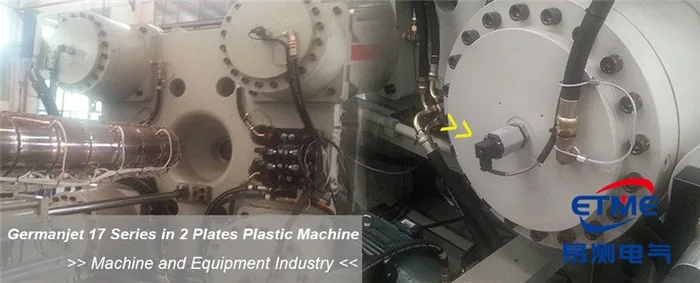
Series 17 Hydraulic Cylinder Integrated Magnetostrictive Displacement Sensor Application Cases
View Details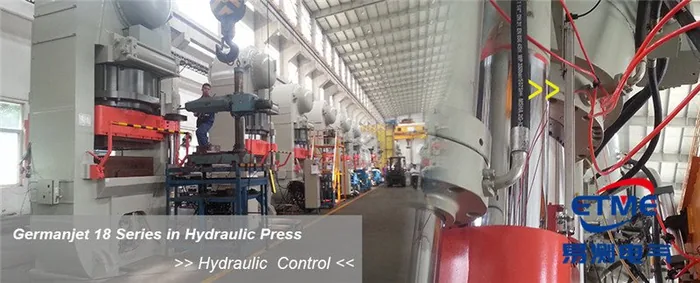
Series 18 Profile Magnetostrictive Displacement Sensor Application Cases
View Details