When Is a Potentiometer Enough, and When Must You Switch to a Magnetostrictive Displacement Sensor?
Not every position measurement must be magnetostrictive. Where motion is infrequent, stroke is short, the environment is clean, downtime is acceptable and the consequence of failure is slight, a potentiometer resistive scale (linear potentiometer) remains a reasonable and economical choice. The criterion is not “how expensive the machine is” but four boundaries: whether the number of strokes puts brush wear into a predictable replacement cycle; whether oil, water, dust and vibration are present; how long a replacement takes and what it costs in downtime; and whether a drifting or jumping reading would cause a safety or quality incident. If any of the four is crossed, the price difference is no longer the decision basis. A comparison of mechanism and failure modes is in Magnetostrictive vs. Potentiometer / Resistive Scale: Life, Failure Modes and Total Cost of Ownership.
Five situations in which a potentiometer is still sufficient
- Low-frequency motion: adjustment mechanisms that cycle only a limited number of times per day, such as manual/semi-automatic opening adjustment, mould-height setting and manual roll-gap trim. Brush wear rate is directly related to stroke count, so low frequency means long life.
- Short-stroke indicating applications: the operator only needs a position indication or coarse feedback, not closed-loop control, and the allowance is loose.
- Clean, room-temperature indoor machines: no oil mist, no wash-down, no dust, stable temperature, and seals under no extra stress.
- Non-critical axes that are easy to stop and replace: planned downtime is possible, the sensor is exposed, replacement takes only a few minutes, and no complex calibration is needed.
- Prototype and proving stages: the scheme is not yet frozen and the stroke may change; a low-cost solution is used first to prove the logic, then the type is frozen for series production.
Red lines against using a potentiometer
- Participation in a safety interlock or safety function: contact sensing has a risk of momentary lift-off, and an output spike may be taken by the controller as a true position; safety-related duty should consider a redundant scheme — see What Is Redundant Output? The Story Behind Dual-Channel Safety Design and Series 16R redundant in-cylinder.
- Need to be built into a pressurised oil chamber: a resistive scale cannot be placed inside a hydraulic cylinder; in-cylinder duty can only be magnetostrictive, with pressure rating by series: Series 16/16R is 350 bar working / 530 bar peak, Series 17/17EX is 350/600 bar, Series 19 in-cylinder is 300/600 bar — see High-Pressure Cylinder Selection.
- Wash-down, immersion, dust or oil mist: foreign matter cannot be tolerated between the resistive track and the brush; such duty needs IP65 / 67 / 68 / 69K protection — see IP65/67/68/69K Is Not a Numbers Game.
- High-frequency reciprocation or local dither: repeated grinding on the same short section of stroke forms a local dead spot, seen as a sudden jump at a particular position.
- Vibration and shock: the brush may bounce off momentarily; such duty can use Series 13 mobile hydraulics, rated 25 g vibration and 100 g shock.
- μm-level closed loop: the repeatability of a contact scheme degrades with wear and cannot be held long-term; the method is in High-Accuracy Applications.
Boundary decision table
| Decision item | Potentiometer may be considered | Change to magnetostrictive |
|---|---|---|
| Motion frequency | Low frequency, intermittent | High-frequency reciprocation, continuous production |
| Local dither | None | Repeated adjustment on a short section of stroke |
| Environment | Clean, room temperature, indoor | Oil mist, dust, wash-down, outdoor |
| Vibration and shock | Essentially none | Reversing shock or whole-machine vibration present |
| Mounting location | Exposed, quick to replace | In-cylinder or hard to reach |
| Control role | Indication, coarse adjustment | Closed-loop positioning, synchronised control |
| Consequence of failure | Can be stopped and handled; no safety effect | Affects safety or quality, or causes unplanned downtime |
| Accuracy requirement | Loose | Needs repeatability of the order of ±0.002 mm |
| Stroke | Short stroke | Long stroke (still to be met after % FS conversion) |
| Life expectation | Periodic replacement acceptable | Maintenance-free over the machine life |
How to calculate the cost turning point
A complicated model is unnecessary; three numbers decide it:
- Expected number of replacements = number of strokes over the machine life ÷ strokes the resistive scale can tolerate (obtain the latter as the rated value of that model from the supplier; it varies widely by process);
- Total cost of one replacement = spare price + labour + downtime × lost output per unit time;
- Compare: expected number of replacements × total cost of one replacement + cumulative calibration labour vs. the price difference of a one-off non-contact scheme.
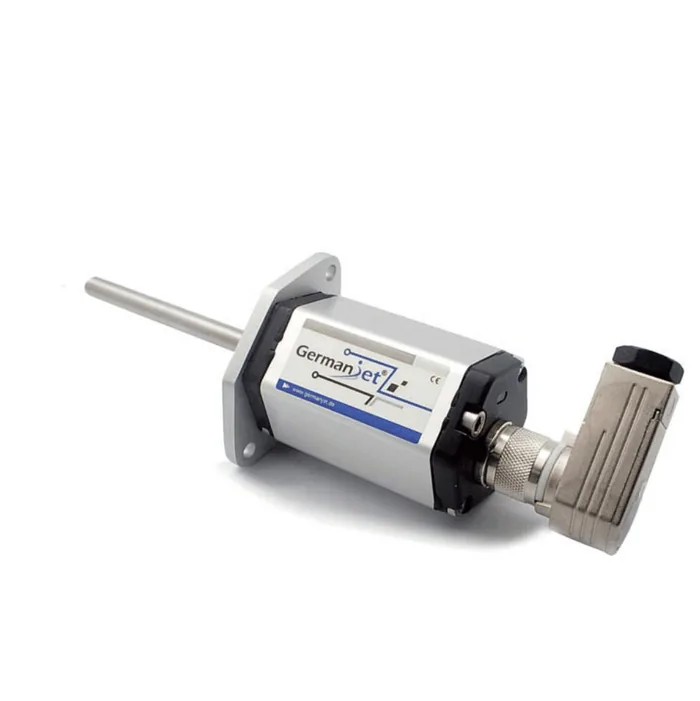
On a continuous production line, the downtime loss in item 2 usually decides the issue: a single unplanned stop often wipes out the price difference. Conversely, on low-frequency, planned-downtime duty the economics of a resistive scale do hold. If an upgrade is decided but the cylinder is not to be altered, take the external retrofit path in Retrofitting Legacy Equipment: Adding Position Measurement Without Touching the Cylinder; products include Series 18 external.
Compromise practices when the budget is limited
- Tiered fitment: magnetostrictive on critical axes, resistive scales retained on auxiliary/indicating axes, so the budget is spent where quality and safety are affected;
- Compress the range rather than drop the grade: a short-range model has a smaller % FS absolute error, so the smallest feasible range is better value than a coarser step; the calculation is in Practical Selection Calculations;
- Choose an adequate resolution step: among 1 / 2 / 5 / 10 / 20 / 50 / 100 μm, take the step that meets the control allowance; an excessively fine step brings no gain and amplifies noise;
- Keep the interface simple: with no fieldbus need use an analog scheme (Series 191 analog) or general-purpose Series 12; output selection is in Selecting a Magnetostrictive Displacement Sensor: 4-20 mA Analog or CANopen Fieldbus?;
- Supply-side trade-off: combined evaluation of specification, lead time and service is in Displacement Sensor Parameters Explained.
Frequently Asked Questions
Q: In which situations is a potentiometer resistive scale still sufficient?
Five: low-frequency adjustment mechanisms with a limited number of cycles per day; short-stroke applications used only as a position indication, not in a closed loop; clean, room-temperature indoor machines with no oil mist, wash-down or dust; non-critical axes that can be stopped to plan and replaced in a few minutes; prototype proving stages before the scheme is frozen.
Q: In which situations must a potentiometer never be used?
Six red lines: participation in a safety interlock or safety function; need to be built into a pressurised oil chamber; wash-down, immersion, dust or oil mist on site; high-frequency reciprocation or local dither on a short section of stroke; vibration and shock; a micrometre-level closed loop that must hold repeatability long-term.
Q: How is the cost turning point estimated?
Three numbers: expected number of replacements equals strokes over the machine life divided by the strokes that model can tolerate; total cost of one replacement equals spare price plus labour plus downtime times lost output per unit time; compare that product plus cumulative calibration labour with the price difference of a one-off non-contact scheme.
Q: How can I compromise when the budget is limited but the duty is severe?
Tier the fitment: magnetostrictive on critical axes, resistive scales retained on auxiliary indicating axes; compress the range rather than drop the grade, because a short range has a smaller % FS absolute error; take a resolution step that meets the control allowance; use an analog scheme to cut cost when there is no fieldbus need.
Related Products
Related Applications
Multi-Industry Application Cases for Magnetostrictive Displacement Sensors
View Details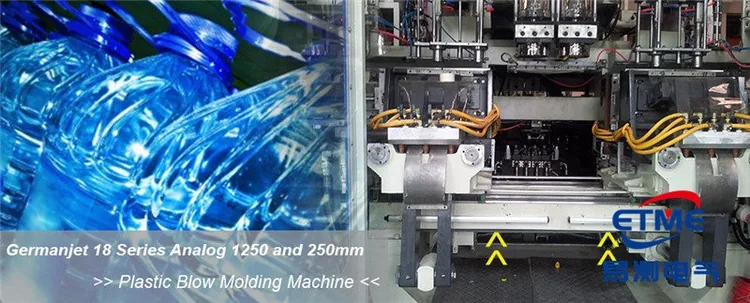
Series 12 General-Purpose Magnetostrictive Displacement Sensor Application Cases
View Details
Series 18 Profile Magnetostrictive Displacement Sensor Application Cases
View Details