High-Temperature Duty on a Magnetostrictive Displacement Sensor: Oil and Air Are Separate Limits
In high-temperature duty, either temperature over spec fails; never average the two. Selecting a magnetostrictive displacement sensor must satisfy two independent temperature constraints at the same time: the oil (medium) temperature seen by the immersed rod, and the ambient temperature at the electronics head. Neither can substitute for the other, nor may they be averaged — exceeding either specification will cause failure or a drop in performance. In practice the electronics head fails more often than the rod: the cylinder base is often next to a heat source, poorly ventilated and additionally loaded by radiant heat, so the measured temperature can be far above shop temperature. This article covers identifying temperature sources, reading the ratings, remote-electronics solutions and installation measures. The magnitude of temperature effects on the measurement itself, warm-up thermal equilibrium and the correct moment to set zero are in Do Sensors Need Warm-Up? Self-Heating, Thermal Equilibrium and the Real Magnitude of Temperature Effects.
Distinguish three temperatures first
- Medium temperature: the temperature of the hydraulic oil, emulsion or other working medium, acting on the immersed rod and the pressure seals. Oil temperature in metallurgy, die casting and rubber vulcanising is often high for long periods.
- Ambient temperature: the air temperature around the electronics head. Measure it under full-load continuous running, not from the shop design temperature. Local temperature at the cylinder base, near a mould or in front of a furnace can be markedly higher than the shop average.
- Radiant heat: radiation from a furnace, mould or hot billet onto the electronics head does not show up in air temperature, yet it raises the housing temperature in a very real way. An infrared thermometer on the electronics-head housing is more reliable than the shop thermometer.
Operating temperature and storage temperature on the datasheet are two different ratings and must not be mixed; the distinction is in Operating Temperature vs. Storage Temperature: How to Read Sensor Temperature Ratings Without Getting Burned.
How temperature affects measuring performance
Temperature affects not only reliability but also accuracy. Three paths: first, the sonic velocity in the waveguide material changes with temperature, which directly changes the time-to-distance conversion coefficient and appears as span-gain drift; second, thermal expansion of the rod and the measured mechanism shifts the mechanical zero; third, thermal drift of the electronics-head circuitry affects timing and analog output. Actual accuracy in high-temperature duty is therefore usually below the room-temperature rating; keep a margin in the accuracy budget. If the process allowance is already tight, a further on-site calibration after the working temperature has stabilised is recommended; calibration and linearisation are covered in Factory Calibration and Linearisation.
Responses to four high-temperature situations
| Situation | Main constraint | Recommended practice | Notes |
|---|---|---|---|
| High oil temperature, normal ambient | Medium temperature | Select a standard in-cylinder type on medium temperature; check the temperature rating | Confirm seal compatibility with the medium |
| High ambient, normal oil temperature | Electronics-head heat dissipation | Add a heat shield, re-orient the electronics head, forced-air cooling | The heat shield must not be sealed; leave a convection path |
| Both oil and ambient high | The two combined | Use a split type and move the electronics head out of the hot zone | Select the interconnecting cable by temperature class |
| Strong radiant heat | Radiant heating of the housing | Add a reflective heat shield + spatial separation | Recheck actual housing temperature with infrared |
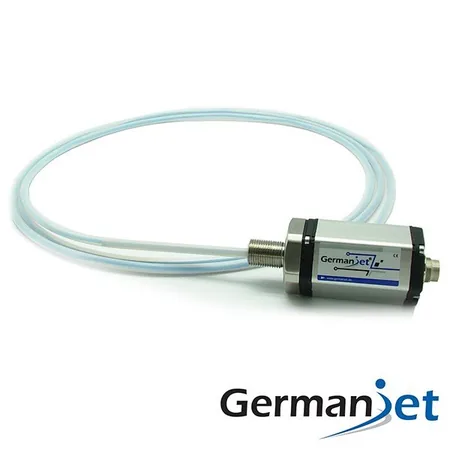
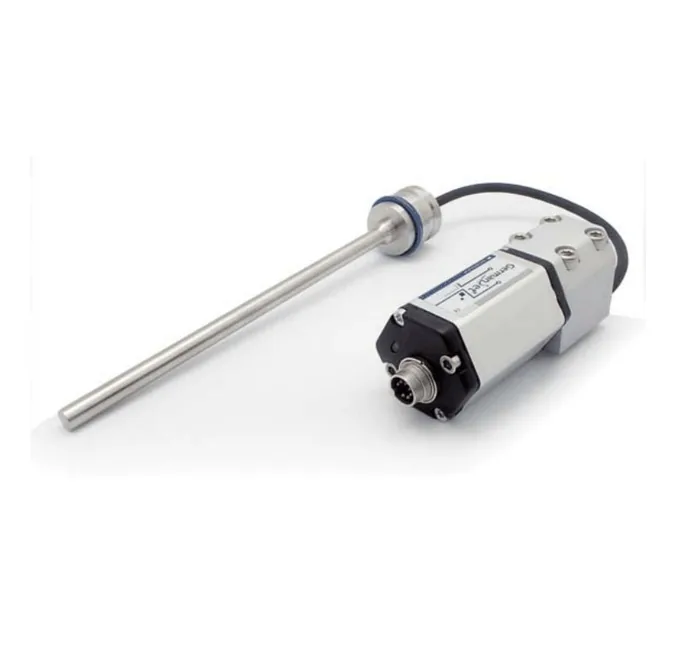
The most direct solution when both temperatures are high is the split type: the rod stays in the hot zone and the electronics head is mounted, via a cable, in a temperature-controlled location; see Series 19D split type. A 19D split type moves the head to a controlled spot via a heat-rated cable away from the source. On split mounting, watch the cable’s own temperature rating, keep the routing off heat sources, and secure the connection against pull-out.
Installation and accompanying measures
- Heat insulation and shielding: place a metal heat shield between the electronics head and the heat source, with an air gap between shield and head; do not press the electronics head directly onto a hot cylinder body.
- Heat-dissipation path: do not enclose the electronics head in a sealed guard box — the temperature inside a sealed box can be higher than outside; if a box is required, provide ventilation or cooling.
- Cable selection: rate the cable on the hottest point along its run, not on the electronics-head location; a heat-resistant conduit may be added on the section nearest the heat source.
- Connector seals: high temperature accelerates seal ageing; include M12 and similar connector seals in the inspection list, see Selecting Waterproof M12 Connectors and Maintaining Seals.
- Oil-temperature control: persistently high oil temperature is itself a hydraulic-system problem; adding a cooler protects the sensor as well as the oil seals and the fluid. Background is in Why Choose Magnetostrictive Sensing for Hydraulic Cylinder Position Control.
Further on-site installation detail is in Installing in High Temperatures: Blocking Radiation, Dissipating Heat, Split Mounting and Cable Selection. If the hot zone is also a hazardous area (chemical, oil and gas), temperature class and explosion-protection type must be checked together; intrinsically safe models are in Series 17EX intrinsically safe, and zone mapping is in 17EX Intrinsic Safety Explained. For high temperature plus vibration on mobile machinery, consider Series 13 mobile hydraulics (IP69K, 25 g vibration, 100 g shock).
Selection check-list
- Measured oil temperature (maximum duty, not the average);
- Measured ambient at the electronics head (after 2 hours of full-load continuous running);
- Infrared check of electronics-head housing temperature to confirm radiant-heat effect;
- Compare with the datasheet operating temperature (not storage temperature);
- If either item approaches the limit, consider a split type at once rather than “watching it further”;
- Allow for the accuracy margin at high temperature; recalibrate in the hot state if necessary;
- Fix cable temperature rating, connector seals, heat shielding and ventilation in the same step.
Frequently Asked Questions
Q: Why is it usually the electronics head that fails first in high-temperature duty?
The cylinder base is typically next to a heat source, poorly ventilated, and additionally loaded by radiant heat from a furnace or mould, so the measured temperature can be far above shop temperature. Radiant heat does not show in air temperature yet raises the housing temperature; an infrared thermometer on the electronics-head housing is more reliable than the shop thermometer.
Q: Does temperature affect measuring accuracy?
Yes, by three paths: sonic velocity in the waveguide changes with temperature and alters the time-to-distance conversion coefficient, appearing as span-gain drift; thermal expansion of the rod and the measured mechanism shifts the mechanical zero; thermal drift of the electronics-head circuitry affects timing and analog output. Actual accuracy at high temperature is usually below the room-temperature rating.
Q: What if both oil temperature and ambient temperature are high?
Use a split-type solution: the rod stays in the hot zone and the electronics head is mounted, via a cable, in a temperature-controlled location. On split mounting, watch the cable’s own temperature rating, keep the routing off heat sources, and secure the connection against pull-out.
Q: When should calibration be done in high-temperature duty?
Hot-state calibration is better than cold-state. Setting zero and span after the machine has warmed to process temperature and stabilised is closer to actual running conditions than calibrating at start-up. Record electronics-head housing temperature and the zero reading once a quarter; a slowly drifting zero is usually an early sign of thermal ageing.
Related Products
Related Applications

Multi-Industry Application Cases for Magnetostrictive Displacement Sensors
View Details
Series 17 Hydraulic Cylinder Integrated Magnetostrictive Displacement Sensor Application Cases
View Details
Series 19D Split-Type Process Displacement Sensor Application Cases
View Details