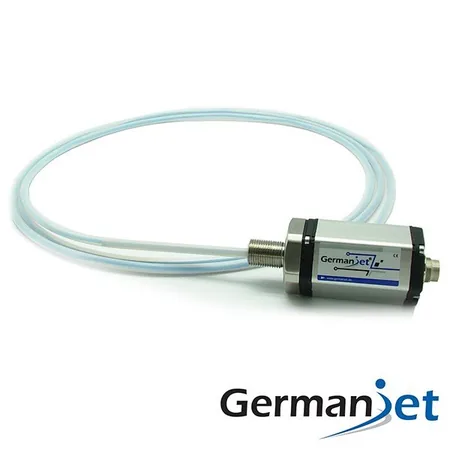
Operating vs Storage Temperature for a Magnetostrictive Displacement Sensor: Read the Ratings Right
On a datasheet, "operating temperature" and "storage temperature" are different concepts; treating them as one will catch you out in high-temperature duty. Operating temperature is the ambient range in which the sensor can measure normally; storage temperature is only the range in which the device will not be damaged while powered off, and is usually wider. Taking storage temperature as operating temperature is a common cause of failure on high-temperature sites.
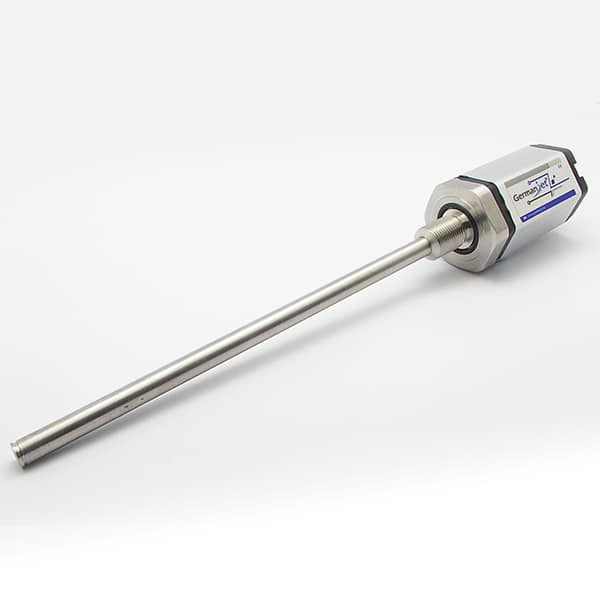
Operating temperature: the range in which measurement is normal
Within this range the sensor guarantees stated accuracy and stable output. Beyond it, electronics may drift, waveguide speed of sound may change more severely, and measuring accuracy falls or the unit fails. Note: the temperature ratings of the electronics head and of the rod (waveguide) are often different — the electronics head contains circuitry and has a narrower rating; the rod sits in oil and can take a higher medium temperature.
Storage temperature: storage only, not working
This is the temperature range in which the device will not suffer permanent damage while stored unpowered. It is wider, but in no way means the unit can work normally at that temperature. For example a model may have a storage temperature of −40 to +100°C and an operating temperature of only −20 to +75°C.
Operating temperature vs. storage temperature
| Item | Meaning | Range character | Use in selection |
|---|---|---|---|
| Operating temperature | Can measure normally | Narrower (electronics head / rod separately) | Basis for actual duty |
| Storage temperature | Stored without damage | Wider | Transport / stock reference |
Why it is easy to get this wrong
- Looking only at the storage-temperature upper limit and using the sensor in oil far above operating temperature, so the reading drifts;
- Ignoring the different ratings of electronics head and rod, so the electronics-head end exceeds its limit;
- Not choosing a high-temperature model or providing cooling when oil is hot (see high-temperature installation).
The practical magnitude of temperature effects is in sensor warm-up and thermal equilibrium; selection for high-temperature environments is in selection for high-temperature environments; temperature constraints on intrinsically safe models are covered by the Series 17EX intrinsically safe explosion-protected range. Bus-related temperature is in the calibration temperatures of each model in connecting to a fieldbus.
Frequently Asked Questions
Q: Are operating temperature and storage temperature the same?
No. Operating temperature is stricter; the storage-temperature range is wider.
Q: What if oil temperature exceeds operating temperature?
Choose a high-temperature-rated model, or provide cooling/thermal isolation.
Q: Do the electronics head and the rod have different ranges?
Yes. The electronics head has a narrower temperature rating; the rod can take a higher medium temperature.
Related Products
Related Applications

Multi-Industry Application Cases for Magnetostrictive Displacement Sensors
View Details
Series 17 Hydraulic Cylinder Integrated Magnetostrictive Displacement Sensor Application Cases
View Details
Series 19D Split-Type Process Displacement Sensor Application Cases
View Details