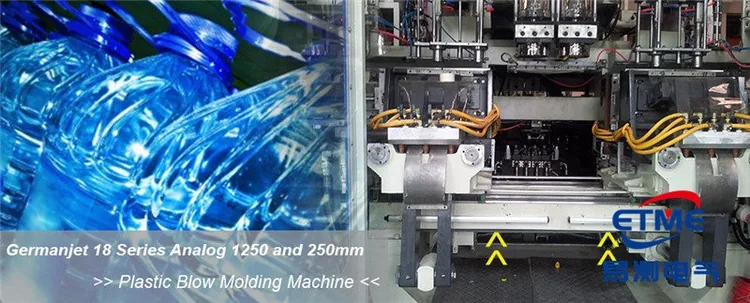
Maintenance-Free Life of a Magnetostrictive Displacement Sensor: The Hidden Green Benefit Beyond Watts
The green benefit of a magnetostrictive displacement sensor is not its low current draw; it is the avoided line stops of a non-contact, wear-free design. Discussing displacement sensors under green manufacturing easily walks into a misconception: focusing on the sensor's own power consumption. In fact a single displacement sensor's electricity use is a very small share of machine energy. Its real effect on energy and resource consumption comes from the downtime, scrap and replacements it lets the machine avoid. Magnetostrictive measurement is non-contact: there is no mechanical contact and no sliding wear between the position magnet and the waveguide. The maintenance-free character of that structure is the hidden return worth quantifying in a green-manufacturing context. This article sorts the sources and boundaries of those returns into accountable and unaccountable kinds.
Return source 1: scrap reduction from closed-loop accuracy
Scrap is the most direct resource waste in manufacturing — material, electricity and labour lost in one go. Consistency of the position closed loop directly determines product consistency: a measurement level of typical repeatability ±0.002 mm and typical non-linearity <0.02%FS means that positioning error is no longer the main error source. On hydraulic-press equipment, for example, more consistent stroke can reduce rework caused by over-pressure or under-pressure. The technical logic is in why choose magnetostrictive sensing for hydraulic-cylinder position control; how to read the figures is in the difference among resolution, repeatability and non-linearity. Note that the size of any scrap-rate improvement depends heavily on the process itself; a universal number should not be given.
Return source 2: maintenance-free operation from a non-contact structure
Contact-based schemes (for example a resistive contact scale) take the value from a sliding contact. Wear between the contact and the resistive track is inevitable, and life is constrained by the number of strokes. After wear, the appearance is a local jump or reading drift, and usually only a complete replacement will do. Non-contact measurement has no such mechanism, so the replacement interval differs clearly under high-frequency reciprocating duty. No wiper to wear and no cable to fatigue means fewer service spares, which matters more than the unit’s own energy bill. Life-cycle cost is compared in magnetostrictive vs. contact-based resistive scale: life and total cost of ownership. Be objective, though — in low-frequency, short-stroke, cost-sensitive applications a contact-based resistive sensor remains a reasonable choice; see cost-sensitive selection: when a contact-based sensor is good enough.
Composition of the hidden returns compared
| Return item | Mechanism | Accountability | What influences it |
|---|---|---|---|
| Less scrap and rework | Improved position consistency | Higher (scrap rate can be compared) | The process's own tolerance demand |
| Less unplanned downtime | No sliding wear; status can be diagnosed | Higher (downtime hours can be compared) | Severity of duty, installation quality |
| Lower spare consumption | Longer replacement interval | Medium (needs long-term statistics) | Reciprocating frequency, temperature, contamination |
| Less commissioning and calibration labour | Absolute position needs no homing; parameters can be written remotely | Medium | Whether fieldbus / IO-Link is used |
| The sensor's own power consumption | Device working current | High but a very small share | Quantity, interface type |
The last row restates the judgement at the start of this article: putting the green return on sensor power consumption is the wrong direction. The real leverage is downtime and scrap.
Return source 3: idle energy saved by not homing
An incremental scheme must execute a homing move after every power-loss recovery. On multi-axis, long-stroke machines, homing itself consumes electricity, hydraulic work and time. Magnetostrictive output is absolute position, read on power-up, with no homing move and no reference-point switch. On a line with frequent short stops this is a continuing saving. The mechanism is in absolute vs. incremental position: why zero is not lost on power-down.
The relationship between reliability design and resource efficiency
On critical machines whose downtime cost is high, redundant design appears to add hardware, yet from a resource viewpoint it avoids the batch scrap and restart energy of an unplanned whole-line stop. The technical background of a dual-channel structure is in what redundant output is: the story behind dual-channel safety design; the on-site comparison method is in redundant installation: how to compare two sensors. Using status data for planned maintenance rather than after-the-fact repair is also a path to less resource waste; the method is in predictive maintenance: spotting equipment degradation in position data.
On-site practices that extend life
Maintenance-free is a structural property, not an unconditional promise. Actual life is still affected by installation quality and duty: oil contamination accelerates deterioration of the environment around a cylinder-integrated rod; see hydraulic oil cleanliness and filter management: the key to long rod life. High-temperature duty must be selected within the rated boundary; see high-temperature selection. Outdoor and wash-down applications should check the protection rating; see what IP65/67/68/69K really mean.
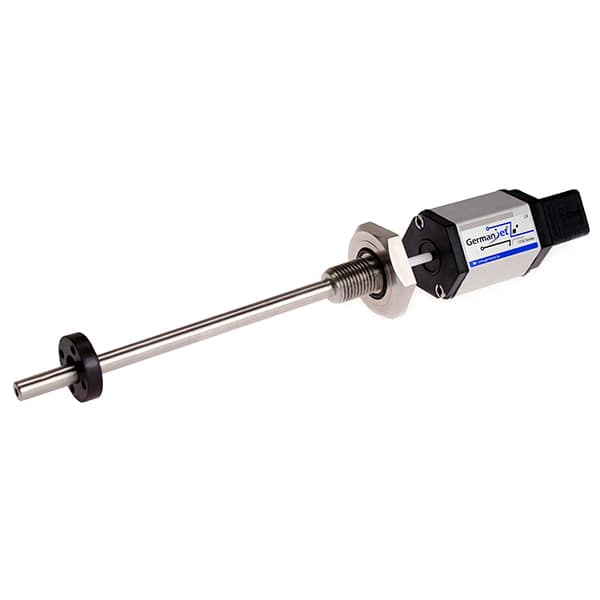
On the product side, long-running, high-reciprocating-frequency hydraulic machines commonly use the Series 16 cylinder-integrated and the Series 17 hydraulic-cylinder integrated; mobile and outdoor duty more often uses the Series 13 mobile hydraulics; where downtime cost is high, the 16R redundant cylinder-integrated can be used. Technical support and spare-parts service in China are provided by Shenzhen Yice Electric Co., Ltd. (authorised distributor).
Frequently Asked Questions
Q: Does a displacement sensor have a large effect on machine energy consumption?
A single sensor's electricity use is a very small share of machine energy; the direct energy-saving meaning is limited. The real leverage is less unplanned downtime and scrap: the energy and resource loss of one batch scrap or a whole-line restart far exceeds the sensor's own electricity use over its life.
Q: Why is non-contact measurement considered more resource-efficient?
There is no mechanical contact between the position magnet and the waveguide, and none of the inevitable sliding-contact wear of a potentiometer. Under high-frequency reciprocating duty the replacement interval differs clearly, so spare consumption and replacement downtime fall. This is a structural property, not an unconditional promise; life is still affected by installation quality and duty.
Q: How much can absolute position without homing save?
A universal number should not be given. The mechanism is clear: an incremental scheme must execute homing after every power-loss recovery, consuming electricity, hydraulic work and cycle time; absolute position is read on power-up with no reference-point switch. On a line with frequent short stops this is a continuing saving; the size depends on stop frequency and stroke length.
Q: How should the real return of changing a measuring scheme be accounted?
Change the basis from sensor unit price to comprehensive cost per thousand running hours, including spares, downtime labour and scrap loss. Run a controlled comparison: when changing the scheme, do not change other process parameters at the same time, or attribution is impossible.
Related Products
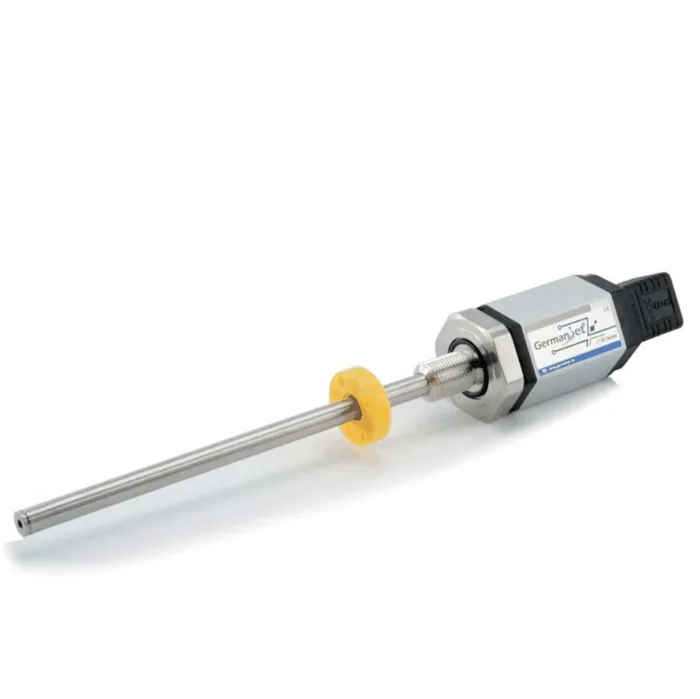
Series 17 Hydraulic Cylinder Integrated
View Product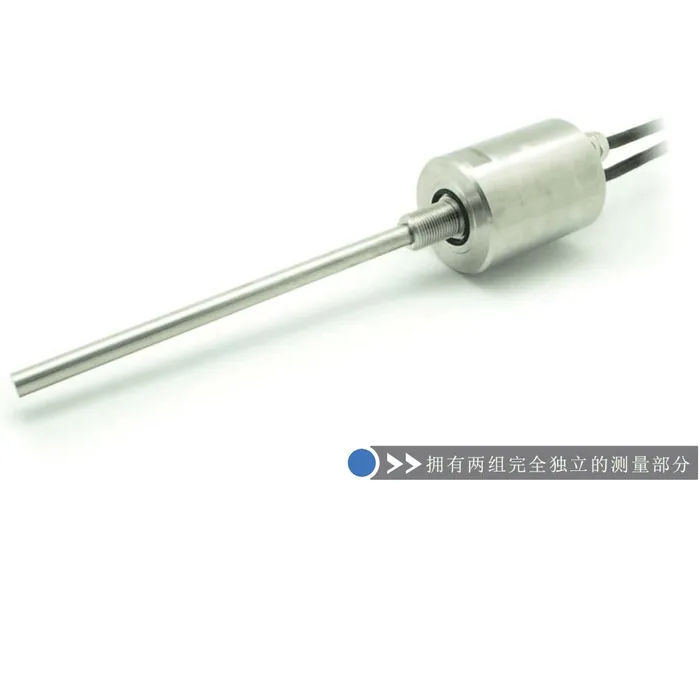
Series 16R Redundant Design Built-in
View Product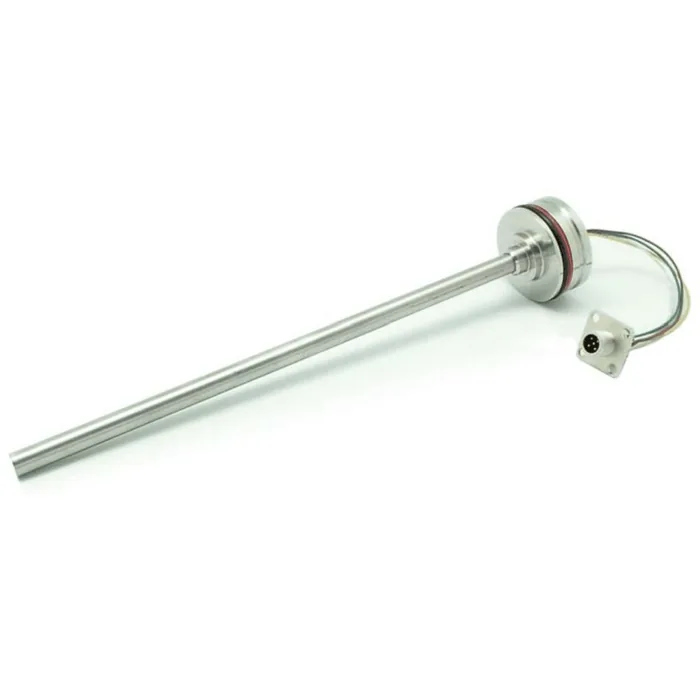
Series 13 Mobile Hydraulic
View Product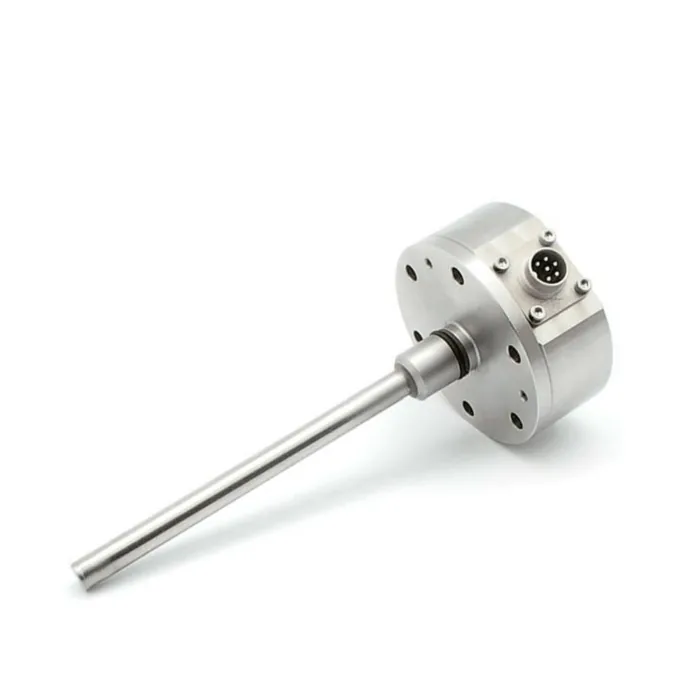
Series 16 Hydraulic Cylinder Built-in
View ProductRelated Applications
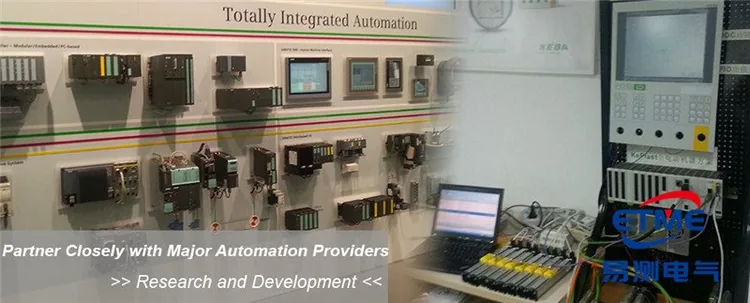
Multi-Industry Application Cases for Magnetostrictive Displacement Sensors
View Details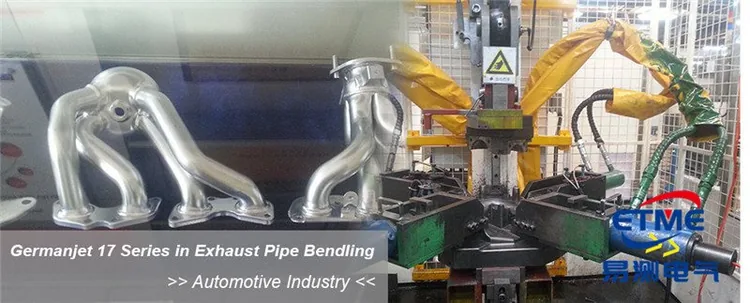
Series 16 Hydraulic Rod Magnetostrictive Displacement Sensor Application Cases
View Details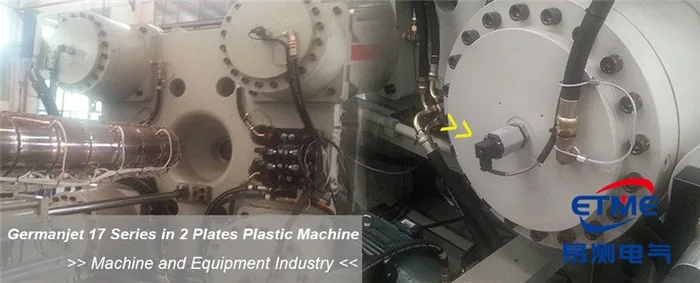
Series 17 Hydraulic Cylinder Integrated Magnetostrictive Displacement Sensor Application Cases
View Details