
Magnetostrictive Displacement Sensor Principle: Open vs Closed Magnet Ring
A magnetostrictive displacement sensor measures position with a rod, a magnet ring and a timer. Understand the timing principle and you understand why it is precise, and why the magnet ring matters so much. This article explains the working principle with diagrams, then the open-ring versus closed-ring choice.
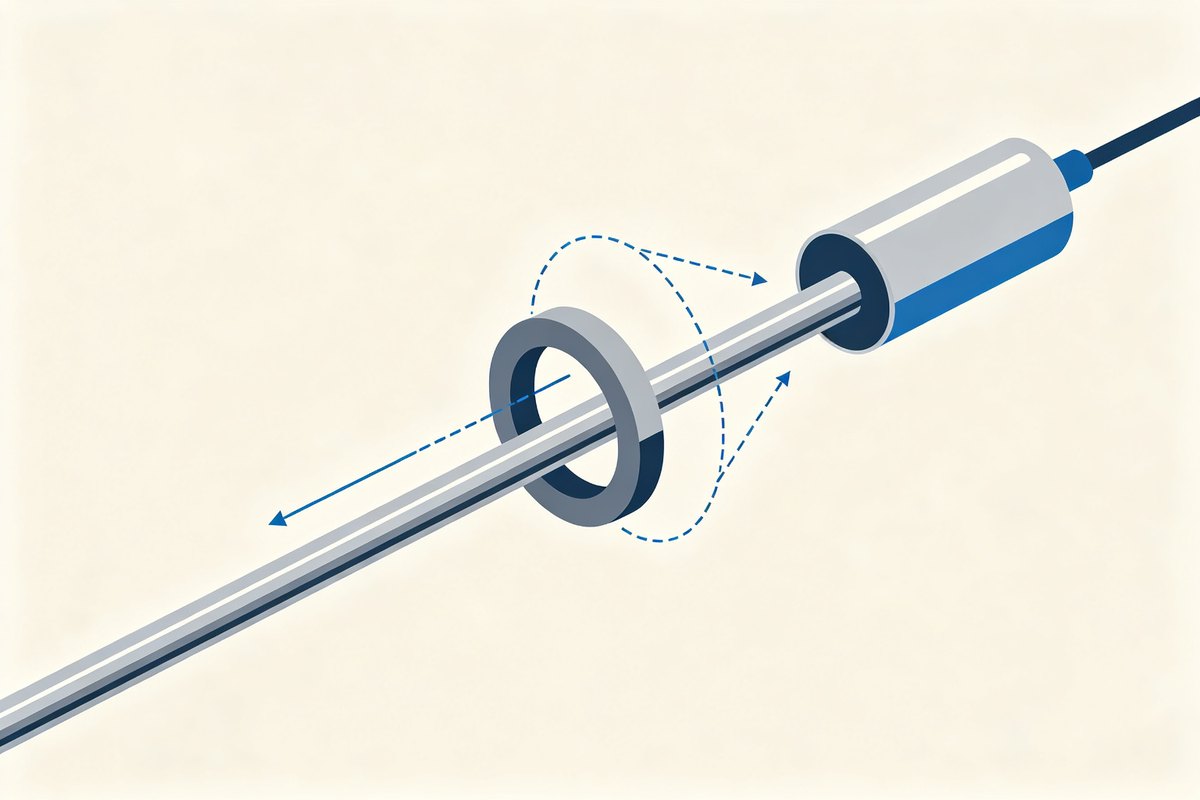
How it works: one rod, one ring, one timing
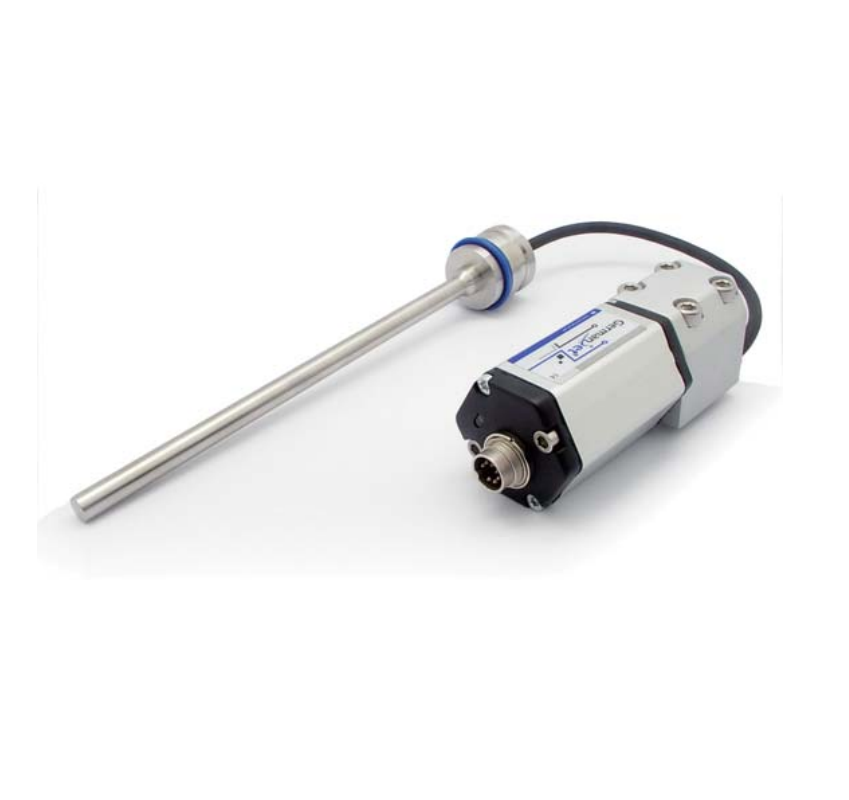
The electronics head sends an electrical pulse along a waveguide inside the rod. Where the pulse meets the magnetic field of the magnet ring, a torsional wave is generated and returns to the head. The head measures the time between pulse out and echo back, and converts that time into distance. Half the round-trip time, multiplied by the wave speed inside the tube, is the distance from the ring to the head. Faster and more consistent timing means a more precise position — that is the whole accuracy story. Germanjet times to the nanosecond and compensates for temperature, which is why the magnetostrictive principle is the one behind high-precision displacement sensors.
Accuracy and the magnet
- Resolution and repeatability depend on the timing electronics and on a clean, consistent magnetic field from the ring.
- The ring must sit centred on the rod, with the rod passing through it, and must not wobble as it travels.
- Ferrous debris stuck on the rod distorts the field and shows up as local inaccuracy — keep the rod clean.
- Do not place strong magnets or large steel masses near the measuring zone.
Open ring versus closed ring
Why do you have to distinguish open and closed rings? The two forms suit different mounting situations:
- Open (C-shaped) ring — can be clipped onto the rod at any position, so it is easy to retrofit and to adjust on site. Use it for external mounting where you want to set or move the reference later.
- Closed ring — is threaded or slid on before assembly, and cannot be removed without taking the rod apart. It is more robust against shock and is the usual choice for in-cylinder mounting.
One-line summary
Magnetostrictive measures by timing a pulse against a magnet ring: the cleaner the field and the steadier the ring, the better the position. Pick the ring form by how the sensor is mounted — open for external retrofit, closed for in-cylinder.
For the mounting that follows the ring choice, see installation and commissioning. For a full working example inside a hydraulic cylinder, see hydraulic cylinder displacement sensor guide.
Frequently Asked Questions
Q: Open ring or closed ring?
Open (C-shaped) clips onto the rod for external retrofit and on-site adjustment; closed ring slides on before assembly and is more robust — the usual in-cylinder choice.
Q: Why does the ring affect accuracy?
The position is timed against the ring's magnetic field. A wobbling ring or ferrous debris on the rod distorts the field and degrades local accuracy.
Related Products
Related Applications
Multi-Industry Application Cases for Magnetostrictive Displacement Sensors
View Details
Series 18 Profile Magnetostrictive Displacement Sensor Application Cases
View Details
Series 19D Split-Type Process Displacement Sensor Application Cases
View Details