
Level Gauge Guide Tube: Cleaning Intervals and Aging Signs
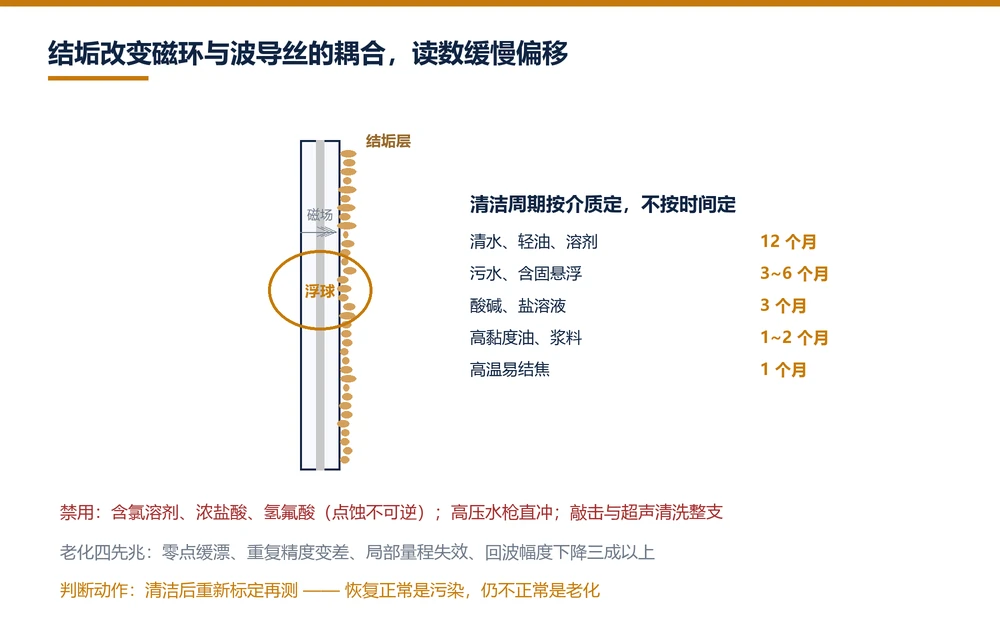
The waveguide wire is sealed inside a stainless tube, which leads many users to assume nothing needs maintaining. In service, a level gauge guide tube sits immersed in the medium, and its outer surface collects scale, crystals and polymer build-up. None of this alters the wire itself, but it changes the coupling between float magnet and waveguide, so the level reading drifts slowly and drifts more at low level than at high level.
Two products, two kinds of fouling
A level gauge guide tube is immersed. Fouling appears on the outside as scale, crystallisation, build-up and corrosion. The more viscous the medium, the higher the temperature and the greater the solids content, the faster it accumulates.
A displacement sensor rod sits in air. The outer surface collects dust and oil mist, common in machining, casting and injection moulding shops. Impact is much smaller, because the sliding magnet wipes the rod as it travels. Problems appear only when deposits harden into a shell.
Maintenance rhythm differs accordingly: level gauges need periodic inspection, displacement sensors usually need one wipe during annual shutdown.
Set the interval by medium, not by calendar
| Medium | Typical deposit | Inspection interval |
|---|---|---|
| Clean water, light oil, solvent | Minimal | 12 months |
| Waste water, suspended solids | Silt, biofilm | 3 to 6 months |
| Acid, alkaline, brine | Crystals, pitting | 3 months |
| Heavy oil, syrup, slurry | Thick build-up | 1 to 2 months |
| High temperature, coking | Hard coke layer | 1 month, or per batch shutdown |
Intervals should be derived rather than guessed. Record the zero-level reading before and after each cleaning. When the shift reaches three times the rated accuracy, halve the interval. Two cycles establish a working rhythm for that site.
Cleaning methods and prohibitions
Mechanical cleaning first. Soft brush, soft cloth or plastic scraper with water or a neutral detergent. Work along the tube axis; never lever sideways, since the tube wall is thin and a bend writes off the assembly.
Chemical cleaning depends on the alloy. 316L resists most neutral detergents, but chlorinated solvents, concentrated hydrochloric acid and hydrofluoric acid must never be used: they cause pitting and stress corrosion cracking, which are irreversible. Alkaline cleaners work for oil removal provided concentration and temperature are controlled, and the tube is rinsed and dried afterwards.
Never use a pressure washer at close range. Flange seals and cable entries are not designed for it; water ingress shows up weeks later as falling insulation resistance and a drifting reading.
Never strike the assembly or clean it ultrasonically. The wire is a tensioned filament; both actions change tension, which changes sound velocity and offsets every reading.
Four signs of aging
Slow zero drift. After fouling is ruled out, a zero that moves by millimetres per month points to relaxation of wire tension.
Repeatability loss. Several measurements at the same level spread wider than before. Both fouling and tension relaxation cause this; if it persists after cleaning, it is aging.
Local failure. The reading becomes unstable over one section of level while the rest is fine. That indicates local fatigue in the wire or damage to the tube bore, and it is not repairable.
Reduced echo amplitude. Where an oscilloscope is available, an amplitude more than 30 percent below the commissioning value shows coupling efficiency degrading.
The first two can be compensated temporarily by recalibration; the last two cannot. The decisive test is clean, recalibrate, then measure again. Recovery means fouling; persistence means aging.
Replace or repair
The guide tube and electronics head form a single assembly. Field-replaceable items are limited to the float magnet and seals. Once the tube has local damage, pitting perforation or lost tension, replacement is the only option.
One pattern is often misjudged as a failed tube: readings oscillate in a narrow band, recover briefly after cleaning and calibration, then return. That is usually the float magnet taking in medium or losing strength. Test with a spare float; if readings settle, the float is the fault and the assembly can stay.
Keep three fields in the maintenance log: cleaning date, zero reading before and after, and method used. Three fields recorded over a year separate fouling problems from aging problems and also track changes in the medium itself.
Frequently Asked Questions
Q: Does the guide tube need periodic cleaning
Yes. A level gauge tube is immersed, and scale build-up changes coupling between float and waveguide so the reading drifts. Intervals by medium: 12 months for clean liquids, 3 to 6 for waste water, 1 to 2 for viscous media, monthly for coking media.
Q: What can the guide tube be cleaned with
Mechanical methods first: soft brush, cloth or plastic scraper with water or neutral detergent, working along the axis. Never chlorinated solvents, concentrated hydrochloric or hydrofluoric acid, pressure washers at close range, striking, or ultrasonic cleaning of the assembly.
Q: How can aging be detected early
Four signs: slow zero drift, repeatability loss, local instability over one section of level, and echo amplitude more than 30 percent below commissioning value. The decisive test is to clean, recalibrate and measure again.
Q: Is a fluctuating level gauge tube failure
Not necessarily. Clean and recalibrate first. If the reading recovers briefly and then drifts again, the float magnet has likely taken in medium or lost strength. Trial a spare float before replacing the whole assembly.
Related Products
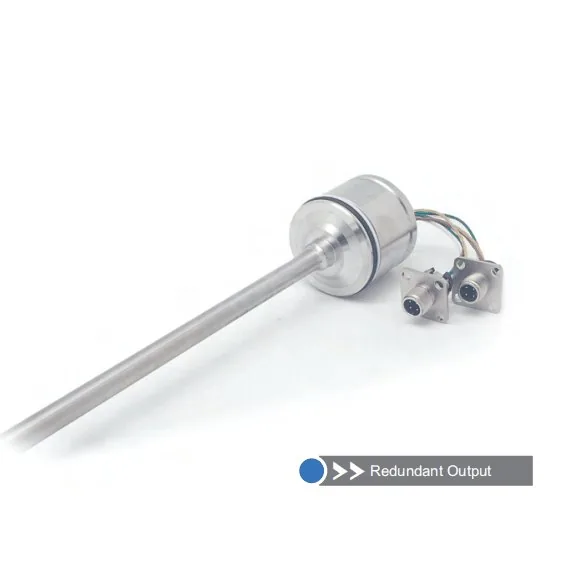
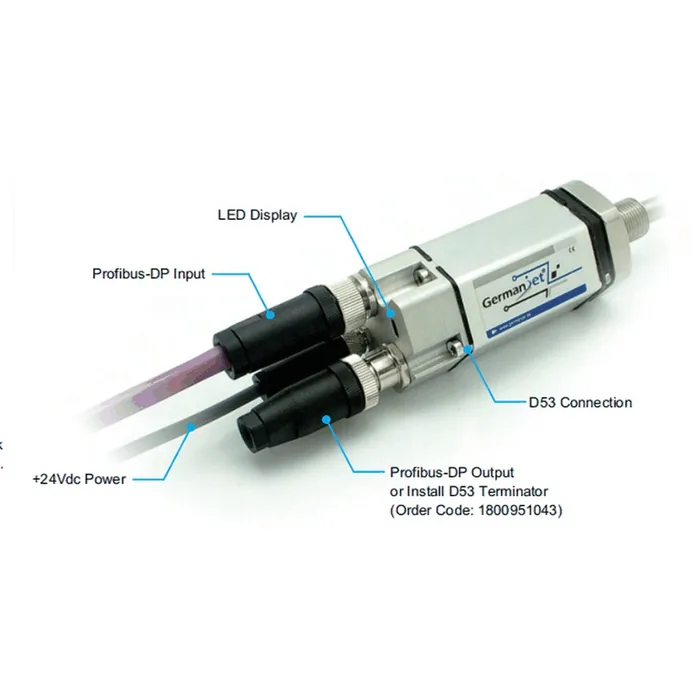


Whatever the question above, it comes back to the same device.magnetostrictive displacement sensorThe product range lists every series by stroke, mounting style and output interface, which is the quickest way into a selection.
← Back to News