Magnetostrictive vs. Draw-Wire Displacement Sensors: Cylinder-Integrated or External Wire?
A draw-wire unit is cheap and external, but a hydraulic cylinder at 350 to 600 bar needs an in-cylinder magnetostrictive displacement sensor. When engineers specify linear displacement measurement, magnetostrictive displacement sensors and draw-wire displacement sensors (cable-extension transducers) often come up together. Both measure linear displacement, but one is built around "cylinder-integrated, high accuracy, non-contact" and the other around "long stroke, external, low cost". This article compares the two schemes on five dimensions — principle, accuracy, life, installation and range — so that the choice can be settled in one pass.
Operating principle: one measures "time", the other measures "cable length"
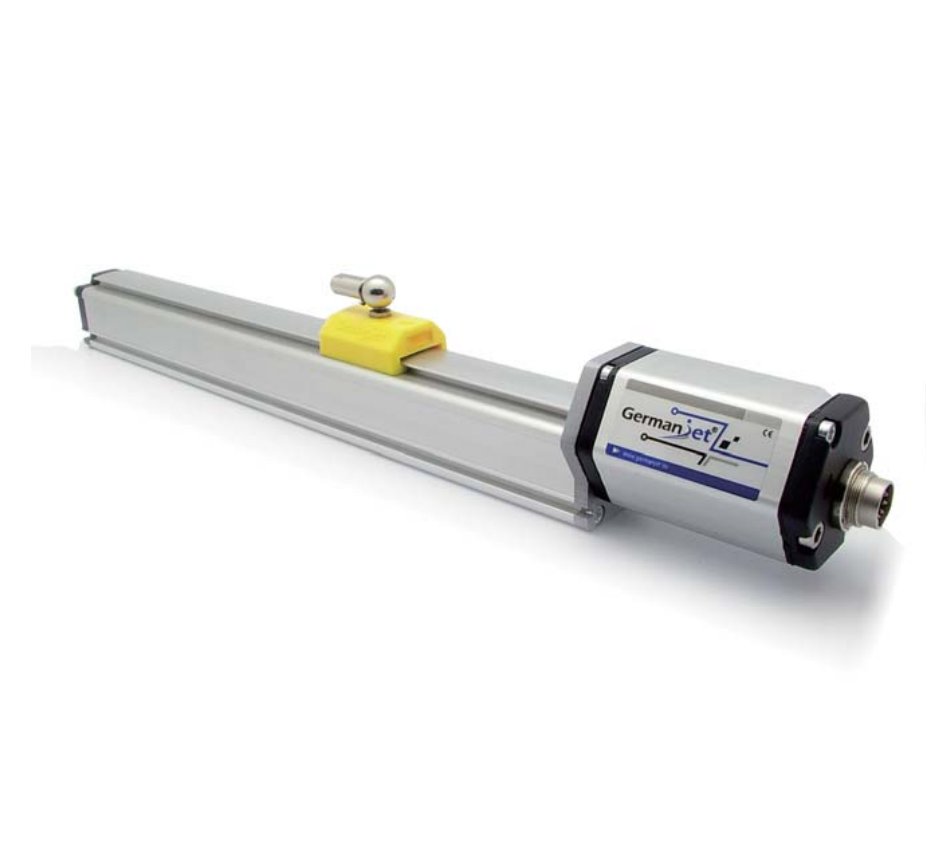
A magnetostrictive displacement sensor contains a waveguide and a following position magnet. The electronics head sends a current pulse along the waveguide; a torsion wave is generated where the pulse and the magnet field superimpose; timing (distance = speed of sound × time) gives the magnet position. The magnet and the waveguide are non-contact; there is no mechanical wear.
A draw-wire displacement sensor winds a steel cable on a drum, with one end of the cable fixed to the measured object. As the object moves, the cable turns the drum, and an encoder or potentiometer converts the angle of rotation into linear displacement. It is mechanical contact measurement, transmitting motion through the cable, a spring and the drum. The draw-wire cable wears and stretches over strokes; the magnetostrictive element is non-contact, which is why its life is rated in cycles rather than in a cable lifespan.
The core differences: one table
| Item | Magnetostrictive displacement sensor | Draw-wire displacement sensor |
|---|---|---|
| Measuring method | Non-contact (position magnet + waveguide) | Contact (cable + drum) |
| Accuracy / resolution | Resolution down to 1 μm; high repeatability | Resolution typically of the order of 0.1–1 mm |
| Life | No wear, maintenance-free, long life | Cable, spring and potentiometer/encoder wear |
| Mounting position | Cylinder-integrated (16/17/19H), external rod (19P) | Must be external; the cable must be routed |
| Range | Cylinder-integrated 75–475 mm; external up to 7600 mm | Commonly 1–15 m, and can be longer |
| Environment | IP67/IP68, 25 g vibration, oil- and pressure-resistant | Limited by the cable and sealing; lower protection |
| Cost | Higher | Lower |
Cylinder-integrated applications: magnetostrictive is the only reasonable choice
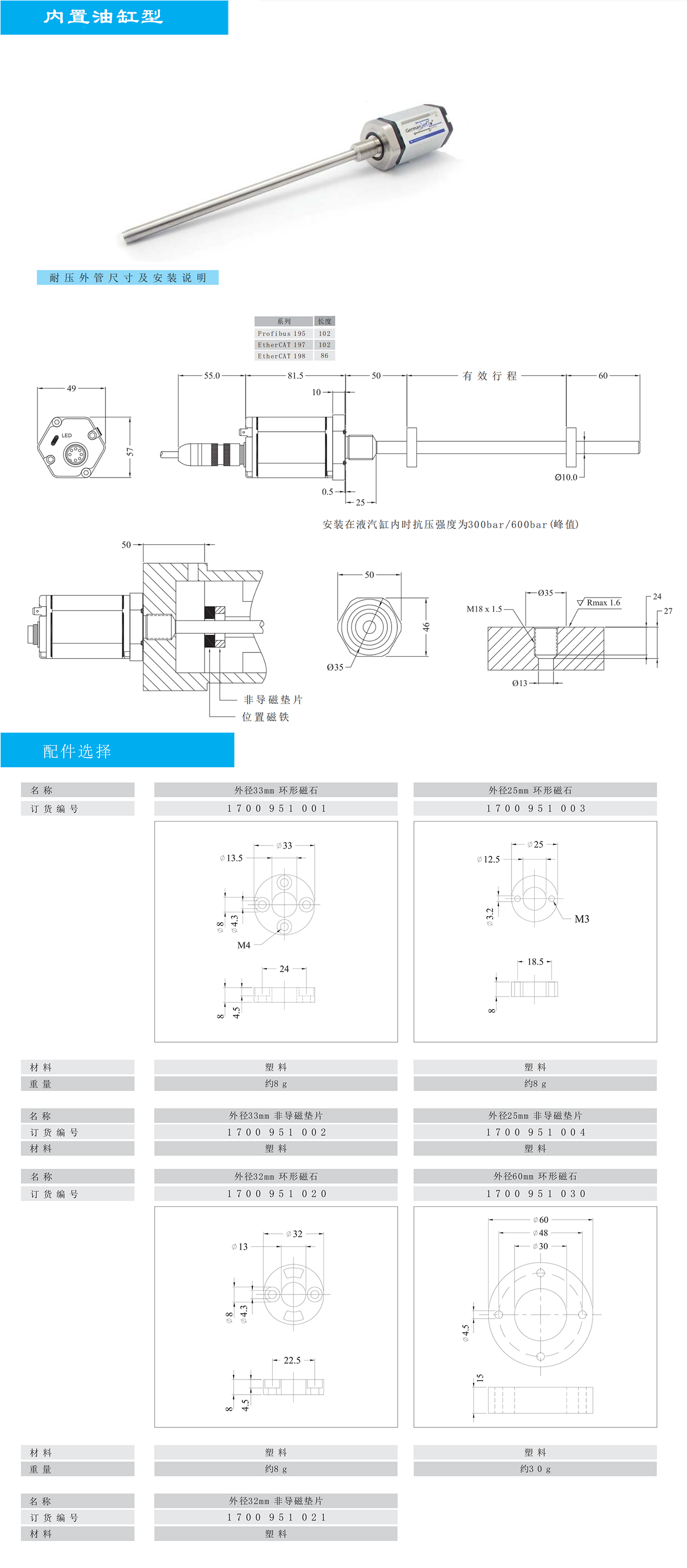
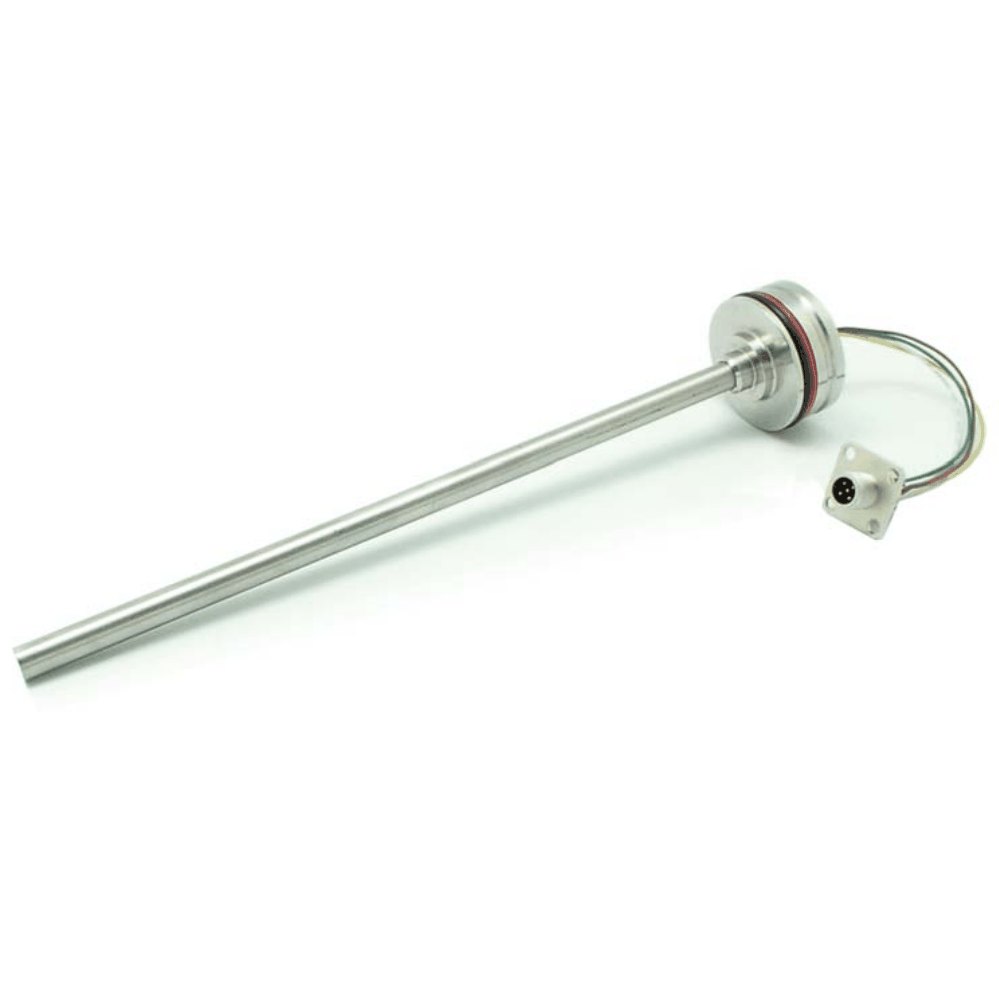
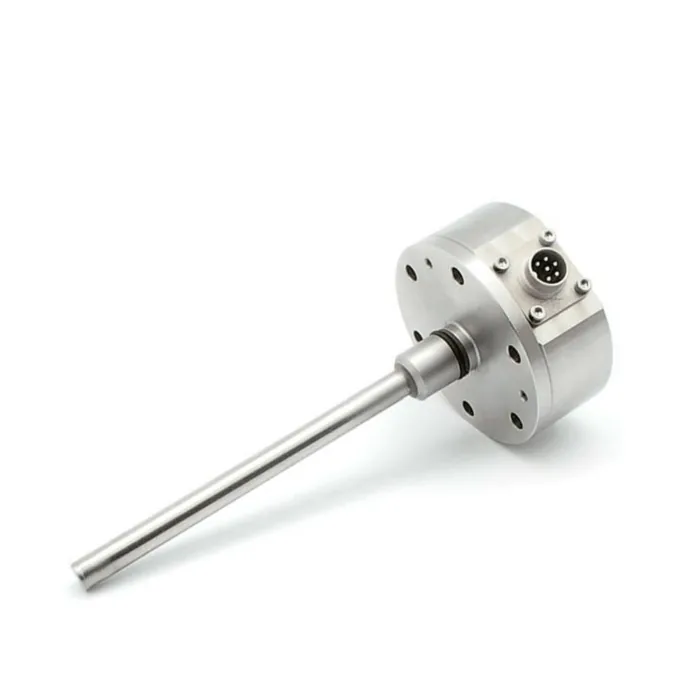
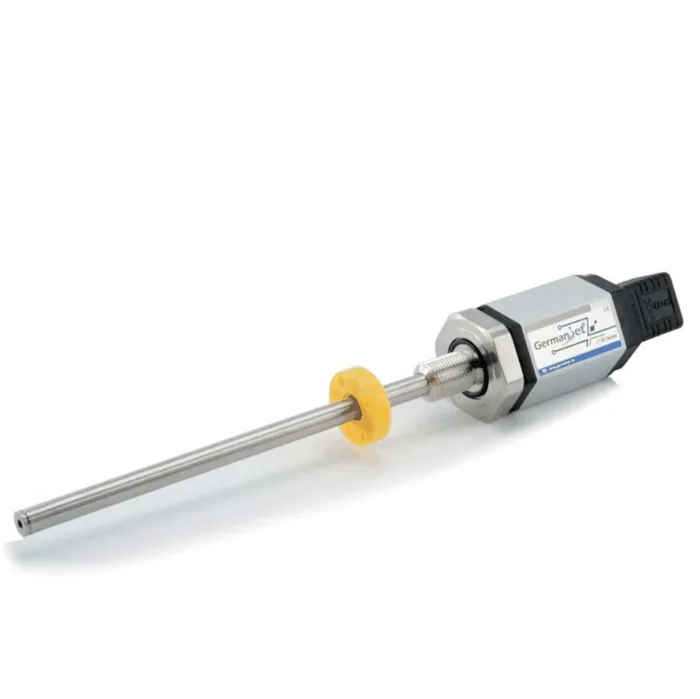
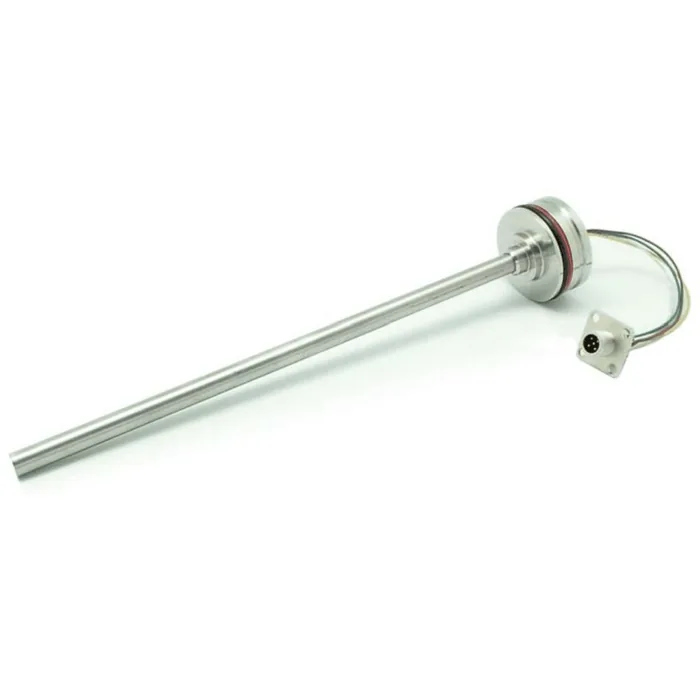
Piston position inside a hydraulic cylinder can almost only be measured with a cylinder-integrated magnetostrictive displacement sensor — the rod inserts directly into the cylinder, pressure-rated 350–600 bar, with the position magnet moving with the piston. Germanjet Series 16 with a flat electronics housing, Series 17 hydraulic-cylinder integrated and 19H cylinder-integrated are all designed for this duty. A draw-wire sensor cannot enter a high-pressure cylinder; it can only pull a cable from outside, and neither accuracy nor life is an advantage.
Long-stroke external applications: both schemes work — it depends on the accuracy demand
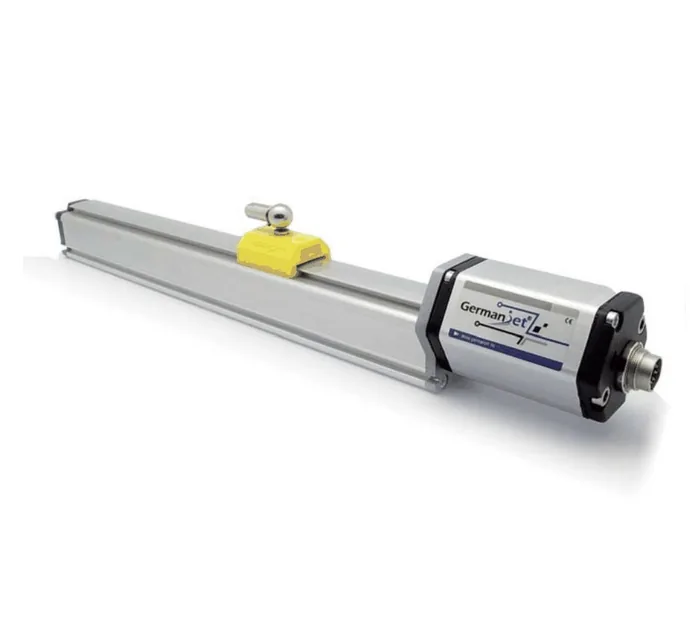
On long-stroke external measurement — machine slides, lifting mechanisms, gate opening and similar — both schemes are feasible. If the requirement is μm-level accuracy, long-term stability and little maintenance, choose an external magnetostrictive type (for example 19P extra-long stroke, 19F flexible long stroke). If the accuracy demand is modest, the budget is limited and the mounting space is open, a draw-wire scheme is more economical. On mobile machinery, Series 13 (IP68/IP69K, 25 g vibration) is better suited to severe duty than an ordinary draw-wire unit.
Selection in one sentence
Inside a hydraulic cylinder, high accuracy, long life, severe environment → magnetostrictive displacement sensor; long-stroke external, cost-sensitive, modest accuracy → draw-wire displacement sensor. The draw-wire scheme is here for comparison only — Germanjet supplies magnetostrictive displacement sensors. For cylinder-integrated, high-accuracy or severe-duty measurement, contact us with stroke and output.
Frequently Asked Questions
Q: Why can a hydraulic cylinder only use magnetostrictive sensing, not a draw-wire unit?
A draw-wire unit is mechanical contact measurement, transmitting motion through a cable, a spring and a drum, and it cannot enter a 350 to 600 bar high-pressure cylinder at all; it can only pull a cable from outside, where neither accuracy nor life is an advantage. Piston position inside the cylinder can almost only be measured with a cylinder-integrated magnetostrictive sensor: the rod inserts directly into the cylinder and is pressure-rated 350 to 600 bar, with the position magnet moving with the piston in a non-contact arrangement. Typical models are Series 16 with a flat electronics housing, Series 17 hydraulic-cylinder integrated and 19H cylinder-integrated.
Q: How large is the accuracy difference between the two?
Magnetostrictive resolution reaches 1 μm with high repeatability, while draw-wire resolution is typically of the order of 0.1 to 1 mm. The difference is not only in the figure: a cable wears and stretches over strokes, so accuracy degrades with time, whereas the magnetostrictive magnet and waveguide are non-contact with no mechanical wear, which is why life is rated in cycles rather than by cable lifespan.
Q: How do I choose for a long-stroke external application?
By accuracy requirement and budget. Both schemes are feasible for long-stroke external measurement such as machine slides, lifting mechanisms and gate opening. If you need μm-level accuracy, long-term stability and little maintenance, choose an external magnetostrictive type such as 19P extra-long stroke or 19F flexible long stroke. If the accuracy demand is modest, the budget is limited and the mounting space is open, a draw-wire scheme is more economical. On mobile machinery, Series 13 (IP68/IP69K, 25 g vibration) suits severe duty better than an ordinary draw-wire unit.
Q: Which covers a longer range?
Magnetostrictive runs 75 to 475 mm when cylinder-integrated and up to 7600 mm externally; a draw-wire unit commonly covers 1 to 15 m and can go longer. On figures alone the draw-wire can be longer, but that is bought with accuracy and life. Where a long external stroke also needs accuracy, magnetostrictive remains the answer, for example 19P or 19F.
Related Products
Related Applications
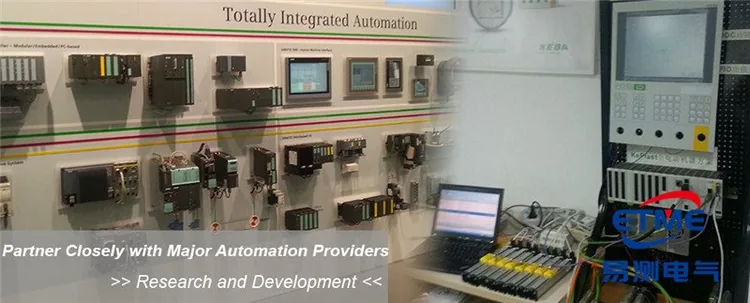
Multi-Industry Application Cases for Magnetostrictive Displacement Sensors
View Details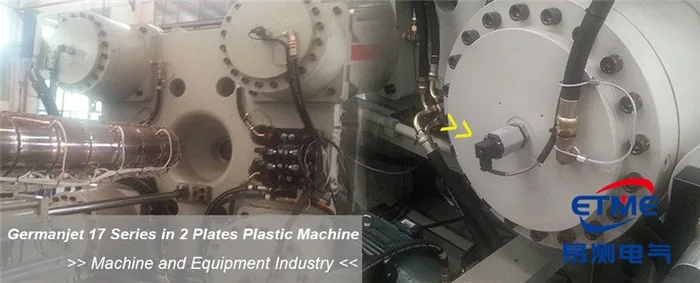
Series 17 Hydraulic Cylinder Integrated Magnetostrictive Displacement Sensor Application Cases
View Details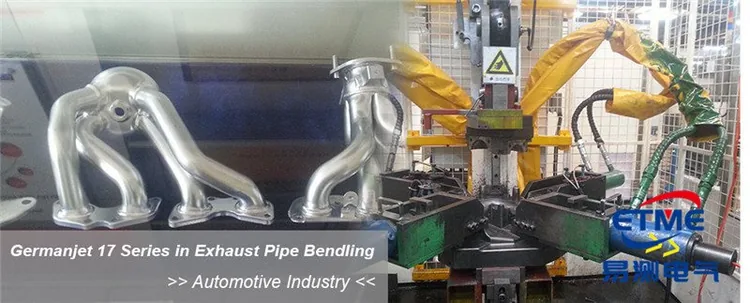
Series 16 Hydraulic Rod Magnetostrictive Displacement Sensor Application Cases
View Details