Ten Injection Presses, One Jittering Ejector Sensor: A Thin Mounting Plate Acting as a Tuning Fork
In August 2024 we visited an injection moulding plant to look at an ejector-side position sensor problem. The customer's description was simple: the reading at the ejector position jitters.
The first thing we did on site was not to remove the sensor. It was to establish the scope. We walked the shop floor and ran every machine in that batch, driving each ejector to its maximum speed and watching the reading.
The result: only one machine out of ten had a problem. On the other nine, with the ejector running at full speed, the reading stayed steady.
That result changed the direction of the investigation completely. If all ten had jittered, the likely cause would have been the sensor batch, or a supply environment common to the whole plant. With one machine affected, the answer was already pointing at that machine's own installation — not at the sensor.
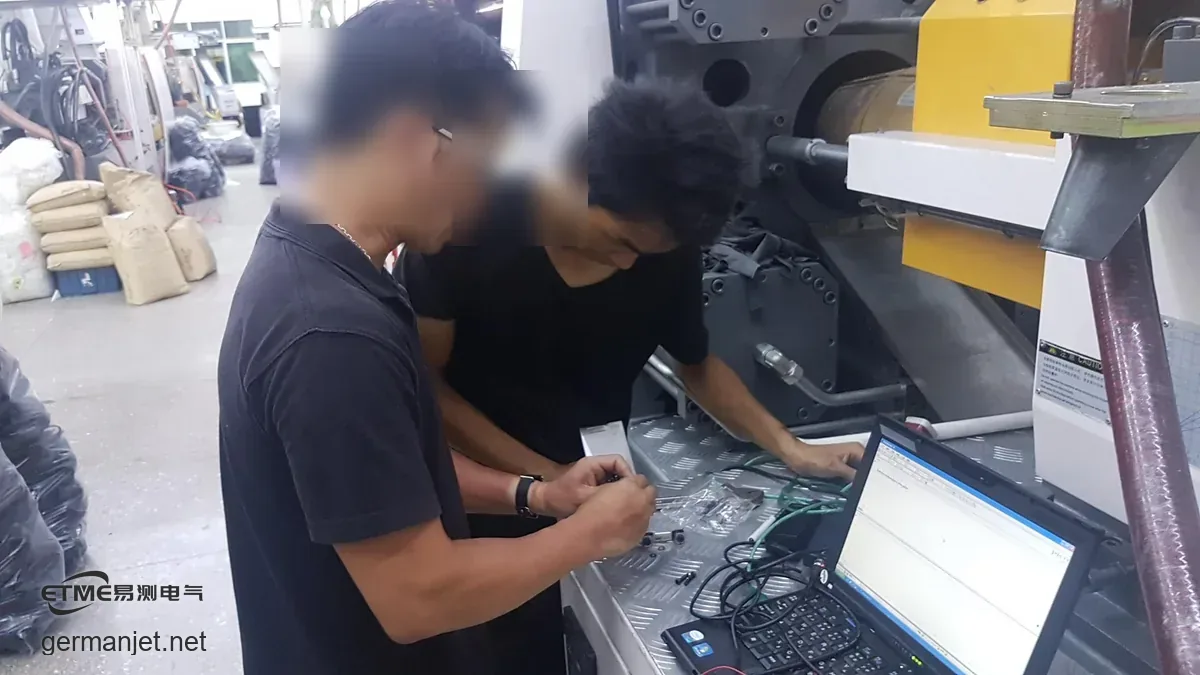
1. What was different about the affected machine
Putting the faulty machine next to the healthy ones, the first difference to stand out was size: the problem appeared mainly on the smaller machines.
The mounting conditions on a small machine are not the same as on a large one. The ejector moves just as fast, but there is less room around the sensor, and the mounting plate that comes with the machine is correspondingly thinner. That turned out to be the root of the problem.
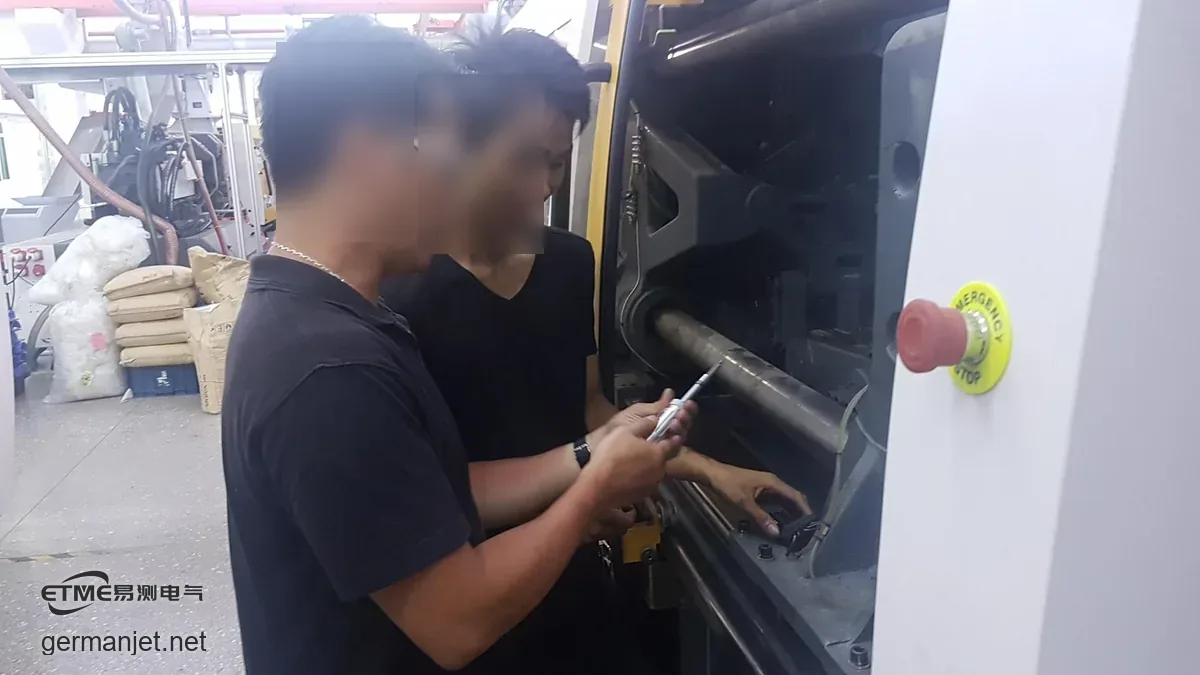
2. Two lines of enquiry: vibration or supply interference
When an ejector sensor reading jitters, site work normally goes in one of two directions:
Direction one: mechanical vibration reaching the sensor. The ejector is a high-speed reciprocating motion. If structural vibration reaches the sensor body, the sensor core reads it as a change in position.
Direction two: interference on the supply or signal cable. An unstable supply, or a signal cable sharing a trunking with power cables, produces exactly the same symptom and looks almost identical on site.
These two cannot be separated by feel. You need the waveform. We brought the sensor's analogue output out to an oscilloscope and cycled the ejector, looking directly at how clean the waveform was.
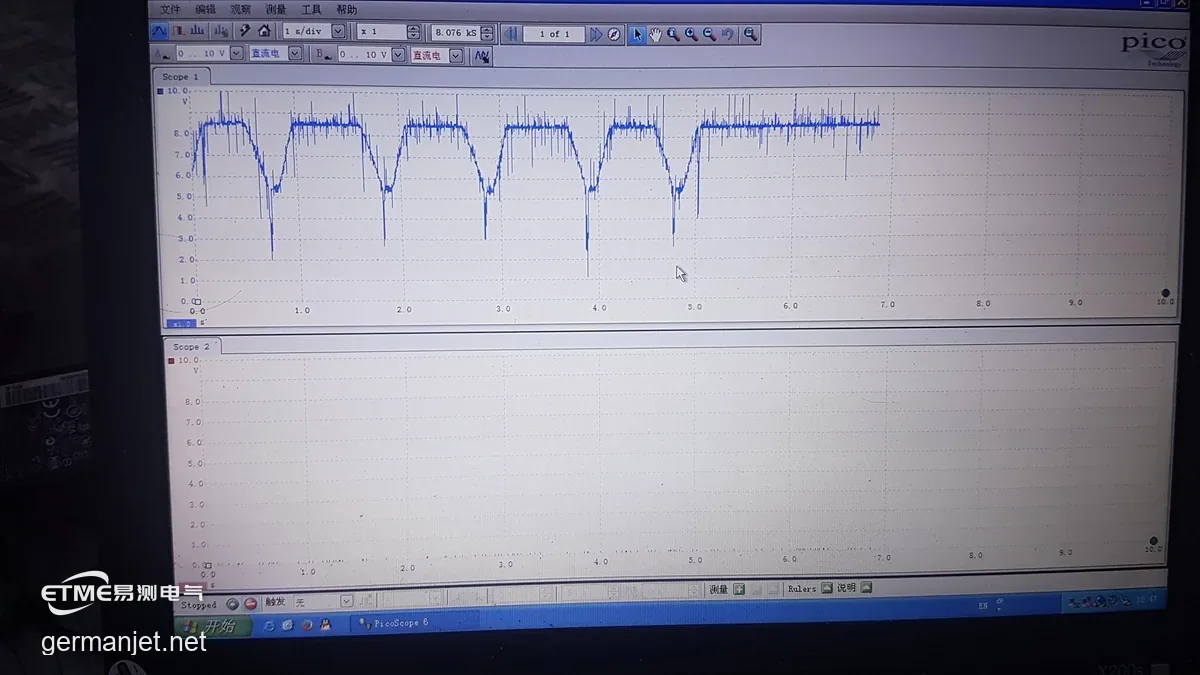
The waveform pointed to vibration. Pure supply interference shows up as jitter while the machine is standing still; here the noise appeared only when the ejector moved, and stopped when it stopped.
3. Root cause: a mounting plate too thin, acting as a tuning fork
With the direction settled on the mechanical side, attention moved to the plate carrying the sensor. Inspection found two faults together: the plate was not rigid enough, and it was too thin.
The tuning fork is the most accurate description anyone on site came up with. One end of the plate is bolted to the machine and the other end carries the sensor. When the ejector fires at speed, that thin plate is excited and resonates, and the vibration travels down the cantilever straight into the sensor. Nothing is wrong with the sensor — it is mounted on a plate that rings.
There is a characteristic signature to this fault: it gets worse the faster the machine runs. The customer's report — invisible at low speed, jittering only with the ejector at full speed — matches the mechanism exactly.

4. Fitting an anti-vibration base eliminated it
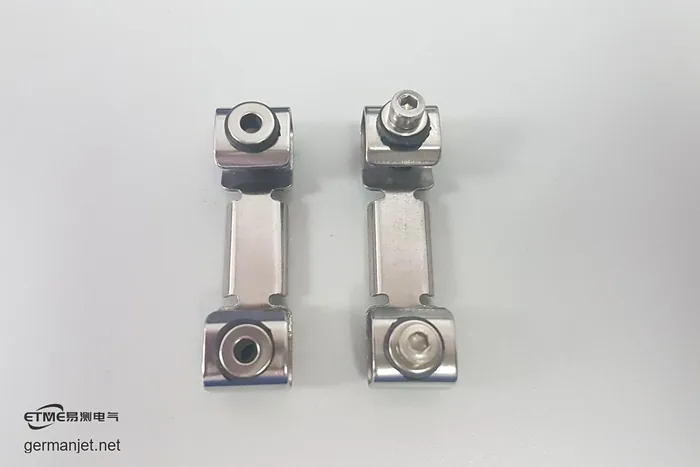
The fix was to fit an anti-vibration base (anti-vibration mounting clips), converting the rigid joint between sensor and plate into an isolating one. After fitting, we repeated the identical test: the vibration problem was gone.
The waveform change was immediate — the same ejector motion, but a clean output.
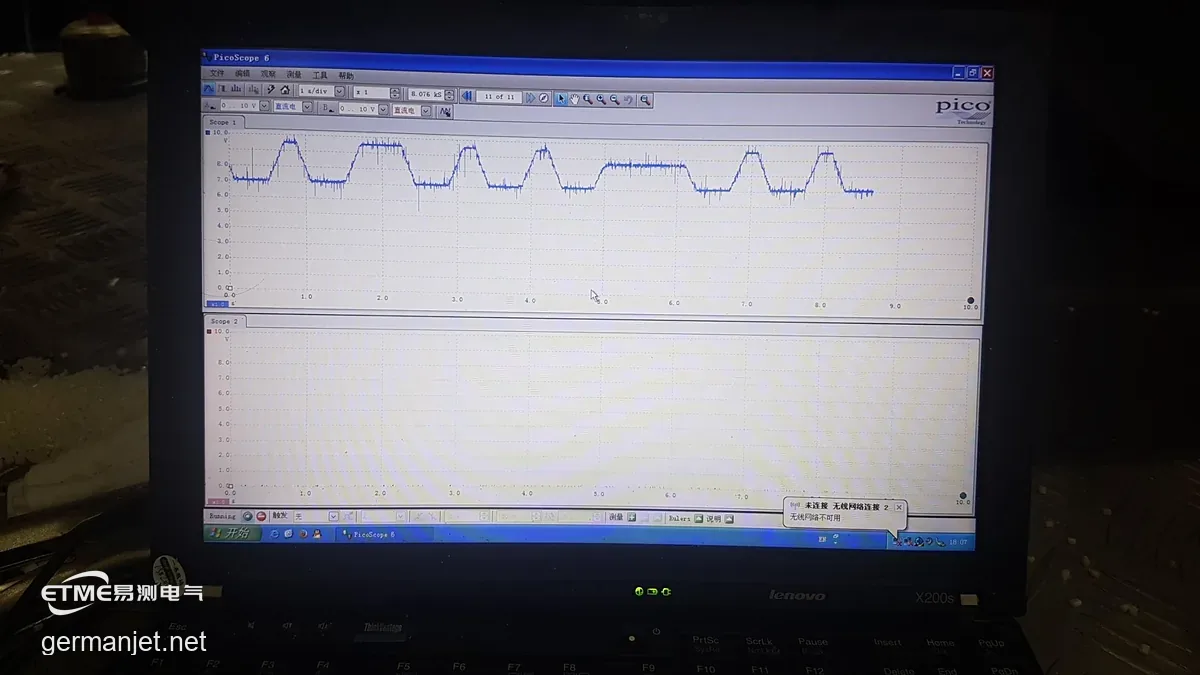
Two things came out of this. One, the machine was fixed. Two, it gives you a way to judge the question "is the reading jittering because the sensor is failing?" — a sensor mounted on a plate that rings produces exactly the symptoms of a failed sensor, and replacing it achieves nothing. The LK 3500-ton case reached the same conclusion, and there too the fault was traced to installation and wiring rather than the sensor itself (see LK 3500-Ton Press: 6 mm Jitter on a 3800 mm Analog Sensor).
5. Two details that must be respected during fitting
Fitting the anti-vibration base is not difficult, but we went over two details twice with the site team.
First: the washers must be fitted. Without a washer, the screw head drives straight through into the elastomer — which defeats the isolating structure and leaves you with a rigid joint again. The washers are supplied with the clips; there is nothing to source separately.
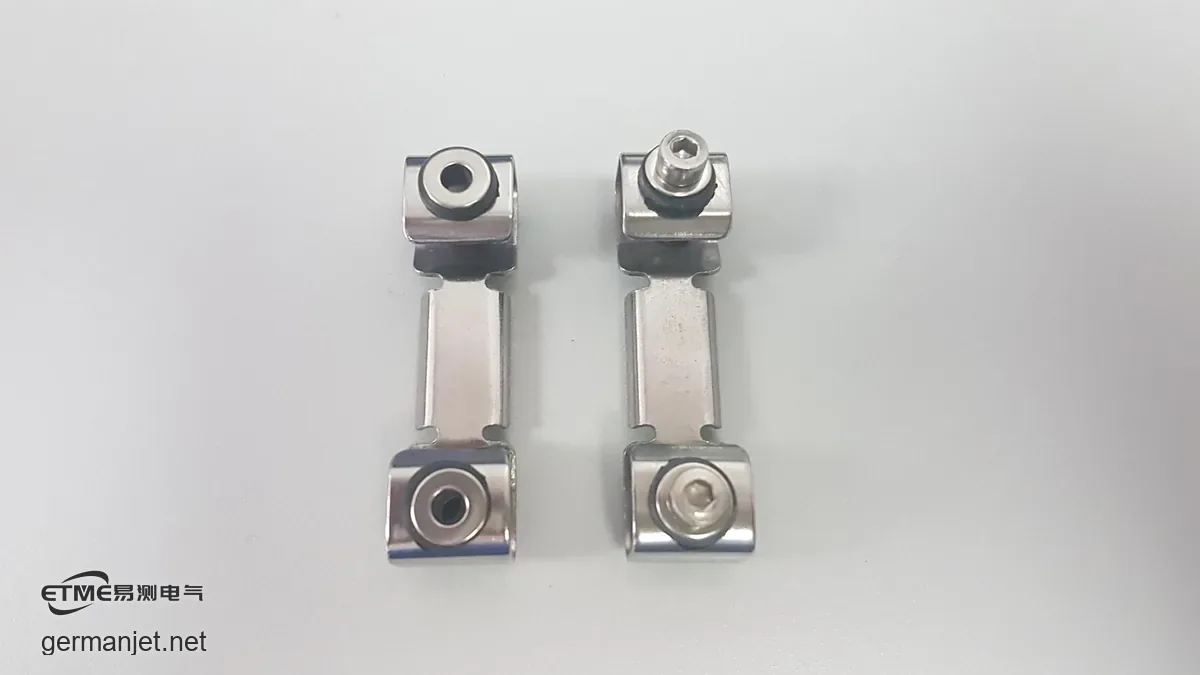
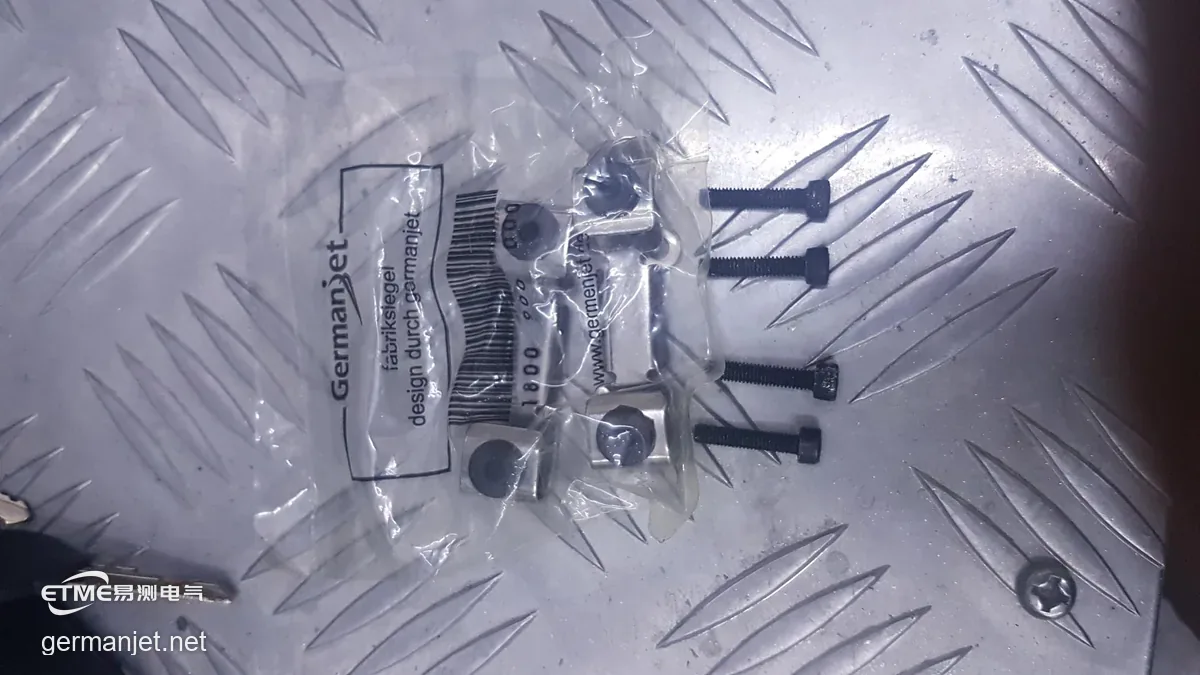
Second: tighten with a torque screwdriver at the standard figure. Neither loose nor as tight as it will go. The figure and the procedure are in the anti-vibration clip installation guide — 3.5 kgf·cm, accepted when the rubber ring is slightly compressed and the washer has not sunk.
6. A second problem found along the way: over-travel
Once the affected machine was dealt with, we checked the travel condition of the sensors across the same batch and found a separate problem: installation over-travel.
At the bottom of the ejector stroke, the slider had travelled past the black mark on the sensor housing. It was not one machine — several in the same batch showed the same condition.
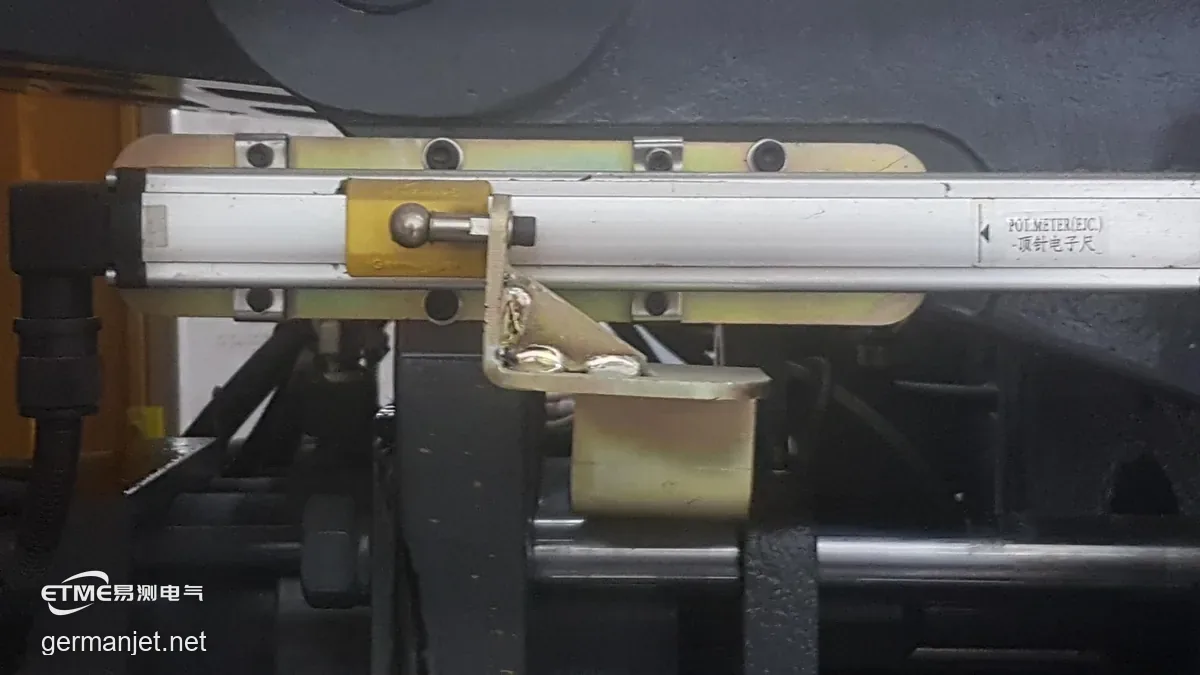
Over-travel is a different fault from vibration, but the two compound. A sensor already jittering from vibration, now also taking mechanical shock at end of stroke, will have a noticeably shorter service life.
Over-travel has to be resolved at installation: confirm the ejector's mechanical stroke, then position the sensor so its effective measuring range covers both ends of that stroke with margin. Skip this at commissioning and no amount of parameter adjustment will recover it later.
7. The order to work in on this kind of problem
| Step | Action | Purpose |
|---|---|---|
| 1 | Compare identical machines across the batch — isolated or common? | One machine affected points to installation, not selection |
| 2 | Look at the waveform — jitter at rest or jitter with motion? | Separates vibration from supply interference |
| 3 | Check the rigidity and thickness of the mounting plate | A plate that rings will always make the sensor jitter |
| 4 | Fit the anti-vibration base, fit the washers, torque to standard | Converts a rigid joint into an isolating one |
| 5 | Review the travel, confirm the slider does not pass the black mark | Prevents mechanical over-travel from shortening sensor life |
The step worth remembering here is the first one. One machine out of ten jittering gave the answer earlier than any instrument reading did: the fault was in that machine's installation. So when a reading starts jittering, do not reach for a replacement sensor first. Work through the sequence above and most cases close out at the installation stage.
This article is based on a Germanjet engineer's on-site investigation of ejector position sensors at an injection moulding plant in August 2024. Test results and waveforms are taken from the records made that day; customer names and machine numbers have been redacted.
Frequently Asked Questions
Q: Is a jittering ejector sensor reading a sign the sensor has failed?
Not necessarily. On this visit only one machine in ten jittered, and the fix was an anti-vibration base — not one sensor was replaced. The waveform tells you which way to look: jitter while the ejector is standing still points to supply or cable interference, whereas noise that appears only when the ejector moves and stops when it stops points to mechanical vibration reaching the sensor. Neither warrants replacing the sensor first. A sensor mounted on a plate that rings produces exactly the symptoms of a failed sensor, and a new sensor in the same mounting condition will jitter just the same.
Q: Why did only the smaller machines in the batch show the problem?
Smaller machines leave less room around the sensor, and the mounting plate supplied with them tends to be thinner. When the ejector fires at speed, that thin plate is excited and resonates, and the vibration travels down the cantilever into the sensor core. The larger the machine and the thicker the plate, the harder it is for that resonance to establish — which is why the larger machines in the same batch were fine. It also explains the typical signature of this fault: it gets worse the faster the machine runs, and is invisible at low speed.
Q: How do you spot installation over-travel on site?
Watch the slider position as the ejector reaches the bottom of its stroke and check whether it passes the black mark on the sensor housing. If it does, the sensor's effective measuring range does not cover the machine's full stroke, and the sensor is absorbing mechanical shock at the ends of travel. Several machines in this batch were in exactly that condition. It has to be resolved at installation: measure the ejector's mechanical stroke, then position the sensor so its range covers that stroke with margin at both ends. It cannot be recovered later by adjusting parameters.
Related Products
Related Applications
Ejector Sensor Jitter on an Injection Moulding Machine: From Mounting Plate Resonance to the Standard Clip Fitting
View Details
Series 19H Cylinder-Integrated Process Displacement Sensor Application Cases
View Details
Series 19P External Rod Process Displacement Sensor Application Cases
View Details