
Long Horizontal Mounting: What Probe Sag Does to the Reading
Once the stroke passes a couple of metres and the only option is horizontal mounting, the middle of the probe drops. The first reaction is usually that the sensor is poor quality. It is a cantilever being a cantilever: fixed at one end, free at the other, with its own weight and the ring's side load concentrated at mid-span. Whether to act on it depends on which symptom appears first.
1. Is the Probe Bending, or Is the Whole Sensor Moving?
Two causes, two very different fixes, and they are easy to confuse on site.
- Probe deflection. The head is solidly fixed and the probe bends in the middle. Readings are correct at both ends and start misbehaving mid-stroke.
- The whole sensor following its bracket. Insufficient bracket stiffness lets head and probe displace or rotate together. The reading drifts as a whole and tracks load.
The separation is simple. Put a dial indicator against the middle of the probe and push the ring along by hand. If the needle moves while the reading does not, the probe is bending. If the needle barely moves and the reading changes, the bracket is moving. The second case belongs to our bracket construction article; only the first is covered here.
2. Three Variables Set Sag, and Only One Is Yours
In the cantilever deflection expression only three things matter: the fourth power of the overhang length, the product of elastic modulus and second moment of area, and the distributed load. In plain terms:
- Length dominates. Double the overhang and deflection goes up by sixteen times. That is why nobody raises the subject on short strokes - under a metre it is invisible, past two metres it is obvious.
- Second moment of area. The probe is tubular, and outer diameter plus wall thickness set its bending stiffness. Fixed at the factory, not adjustable by the user.
- Distributed load. Probe weight is fixed. Ring weight and which side it presses on are not. An off-centre ring, or a machine part pushing sideways on it, adds load to the cantilever.
Of the three, only the first and third are within reach: shorten the overhang, or remove the side load.

3. Sag Degrades Clearance Before It Degrades Accuracy
There is a causal step that gets skipped. Bend the probe and the ring still travels a straight line, because the machine carries it straight. An angle appears between ring and probe, largest mid-span and smallest at the ends.
The first consequence is an uneven clearance in the middle: one side closes up, the other opens. The closed side wears first, the open side couples weakly, and readings begin to drop out intermittently or jump. Our article on eccentricity and concentricity deals with static offset at installation; this is the same mechanism varying with position during travel, which presents as "it only misbehaves in the middle".
The second consequence is accuracy. Position is measured along the probe's own arc while machine travel is a straight line. Over a long stroke the two differ by an amount proportional to the square of the deflection, largest mid-span and zero at the ends. That magnitude is usually below mechanical tolerance and only needs separate treatment in a high-accuracy loop.
Put differently: first comes "can it read reliably", later comes "is the reading right". Sites that reverse the order spend their time tuning parameters while the mechanical side stays untouched.
4. Three Ways Around It, Cheapest First
Shorten the overhang
The least expensive move: shift the fixing point toward the middle, or relocate the head to mid-probe. The price is that the free end needs support redone, and the dead bands at each end may eat usable stroke, so leave that allowance when ordering.
Add a mid-support
A sliding support or guide bush at mid-span. Effective, but it introduces two new problems. The support itself wears and becomes a maintenance point. And if the clearance between bush and probe is set too tight, added friction slows the response on long strokes. Before fitting one, confirm the ring will not collide with the support as it passes.
Move to a flexible probe or a segmented arrangement
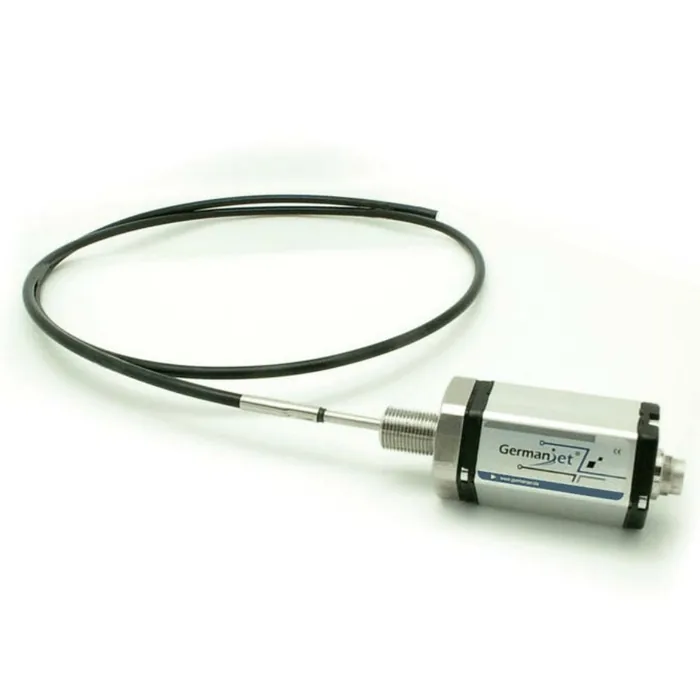
Past two metres the flexible probe exists for exactly this duty. It does not resist bending with stiffness; it holds straightness under tension, so cantilever sag does not arise. Our long stroke article compares a single flexible run against segments, where each joint becomes a new error source. Outside high-accuracy loops the single flexible run is the simpler answer.
5. Vertical Mounting Does Not Solve This
Mount it upright and sag disappears, replaced by three other things.
- Slider weight rests on one side. Nothing carries the ring or slider vertically, so its weight sits on the face in contact with the probe. Over time that is one-sided wear.
- Contaminants settle at the low end. Sludge, swarf and condensate all travel down. The bottom of the probe is the affected region. On vertical mounting, cleaning matters more at the low end than sealing does at the high end.
- Air collects somewhere else. Inverted or vertical mounting makes the highest point of the cylinder the likely air pocket, and position feedback across a pocket is unstable. The related behaviour is described in our end-of-stroke cushioning article.
6. Two Checks Before You Sign Off
- Run the full stroke unloaded and watch for jumps at a repeatable position. Repeatable position points to geometry rather than interference. Random jumps are what send you to shielding and earthing.
- Park the ring mid-stroke and push the ring carrier lightly by hand. If it moves, clearance is loose. If it will not move at all, it is pinched. Neither is right: normal is nearly no perceptible play, and no binding either.
7. One Line to Close
Sag cannot be cured, only worked around. Make it shorter, or stop relying on stiffness to carry it. No parameter change will fix geometry.
Frequently Asked Questions
Q: Does probe sag on a long horizontal mounting affect the reading?
It does, but stability goes before accuracy. Bending puts an angle between ring and probe mid-span, closing the clearance on one side and opening it on the other. Intermittent dropouts or jumps appear first; the difference between arc length and straight travel comes later.
Q: How much sag counts as out of tolerance?
There is no universal figure in millimetres; the criterion is clearance between ring and probe. Push the ring carrier at mid-span: obvious play or obvious binding both indicate a problem, while normal is almost no perceptible play and no binding. Running the full stroke unloaded and watching for jumps at one position is the other check.
Q: Does a mid-support solve it?
It helps, at the cost of a new maintenance point: the support wears, and setting the clearance too tight adds friction and slows response. Before fitting one, confirm the ring will not collide with it and add it to the inspection schedule.
Q: Is there no sag problem with vertical mounting?
Sag is gone, replaced by three others: slider weight resting on one side causing one-sided wear, sludge and swarf settling at the low end, and air collecting at the highest point of an inverted cylinder, which makes feedback across that pocket unstable.
Related Products
Related Applications
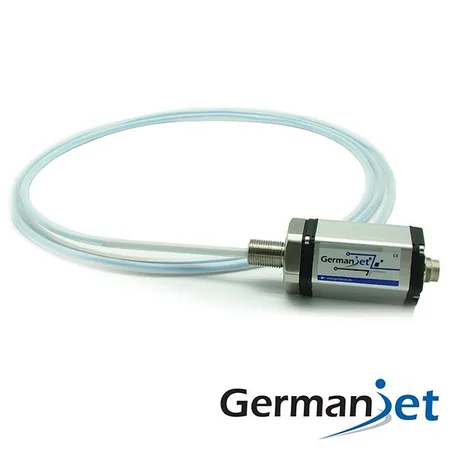
Series 19F Flexible Process Displacement Sensor Application Cases
View Details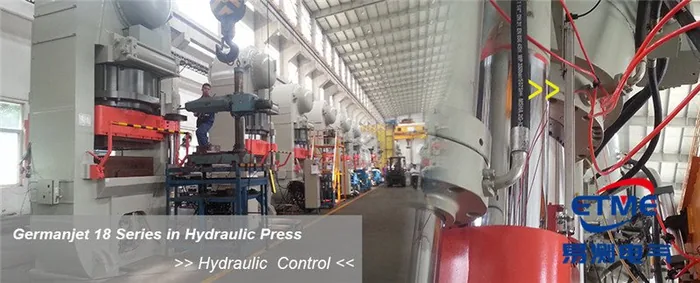
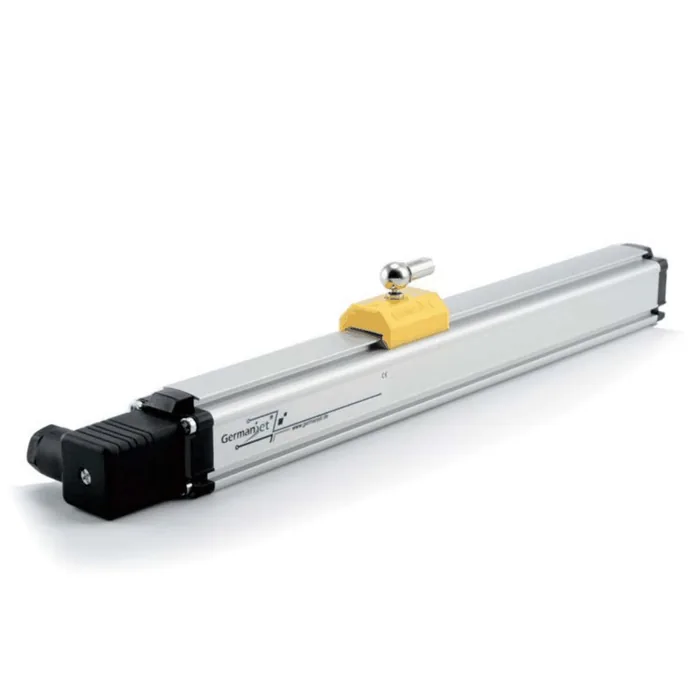
Series 18 Profile Magnetostrictive Displacement Sensor Application Cases
View Details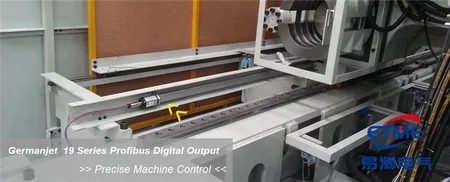
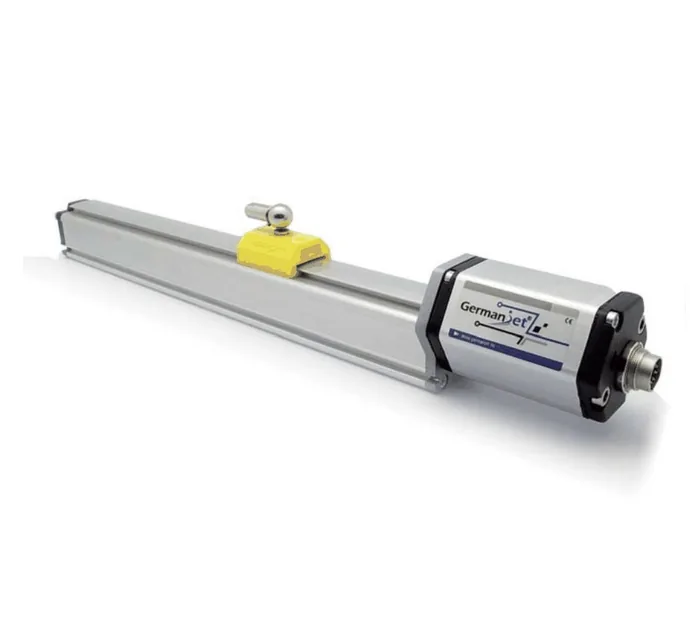
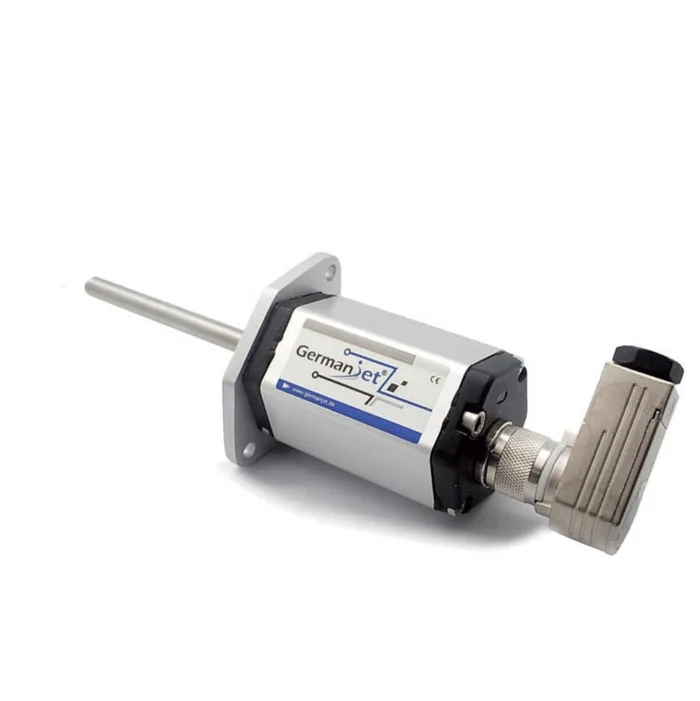
Series 19P External Rod Process Displacement Sensor Application Cases
View DetailsWhatever the question above, it comes back to the same device.magnetostrictive displacement sensorThe product range lists every series by stroke, mounting style and output interface, which is the quickest way into a selection.
← Back to News