The Last Few Centimetres: How Cushioning Changes the Reading, and How to Read the Cushion
The machine is set up, the position is reached, and the part still comes out slightly off — or there is a dull knock at the end of the stroke. Process settings will not explain it, because the signal says the axis has arrived while the mechanics have not.
The last part of a hydraulic cylinder stroke is not travelled at constant speed. What the cushion does to velocity is written straight into the position reading, and that is exactly where the in-position criterion is usually taken.
The Stroke Does Not Finish at Constant Speed
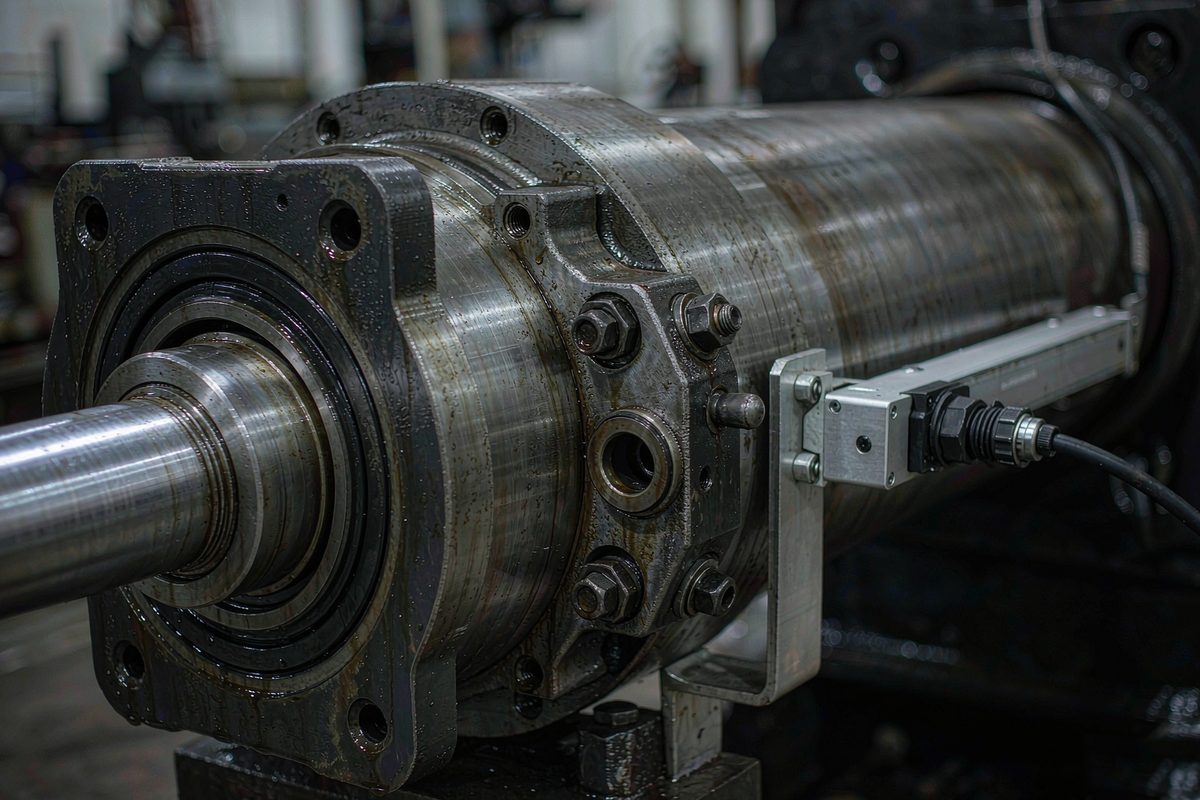
The piston has to slow before it reaches the end cover. A moving mass of several tonnes striking the cover directly would damage the barrel, the rod and the seals. Industrial cylinders therefore use end cushioning: a cushion collar on the piston and a matching cushion bore in the cover.
The moment the collar enters the bore, the return path changes from full bore to a small orifice. Oil can only escape through the restriction, back pressure rises and the piston is decelerated until it settles at the end position.
The distance covered during that deceleration is the cushion stroke. It is part of the travel, simply treated as an end transition in normal control.
What Happens Inside the Cushion Zone
Three things occur together.
The flow area changes. From full bore to a throttle, flow is forced down and velocity follows.
Pressure inside the cylinder rises. Back pressure has to absorb the inertia, so pressure briefly exceeds the working level. Its nature is the same as the reversing shocks described in sizing to peak rather than working pressure.
The orifice is adjustable. A cushion screw on the cover changes the restriction. Too loose and the cushion does little; too tight and the end of the stroke creeps or stalls.
Three Ways Cushioning Shows Up in the Reading
- The end of the curve flattens. A velocity trace that was close to a straight line bends noticeably in the last segment. That bend is the cushion working.
- The in-position moment moves later. If the criterion is reaching a set position and that value sits inside the cushion zone, the mechanical arrival lags the signal. How much depends on throttling and moving mass.
- A small elastic rebound. The pressure step as the collar enters deforms barrel and rod slightly, so the reading shows a micrometre level rebound before settling. The magnitude is small, but precision pressing and clamping fixtures read it as unstable position.
In Position: By Position, or By Stability
This is the practical consequence of cushioning.
By position: the move is called complete as soon as the reading passes the set point. Simple, but if the set point sits inside the cushion zone the signal is issued before the mechanics stop, and the next action starts early — pressed joints come up short, clamped parts do not close.
By stability: the reading must enter a window and then change by less than a threshold for several consecutive cycles before arrival is accepted. This keeps the cushion zone out of the decision at the cost of a few tens of milliseconds.
Which to use depends on how much the next action depends on the mechanics truly stopping. Pressing, clamping and mould closing, where force is transmitted, favour the stability criterion; plain positioning moves do not need it.
The same trade off appears where a position reading drives a process decision, as in setting the injection to packing switchover.
A Healthy Cushion and a Failed One Look Different
| Curve feature | Cushion healthy | Cushion failed |
|---|---|---|
| End slope | Eases off smoothly, transition continuous | Drops abruptly or cuts off |
| Oscillation at the end | Essentially none | Visible ringing before it settles |
| Arrival time | Stable, small variation between cycles | Varies, scattered between cycles |
| Accompanying signs | Nothing unusual | Dull knock at the end, pipework vibration |
The second row is the easiest to watch. When the cushion fails, impact energy has to be absorbed by structure and oil, and the reading shows a short oscillation around the stop, usually with noise. Comparing the end of the curve against an archived healthy trace finds the problem earlier than listening for it.
Keeping the Cushion Zone Out of the Control Band
The travel used for control should not include the cushion. Two ways to arrange that.
Separate the hard stop from the working target. Mechanical stops sit at the end of travel; the controlled target sits before the cushion zone. The margin between them is the room the cushion needs to absorb inertia, sized from cushion stroke plus moving mass.
Cover it with range, exclude it from the loop. The range of the magnetostrictive displacement sensor must span the full travel including the cushion, or the end reading runs into a dead zone or past range. Inside the control logic, the last segment is marked as a transition zone and excluded from the position output.
Both arrangements need range margin. The reason the dead zone at each end has to be avoided is set out in dead zones at both ends of the usable range.
Large Bore and High Pressure Need Extra Care
The larger the bore, the greater the moving mass, the more kinetic energy the cushion must absorb, and the sharper the pressure and curve changes at the end.
In these cases raise the refresh rate of the magnetostrictive displacement sensor. Cushioning may last only tens of milliseconds, and slow sampling collapses the whole deceleration into a single point, hiding whether the cushion is healthy and defeating the stability criterion at the same time.
High pressure systems also need the mounting structure checked for stiffness. The pressure peak at the cushion deforms the barrel elastically, and a feedback unit on a soft bracket turns that into reading jitter that gets chased as a mechanical fault. The load and deflection effects described in multi cylinder synchronisation apply at the end of a single cylinder too.
Field notes for engineers
- Start the cushion screw in the middle of its range and trim it against the end of the curve. Screwing it fully in and working back tends to over-throttle and produce creeping at the end.
- The cheapest way to judge cushion health is to archive the end of the curve while the machine is known good. When a problem is suspected, overlay the two traces — the change in slope is more objective than the sound.
- When using the stability criterion, do not set the window too narrow. Too narrow and noise retriggers it, which shows up as a chattering in-position signal and downstream actions restarting.
- Long stroke cylinders should have the cushion included when sizing range, then stepped up one size. The ordering convention is in working out range from cylinder stroke.
Frequently Asked Questions
Q: Does end cushioning affect the accuracy of position measurement?
Cushioning does not change the position value, only the shape of the velocity curve. The reading stays accurate; the end slope eases and the in-position moment lags the signal. What does need attention is not placing the set point inside the cushion zone, and the small elastic deformation caused by the pressure step.
Q: How can a failed hydraulic cylinder cushion be identified?
From the end of the position curve. A healthy cushion eases off smoothly with no oscillation around the stop; a failed one cuts off abruptly and rings before settling, usually with a dull knock and pipework vibration. Comparing against an archived healthy trace is the quickest judgement.
Q: Should the in-position signal use position or stability?
It depends on how much the next action relies on the mechanics actually stopping. Pressing, clamping and mould closing, which transmit force, are better served by the stability criterion: accept arrival only after the reading stays within a threshold for several cycles. Plain positioning moves are fine with position alone.
Q: What happens if the cushion screw is set too tight?
The end of the stroke creeps or stalls partway. The curve shows very slow end velocity and a much longer arrival time, and in severe cases the position stops advancing at a point before the end. Back the screw out and watch the end of the curve again.
Related Products
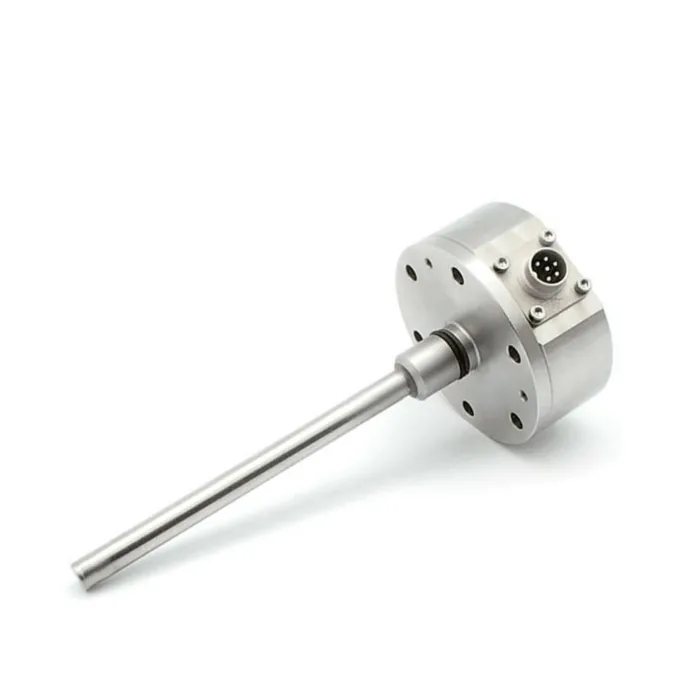
Series 16 Hydraulic Cylinder Built-in
View Product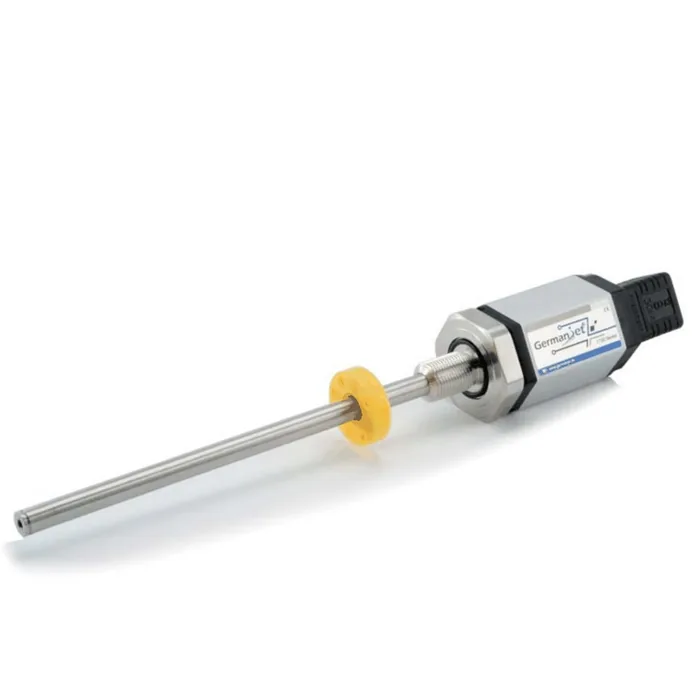
Series 17 Hydraulic Cylinder Integrated
View Product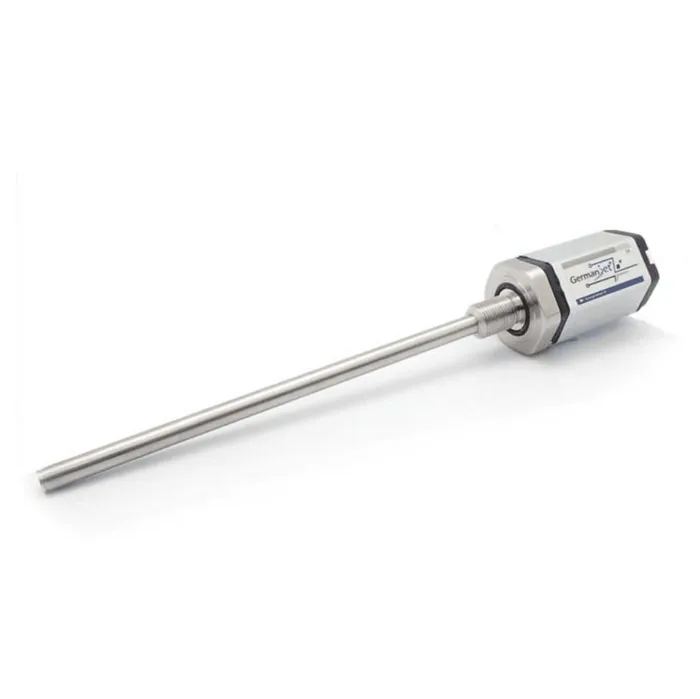
Series 19 H-Type Built-in Cylinder
View Product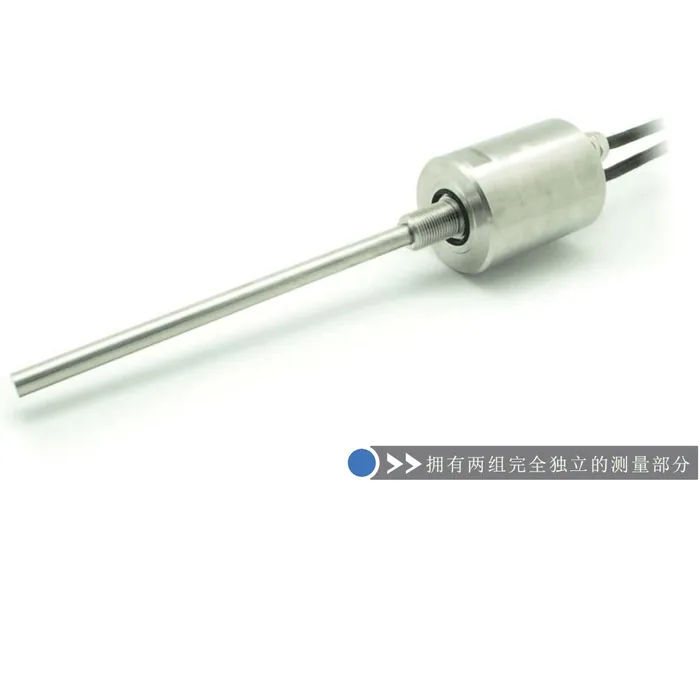
Series 16R Redundant Design Built-in
View ProductRelated Applications
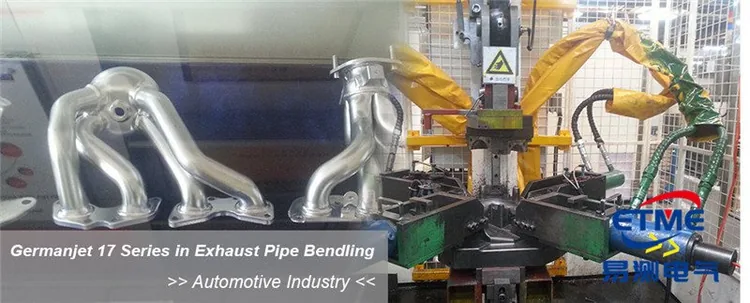
Series 16 Hydraulic Rod Magnetostrictive Displacement Sensor Application Cases
View Details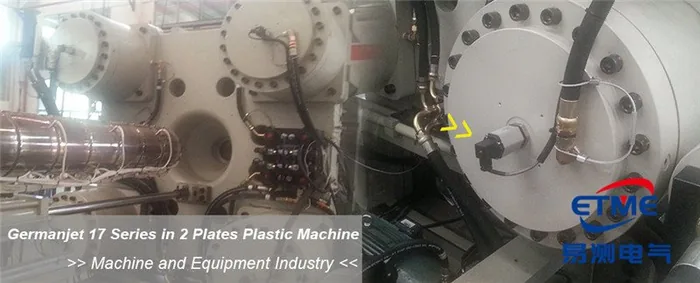
Series 17 Hydraulic Cylinder Integrated Magnetostrictive Displacement Sensor Application Cases
View Details