How to Set the Injection to Packing Switchover: Time, Pressure or Position
Same machine, same mould, same material, and the part weight still scatters from one shift to the next. More often than not the cause sits at the instant injection changes to packing, because that is where the amount of material in the cavity is settled.
What triggers the handover decides whether that point can repeat. Time, pressure and position look at three different quantities, and the difference is not an accuracy figure.

Why There Is a Switchover at All
Injection is velocity controlled: the screw is pushed forward at a set speed and drives melt into the cavity. Packing is pressure controlled: the screw barely moves while pressure is held to compact the material and compensate shrinkage.
The two stages aim at different things, so a moment has to exist where control passes from velocity to pressure. Where that moment sits is effectively a statement about how full the cavity is.
Switch too early and no amount of packing recovers the shortfall. Switch too late and the cavity is already over-pressurised, bringing flash and internal stress. The switchover point is a fill criterion, not a time stamp or a pressure number.
Three Triggers, One Thing They Differ In
There are three ways a controller decides that the moment has come: the injection timer expires, the injection pressure reaches a threshold, or the screw arrives at a position.
All three work. What separates them is how they behave when the process moves underneath them. Only one question matters: under the same conditions, does it switch at the same fill level every time?
| Trigger | What it watches | Main source of drift | Repeatability |
|---|---|---|---|
| Time | The injection timer | Oil temperature, melt viscosity, cavity resistance | Drifts first |
| Pressure | The instantaneous injection pressure | Pressure spikes, detection lag, threshold value | Middle, sensitive to the threshold |
| Position | Where the screw has actually arrived | Essentially only the feedback itself | Steadiest of the three |
The third row is steady for a plain reason: position is a geometric quantity. It has nothing to do with oil temperature, viscosity or cavity resistance. The screw is at that coordinate or it is not.
Time Triggering: Easiest, and First to Drift
Set a time and switch when it expires. No position feedback needed, which is why the method survives on older machines.
The trouble is that how much material goes in during a fixed time depends on melt viscosity and cavity resistance. Warmer oil lowers viscosity and fills faster within the same window; poor venting or a worn gate fills less.
On the floor it appears as weight running high for the first couple of hours and then falling off as the machine warms, or as the whole curve shifting when a new material batch arrives. Time triggering does not create process variation, it translates it directly into part variation.
Pressure Triggering: Fast, but It Reads an Instant
Switch when injection pressure crosses a threshold. This sits closer to the fill level than a timer does, since rising pressure means the cavity is filling.
But it reads an instantaneous value, and instantaneous pressure carries noise. Pressure fluctuates during injection, and valve shift, high shear at the gate and the folding front of the flow all make the reading twitch. Set the threshold close and it triggers early; set it far and the switch happens after the cavity is already full.
There is also unavoidable lag. The pressure element has its own response time, and a further interval passes before the controller acts on it. On large machines with long runners that interval grows.
Position Triggering: It Waits for the Screw
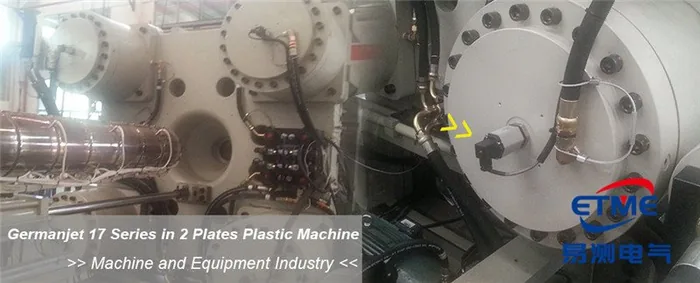
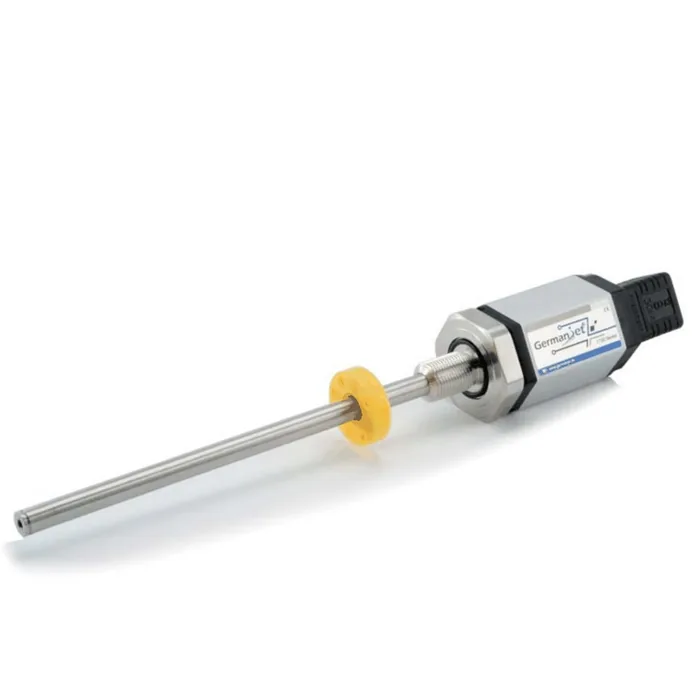
Screw position is delivered continuously by a magnetostrictive displacement sensor on the injection unit, and the controller switches the moment the reading passes the set point.
Its advantage is a single criterion: whatever the oil temperature, viscosity or cavity resistance, the switch happens at that coordinate. Process drift cannot move the switching moment.
Two things need attention. First, repeatability rather than resolution — the consistency of the point rests on repeatability, and more decimal places do not help if the unit does not return to the same place. Second, refresh rate against the injection stage: a controller deciding on the previous cycle position adds a delay of random length to the switchover.
Injection carries the tightest accuracy demand of the measuring points on an injection moulding machine; the grade comparison is set out in clamping force and shot size closed loop.
How the Switchover Point Is Decided
No universal number exists to copy. The point depends on cavity volume, gate size, material shrinkage and the target part weight.
In practice a first value is tried near the point where the cavity is close to full, the part is inspected, and the point is trimmed by weighing. The direction is unambiguous: light parts with sink marks mean the switch came early and the point moves later; flash and high internal stress mean it came late and the point moves earlier.
A change of material, of mould, or even of batch within one grade calls for the point to be confirmed again.
What Early and Late Switching Produce
- Too early: the cavity is handed to packing while still short of full, and the hold phase moves the screw so little that the shortfall cannot be made up. The signs are short shots, sink marks, undersized parts and low weight, with large differences between locations in the same cavity.
- Too late: the cavity is already over-pressurised and more material is forced in. The signs are flash, difficult ejection, internal stress that shows up later as warping or cracking, and damage to the parting line.
- A drifting point: neither early nor late, but different each cycle. Weight scatter is large while the average looks normal, and checking the trigger method pays off faster than adjusting process parameters.
Verifying It: Weighing Beats Watching the Curve
Watching the injection curve shows a trend but not how much material is involved.
Weighing is more direct. Hold the other parameters, step the switchover point forward and back in fixed increments, mould a few parts at each step and record the weight. The sensitivity of weight to the switchover point draws a slope, and the point belongs where that slope is flat and weight is stable.
The same curve also answers whether repeatability is adequate: if consecutive parts within one step already scatter, the problem is not the switchover point but the feedback or the mechanics.
Beyond the feedback, mechanical effects at the end of a stroke are worth a look, as covered in cylinder cushioning and the end of stroke.
Field notes for engineers
- After changing the magnetostrictive displacement sensor, confirm the switchover point again. The controller stores a position value, and the same physical place may read differently on new hardware — carrying the old number over silently moves the point.
- Thin wall high speed moulding often uses position first with pressure as a backstop: switching on position normally, and forcing the switch when pressure hits a ceiling to protect the mould. Confirm the two thresholds do not fight each other.
- When chasing weight scatter, freeze the switchover point before touching anything else. Adjusting mould temperature or packing pressure while the point drifts wastes the effort.
- Take the injection feedback from the screw where it actually is. Mounting it on an intermediate linkage folds linkage clearance and deflection into the reading, as described in which side it is mounted on changes what is measured.
Frequently Asked Questions
Q: What value should the injection to packing position be set to?
There is no universal value. It depends on cavity volume, gate size, material shrinkage and the target part weight, and varies widely between moulds. The practical route is a first value near the expected fill, then trimming by weighing, increment by increment.
Q: Can position and pressure triggering be used together?
Yes. Many systems run position first with pressure as a backstop: switching on position normally, and forcing the switch when injection pressure reaches a ceiling to protect the mould. The two thresholds must be checked against each other, or a pressure trip can cut in before the position switch is due.
Q: Does the switchover point need re-adjusting after replacing the feedback unit?
Yes. What the controller stores is a position value, and a new unit may read the same physical place differently. Re-calibrate zero and span first, then confirm the switchover point by weighing again.
Q: Why is the switchover accurate dry but drifts once material is in the mould?
Running dry, there is no cavity resistance, so screw travel and actual fill are almost the same. With material present, cavity pressure rises and both screw deflection and oil compressibility separate the filled amount from the position reading. The point has to be confirmed under real cavity conditions; dry data is only a reference.
Related Products
Series 17 Hydraulic Cylinder Integrated
View Product
Series 16 Hydraulic Cylinder Built-in
View Product
Series 19 H-Type Built-in Cylinder
View Product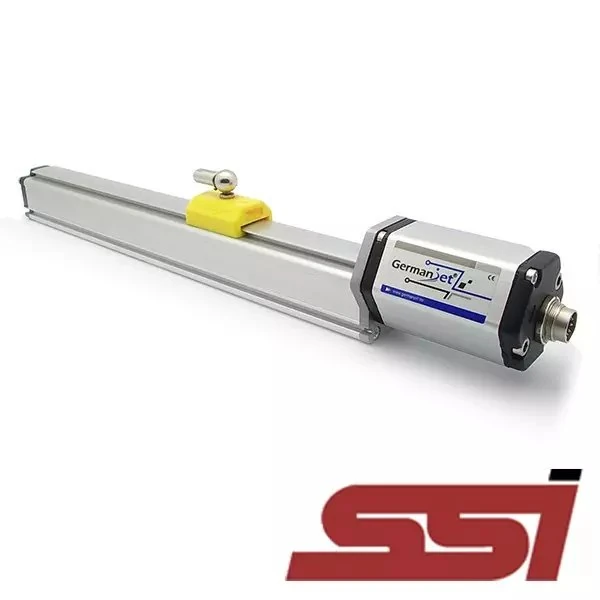
Series 19 SSI Digital Interface
View ProductRelated Applications
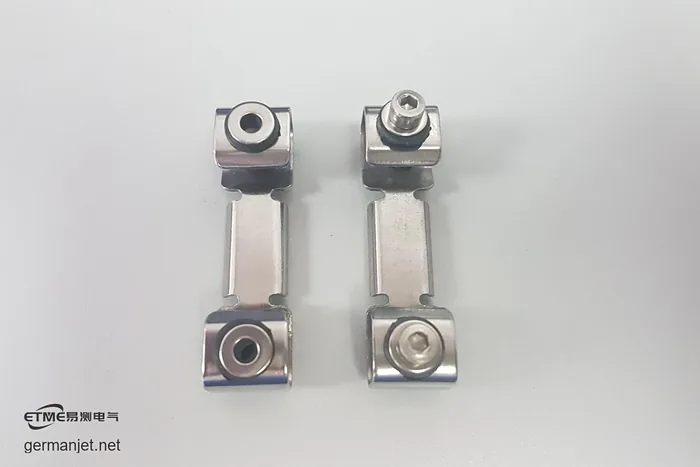
Ejector Sensor Jitter on an Injection Moulding Machine: From Mounting Plate Resonance to the Standard Clip Fitting
View Details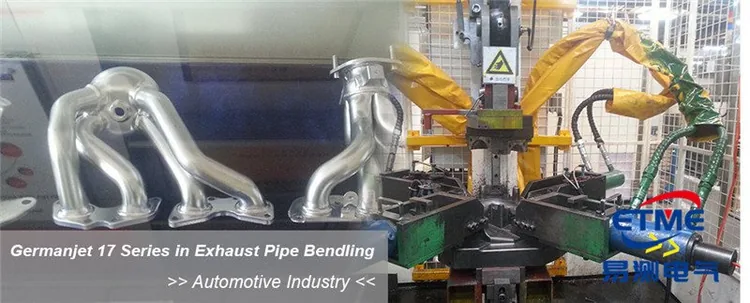
Series 16 Hydraulic Rod Magnetostrictive Displacement Sensor Application Cases
View Details