
Hydraulic Cylinder Stick-Slip, Read from the Position Curve
By the time an operator can feel stick-slip by hand, seals and guideways have usually been wearing for a while. The position curve shows it earlier, with one condition: the curve has to be real. Our article on the position curve of the same motion uses it to watch long-term degradation; this one uses it to look inside a single move.
1. Rule Out the Measurement Side First
A step in the curve has two possible origins: the machine really is stalling, or the sampling never caught up. Three conditions manufacture steps on their own.
- Sampling too slow. The stall is a short event. When samples are sparser than the event, the plot becomes a series of steps that look like sticking but are simply missed continuity.
- Filtering too heavy. Filtering is added to suppress noise, and it slows the response. Corners at stop and reversal get rounded off, hiding the very impact you were looking for.
- Read period not equal to refresh period. If the program polls on a fixed cycle while the sensor refreshes faster, non-integer ratios periodically repeat or skip a value, producing regular spikes.
The test: raise the sampling rate and switch the filter off, then capture again. Steps that disappear were measurement-side. Steps that remain, only sharper, are mechanical.
2. Staircase: Friction and Lubrication
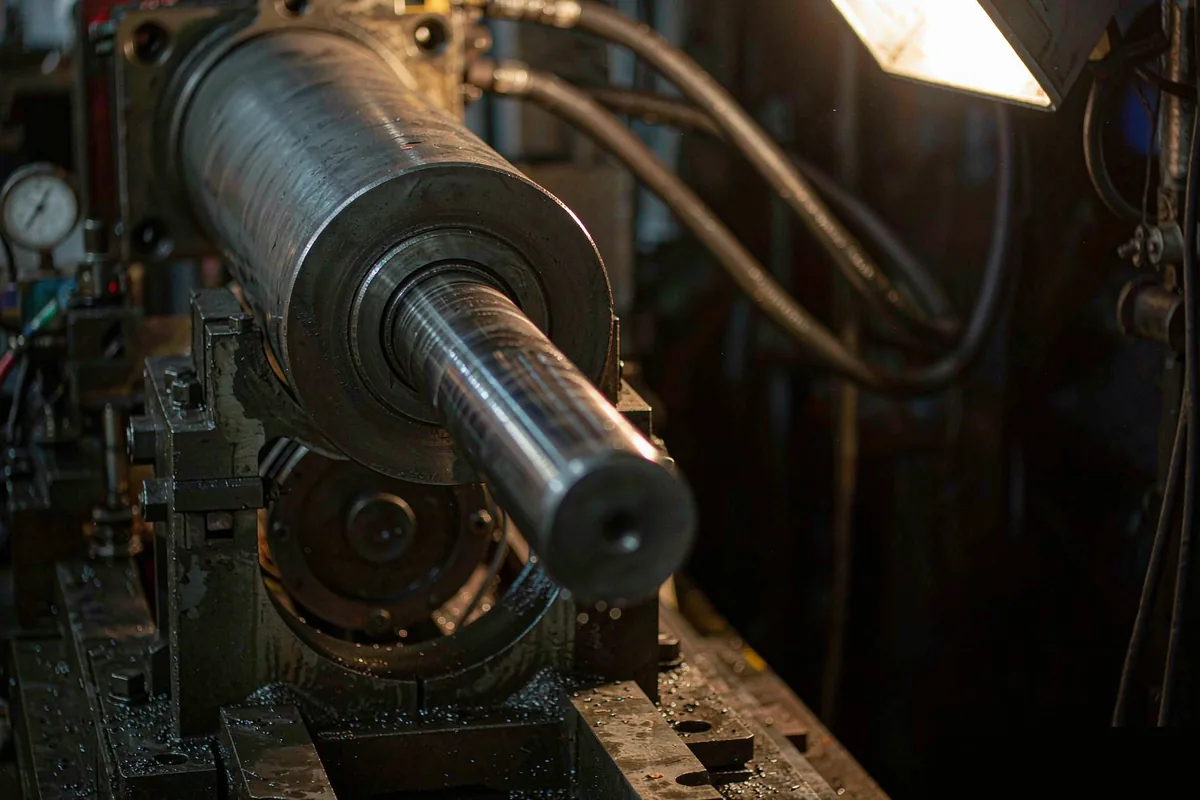
The signature is clear. Velocity drops close to zero in sections and then snaps back, so the position trace looks like a staircase. That is classic stick-slip: static friction exceeds kinetic friction, the piston locks, pressure builds until it exceeds the static value, the piston lurches, and it locks again.
Four places produce it:
- Seals too tight or aged. Hardened seals raise static friction sharply, worst at low speed. Running faster often makes it disappear, which is the giveaway.
- Scored or corroded bore. Friction changes abruptly at one location, so the sticking position is repeatable.
- Dry guideway. The guide bush is starved, or its grease has been washed out.
- Oil viscosity too high. Most obvious on a cold start and relieved once the oil warms.
Separate them by position: repeatable sticking points to bore and guideway; random sticking that tracks oil temperature points to viscosity and lubrication.
3. Sawtooth: Flow Pulsation
Dense high-frequency chatter sitting on an otherwise correct slope. The position trace shows no obvious pause, but the velocity trace is rough. This class is usually not friction at all; the supply itself is unsteady.
- Inherent piston pump pulsation. Pump flow is pulsating by nature and an accumulator absorbs it. A failed accumulator, or wrong precharge, passes the pulsation to the cylinder.
- Proportional valve resolution limit. Spool position is discrete. A small command change does not move it, and once it moves it overshoots, producing a limit cycle.
- Gain set too high. With excessive position gain the loop oscillates around the target. Our article on the two feedbacks, spool and cylinder, covers the phase relationship between the signals in that oscillation.
The test: switch to open loop with a fixed flow. Chatter that persists belongs to the hydraulic supply. Chatter that stops belongs to loop gain or valve resolution.
4. Missing Constant-Velocity Section: Backlash and Back Pressure
Nothing chatters, but the section that should be constant-velocity is visibly uneven - slow at the start, fast in the middle, slow again at the end - or there is an empty stretch right after a reversal. That points to mechanical backlash or pressure build-up.
- Backlash in the connections. Play between rod and load, or between ring carrier and moving part, has to be taken up after each reversal, so the reading and the motion are no longer synchronised.
- Insufficient back pressure. With too little return-line pressure, the load tends to fall in the direction of gravity and velocity cannot be held.
- Entrained air. Air raises compressibility, so motion starts soft and then speeds up. It is often worst on the first move after standing.
Backlash has a direct check: run the same position out and back and see whether the two readings coincide. The discrepancy over that section is the order of the backlash.
5. Set Three Parameters Before the Curve Is Worth Reading
- Sampling rate. As a working rule, the shortest feature of interest should fall on at least ten samples, or the shape cannot be trusted. Stick-slip events run in the tens of milliseconds, so the sample period needs to be an order of magnitude shorter.
- Duration. Cover at least one complete out-and-back including the reversal. A single direction hides everything that happens at reversal.
- Trigger. Trigger from the motion-start signal, not from a person pressing start. The timing drift between manual triggering and actual motion makes two traces impossible to overlay.
Overlaying is the most useful step in the whole method. Put traces of the same motion from different dates on one chart; the change in shape says more than any absolute value.
6. Do Not Treat the Curve as the Only Evidence
The curve locates where and when, never which component. What it gives is direction: repeatable position or not, still present in open loop or not, out and back coincident or not. Those three answers point at completely different things to open up.
Set it beside hand feel, sound and pressure gauge. When three lines of evidence point at the same place, then take it apart. Opening a cylinder on the curve alone tends to replace perfectly good seals.
7. One Line to Close
The curve is not a verdict, it is a sorting tool. It tells you which layer to look at; whether you find anything there is still down to your hands.
Frequently Asked Questions
Q: Does a step in the position curve always mean the cylinder is sticking?
No. Slow sampling, heavy filtering, and a read period that does not divide evenly into the sensor refresh period all manufacture steps. Raise the sampling rate and switch filtering off before deciding; steps that vanish were measurement-side.
Q: What does it mean if the sticking always happens at the same point in the stroke?
Usually a scored or corroded bore, or a dry section of guideway, meaning friction changes abruptly at that location. Sticking that happens at random positions and tracks oil temperature points instead to viscosity and lubrication.
Q: How do I tell friction from flow pulsation?
By shape. Friction produces a staircase, with velocity dropping near zero in sections and snapping back. Pulsation produces a sawtooth of dense chatter on an otherwise correct slope. Switching to open loop with fixed flow settles it: chatter that disappears is loop or valve, chatter that remains is supply.
Q: What sampling rate is enough for a usable trace?
Set it from the shortest feature of interest: that event should land on at least ten samples. Stick-slip events run in the tens of milliseconds, so the sample period needs to be an order of magnitude shorter. Trigger from the motion-start signal so traces from different dates can be overlaid.
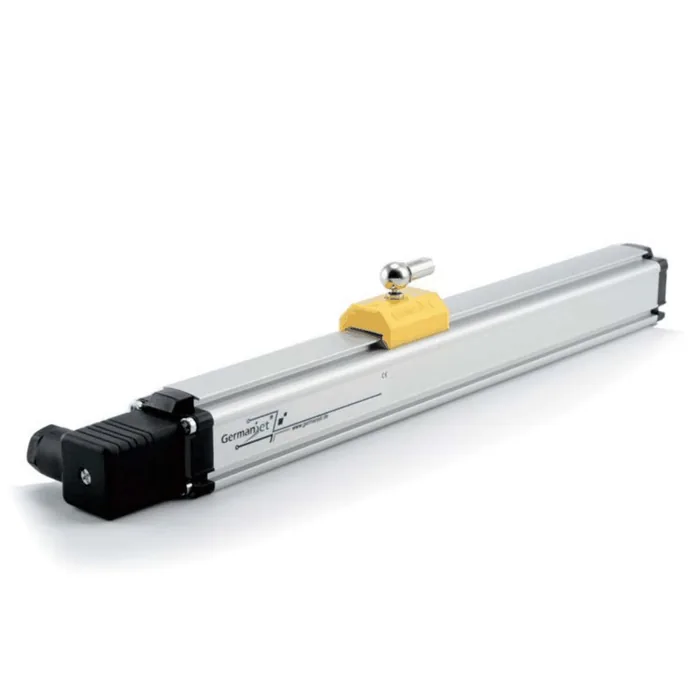
Related Products
Related Applications
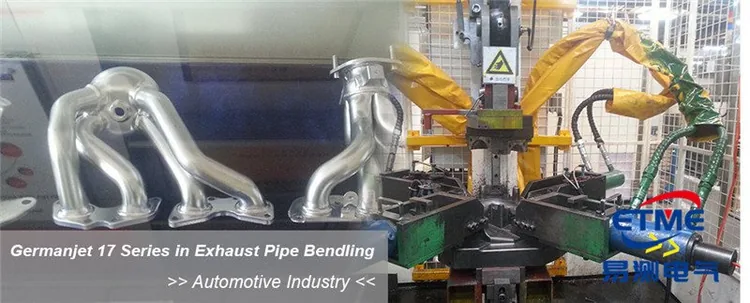
Series 16 Hydraulic Rod Magnetostrictive Displacement Sensor Application Cases
View Details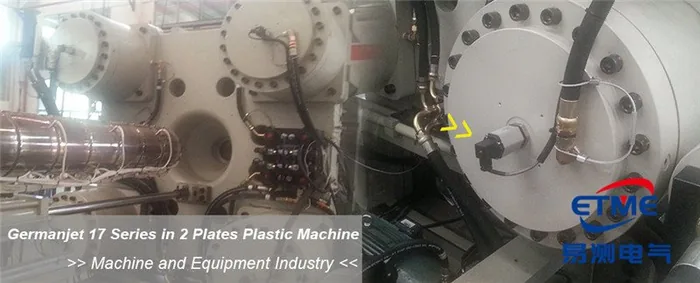
Series 17 Hydraulic Cylinder Integrated Magnetostrictive Displacement Sensor Application Cases
View Details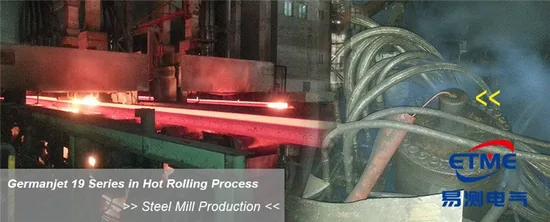
Series 19H Cylinder-Integrated Process Displacement Sensor Application Cases
View DetailsWhatever the question above, it comes back to the same device.magnetostrictive displacement sensorThe product range lists every series by stroke, mounting style and output interface, which is the quickest way into a selection.
← Back to News