Injection Moulding Machine: Seven Electronic Rulers on One CANbus Node
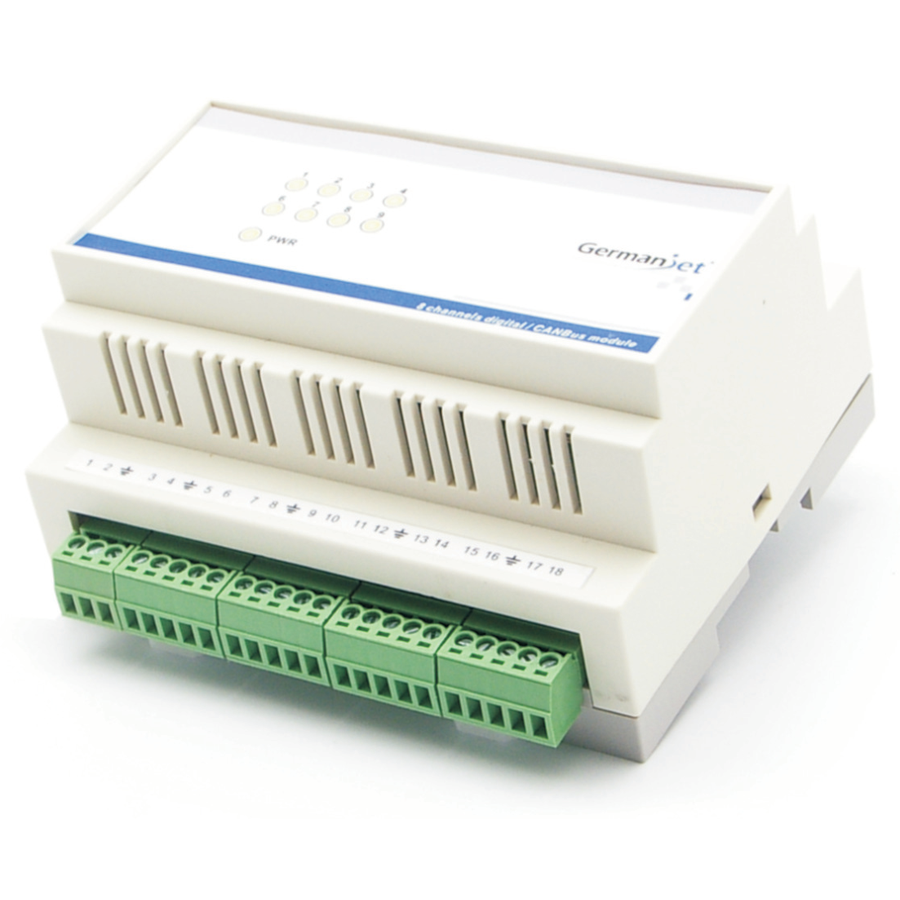
An injection moulding machine carries many electronic rulers — clamp, ejector, injection, core pulls — and every ruler that is wired as its own CANopen node eats a node address and a share of the bus. The Germanjet digital CANbus integration module solves this the other way: seven (up to eight) electronic rulers converge into one bus node, so the whole machine uses a handful of addresses instead of one per sensor.
What the node ceiling costs on a real machine
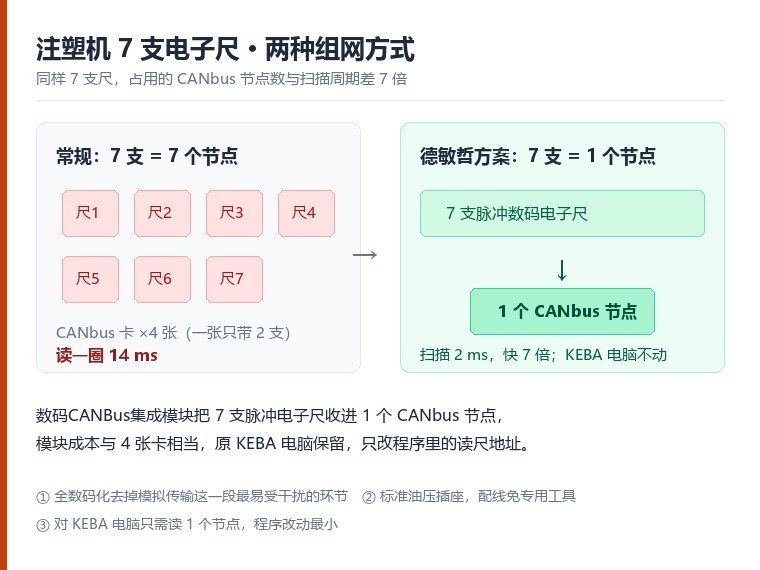
Fully digital electronic rulers have been standard on Japanese and European injection moulding machines for years — precise and immune to interference — but cost has always been the obstacle. The rulers themselves are expensive and the wiring is not cheap; worse, under KEBA guidance one CANbus card carries at most two electronic rulers. A two-platen machine with seven rulers therefore needs four KEBA cards, and the cost steps up with them.
That is the core conflict in ruler selection on a moulding machine: you want to go fully digital, and the node count stops you first. Machines that already solved it show the pressure from the other side — Toyo and Nissei run three fully digital CANbus rulers on two cards purely to collect readings faster, while ENGEL and HUSKY saw the limits of both the card count and the bus speed and moved their communication base to Siemens Profibus. Each route has its own price.
Collecting the seven nodes into one node is the way out:
- Speed — the KEBA controller scans one node instead of seven. At 2 ms per ruler a seven-ruler scan takes 14 ms; one node brings it back to 2 ms, seven times faster, and a shorter scan cycle feeds straight into machine accuracy and performance.
- Cost — one KEBA card replaces four, with no extra overhead on the card itself. The controller stays as it is: the KEBA industrial PC is the most reliable machine controller in the industry and builders such as Haitian keep it, changing only the reading address in the program.
- Wiring — Germanjet pulse-digital rulers use a standard hydraulic socket, so no special tooling is needed and assembly time falls.
- Interference — measured against the halfway house of one digital CANbus clamp ruler plus six analogue rulers, going fully digital removes the analogue transmission path, which is the part most exposed to interference. Reading stability and accuracy both step up.
The industry is moving the same way: Chen Hsong has built large moulding machines for Mitsubishi for years, and its own controllers now carry seven pulse-digital rulers as standard on medium and large machines. The digital share of injection moulding only goes one way.
Why node count matters
- Every node needs a unique node ID; a machine with twelve rulers on twelve nodes is twelve IDs to administer and fault-find.
- More nodes mean more PDO traffic on the same bus — at high cycle rates the bus, not the sensor, becomes the limit.
- Each node is a failure point: one dead node on a shared bus can stall the whole segment.
How the one-node scheme works
- The analogue rulers (4-20 mA or 0-10 V) or SSI rulers connect to the integration module's input channels.
- The module reads all channels, converts them to positions, and publishes them as one CANopen node.
- The PLC sees one node with several mapped position objects instead of one node per ruler.
- The module is configured over SDO like a normal CANopen device — node ID, baud and channel mapping.
What changes on the PLC side
- Fewer EDS entries — one device file instead of one per ruler.
- Fewer node addresses to reserve and document.
- The scan cycle is shared; make sure the module's publish period covers the fastest axis you monitor.
- Wiring concentrates at the module — keep the supply and the shield to the module clean, because a noisy input shows up on every channel.
Step-by-step connection of the module to a PLC — master setup, EDS import, PDO mapping and terminal wiring — is in connecting a digital CANbus integration module to a PLC. If the rulers themselves still use single-node CANopen, the communication frames are explained in CANopen communication examples.
Frequently Asked Questions
Q: How many rulers fit on one module?
The Germanjet digital CANbus integration module collects up to seven (optionally eight) channels into one bus node, depending on the input types.
Q: Do the rulers still need their own node addresses?
No. They connect to the module channels; the module is the single CANopen node the PLC talks to.
Related Products
Related Applications
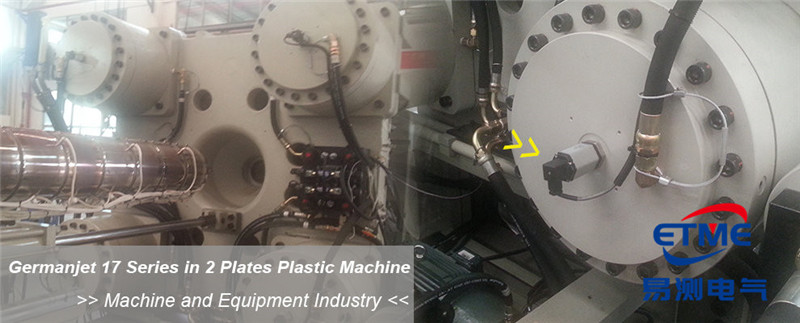
Series 17 Hydraulic Cylinder Integrated Magnetostrictive Displacement Sensor Application Cases
View Details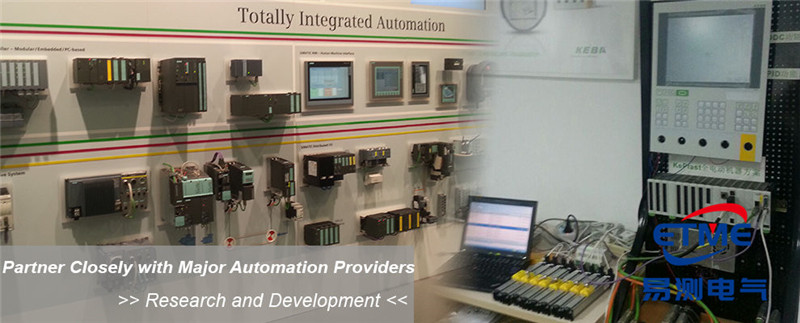
Multi-Industry Application Cases for Magnetostrictive Displacement Sensors
View Details
Series 18 Profile Magnetostrictive Displacement Sensor Application Cases
View Details