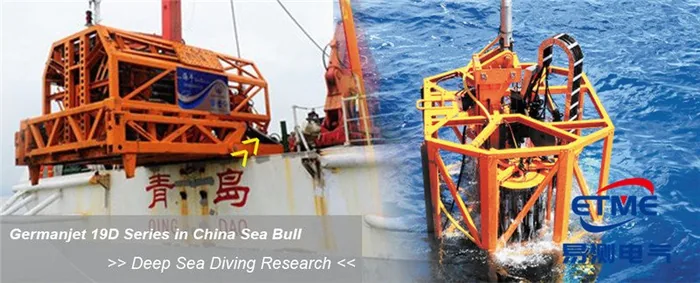
Two-Platen Retrofit: External Displacement Sensor, Cylinder Untouched
Prefer an external magnetostrictive displacement sensor, with no cylinder or screw change, when adding position measurement to two-platen and all-electric injection molding machines. The difficulty is not the sensor itself but the difference in installation space and transmission: a two-platen machine has no toggle, clamping is done by a locking mechanism plus an intensifier cylinder, platen stroke is long and the cylinders are short; an all-electric machine is driven by a servo motor and ball screw and originally relies on motor-encoder counts, so the retrofit aim is to add an absolute-position feedback path independent of the transmission chain. Both machine types should prefer an external magnetostrictive displacement sensor — the cylinder is not opened and the screw is not altered; only a bracket and a position magnet are added.
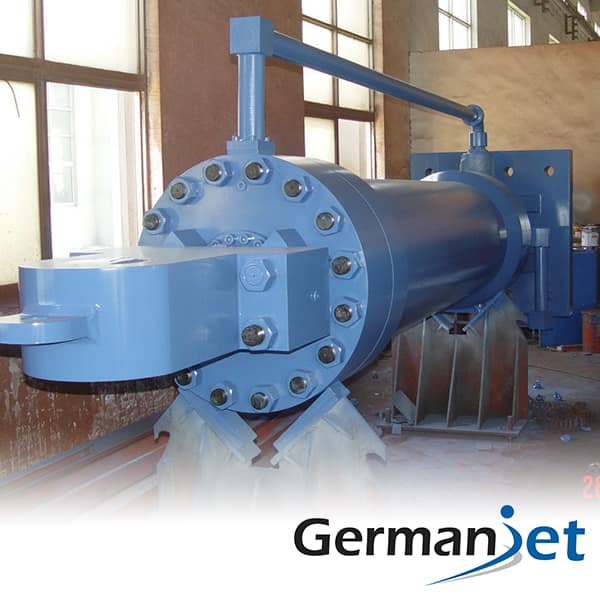
Structural differences and measuring points of two-platen machines
The moving platen of a two-platen machine is driven over a long stroke by a fast-traverse cylinder; once closed, a lock engages the tie bars and an intensifier cylinder then builds clamping force. This brings three retrofit points: first, the traverse stroke is long, typically much longer than a toggle machine of the same tonnage, so absolute error must be converted from % FS on a long range (0.02% FS is ±0.4 mm on a 2 m stroke) and checked by section if necessary; second, the lock position must be confirmed independently — alignment of lock teeth with the tie-bar teeth depends on the platen-position reading, and position drift will cause a lock-not-seated alarm; third, the intensifier-section stroke is extremely short, with only millimetre-scale displacement, so a fine resolution step (1–5 μm) is needed to reflect tie-bar elongation.
All-electric machines: why a displacement sensor is still added
Position on an all-electric machine comes from cumulative counts of the servo-motor encoder, converted by screw lead. The inherent limit of that scheme is that it reads the motor end, not the actuator end. Screw backlash, coupling twist, screw thermal growth and elastic slip of a belt drive are all invisible to the motor encoder. Adding a magnetostrictive displacement sensor that measures the actuator end directly can be used as the closed-loop outer loop or as a check channel, and at the same time provides absolute position that is not lost on power-down — the difference from an incremental encoder is in Absolute vs. Incremental Position.
Comparison of retrofit mounting forms
| Machine type / measuring point | Recommended form | Mounting points | Resolution step | Typical concern |
|---|---|---|---|---|
| Two-platen traverse stroke | External, fixed along the platen motion | Large bracket span; add intermediate support against sag | 10–20 μm | Absolute error on a long range |
| Two-platen intensifier / clamping-force section | In-cylinder or short-range external | Stroke is short; keep clear of both-end dead zones | 1–5 μm | Ability to resolve a minute displacement |
| All-electric injection unit / injection axis | External, rigidly coupled to the screw carriage | Mount parallel to the screw; avoid side load | 1–5 μm | Backlash and thermal-growth compensation |
| All-electric clamp open/close | External | Lighten the magnet bracket to cut moving inertia | 10–20 μm | Update rate at a high cycle rate |
A retrofit path that leaves the cylinder untouched
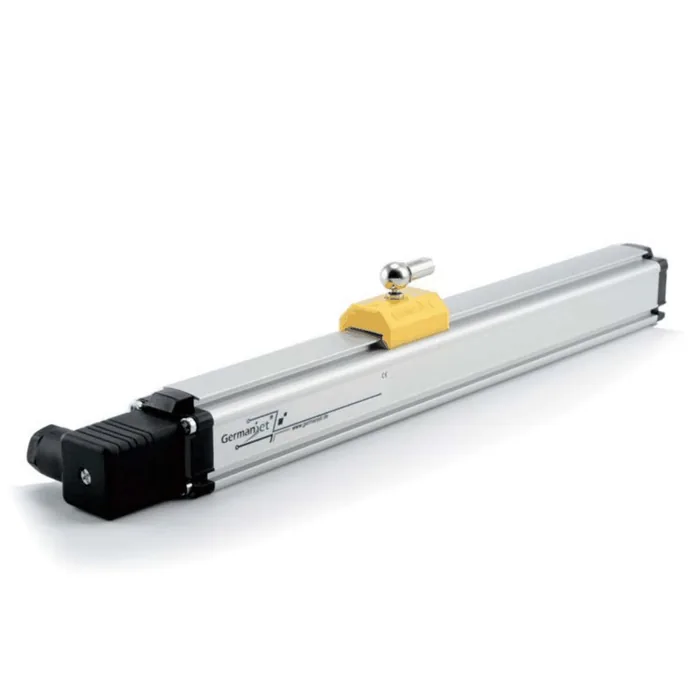
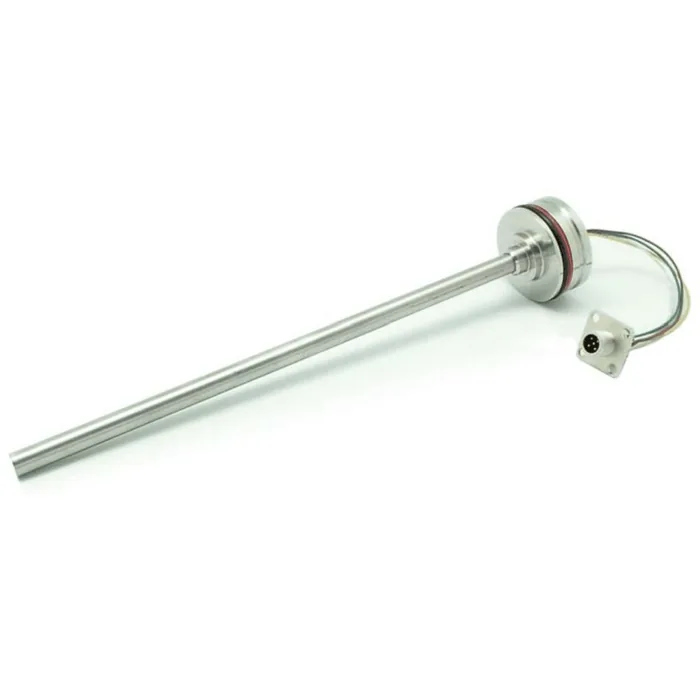
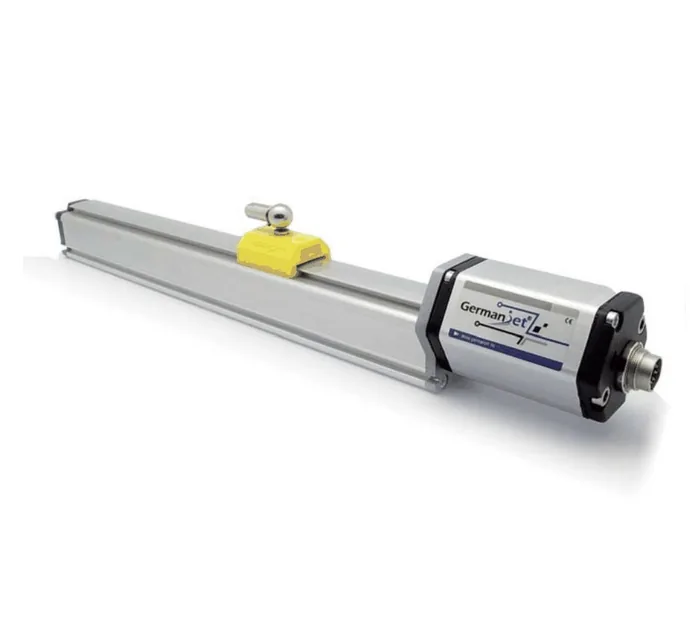
The worst mistake on a legacy retrofit is opening the cylinder — once opened, sealing, bleeding and commissioning cost far more than the sensor itself. An external scheme fixes the body on the machine frame or outside the cylinder, and an aluminium bracket lets the magnet follow the platen/carriage, without breaking the hydraulic circuit. Select the range as usable stroke plus two-end margin, and confirm parallelism of the mounting face: excessive coaxial error between magnet and rod weakens the echo and shows as an unstable reading at particular positions. External products include Series 18 external and Series 19P external; if the machine needs frequent high-pressure wash-down, choose the higher-protection Series 13 mobile hydraulics. The overall hydraulic closed-loop approach is in Why Choose Magnetostrictive Sensing for Hydraulic Cylinder Position Control; the four-point scheme for standard machines is in Injection Molding: Closing the Loop on Clamping Force and Shot Volume.
Interface: how to connect a legacy controller
Most in-service injection-molding controllers have only analog input channels; connecting in the original 0–10 V or 4-20 mA analogue channel is then the least work — match the original signal and re-calibrate for least effort — needing only a range recalibration. If the retrofit also upgrades the control system, CANopen or EtherCAT models can put multi-axis position on one bus; fieldbus wiring and termination notes are in How to Connect Magnetostrictive Displacement Sensors to a Fieldbus. If the reading jumps after the retrofit, first check supply, shield earthing and magnet gap in the order of Troubleshooting Magnetostrictive Displacement Sensors.
Engineering application notes
- A 6600-tonne two-platen injection molding machine used a Series 19 7600 mm-stroke CANBus scheme for full-stroke clamp-position feedback.
- Die-casting clamp speed can reach 10 m/s; choose a digital-interface model with a sufficiently fast response.
- Steel-mill roll-gap control has used Series 19 with SSI output; woodworking formers and packaging machines (IP67 environments) are often fitted with Series 17/18.
Frequently Asked Questions
Q: Why does a two-platen machine need multi-point measurement of platen parallelism?
A rodless structure clamps with four-corner synchronised cylinders; any point out of step causes mould offset load and flash. Monitoring the four-corner difference with several sensors of the same type reflects clamp quality better than a single figure.
Q: Does an all-electric injection molding machine still need a displacement sensor?
Yes. The motor encoder sees the screw end, not the mould end, so backlash and elastic deformation are invisible. Adding a magnetostrictive sensor that measures the actuator end directly removes transmission error and eliminates homing.
Q: How can position measurement be added without touching the cylinder?
Mount a profile-style external type in parallel on the side of the mechanism, with the magnet following the mover. If minimum installation space is limited, choose a short-rod external model; see Series 18 external.
Related Products
Related Applications
Multi-Industry Application Cases for Magnetostrictive Displacement Sensors
View Details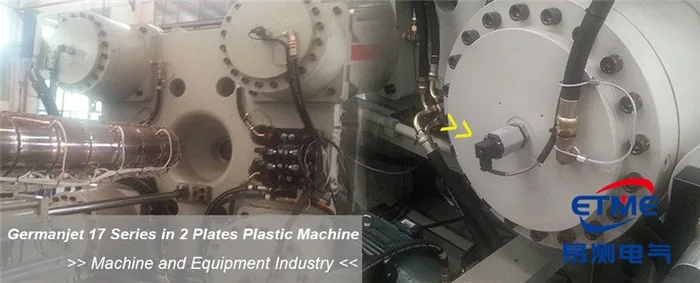
Series 17 Hydraulic Cylinder Integrated Magnetostrictive Displacement Sensor Application Cases
View Details
Series 18 Profile Magnetostrictive Displacement Sensor Application Cases
View Details