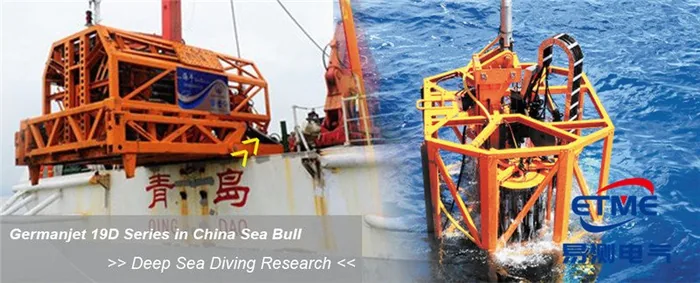
Water Gate Outdoor Duty: Displacement Sensor on the Hoist Cylinder
A magnetostrictive displacement sensor on water gates and hoists meets three hard constraints: long stroke (hydraulic-hoist cylinder stroke often several metres), outdoor all-weather duty (rain, sun, condensation, lightning surge), and lightly manned operation (high on-site maintenance cost, so maintenance-free running is required). The core value of magnetostrictive displacement sensors in this scene is absolute-position output and a non-contact structure: after power loss or a communication break the true opening can be read without homing; there is no mechanical contact between rod and magnet, so there is no wire fatigue or cable fouling of a cable-extension encoder.
Three common methods of gate-opening feedback
Three schemes dominate on site: first, a cable-extension encoder, flexible to install and low in cost, but the wire rusts, ices and binds outdoors over time, and most are incremental so that power loss requires homing; second, a rotary encoder + drum/rack conversion, which measures the drive end rather than the gate end, so chain stretch and drum slip accumulate error; third, a magnetostrictive displacement sensor measuring cylinder stroke directly, absolute position, non-contact, with IP67/IP68 protection possible. The third is the recommended practice for hydraulic hoists. What protection classes actually mean is in IP65/67/68/69K Is Not a Numbers Game.
Scheme comparison
| Scheme | Position type | Outdoor endurance | Maintenance | Typical problems |
|---|---|---|---|---|
| Cable-extension encoder | Mostly incremental | Moderate | Higher | Wire rust, ice binding, homing after power loss |
| Rotary encoder + mechanical conversion | Mostly incremental | Better | Medium | Accumulated transmission-chain error, slip |
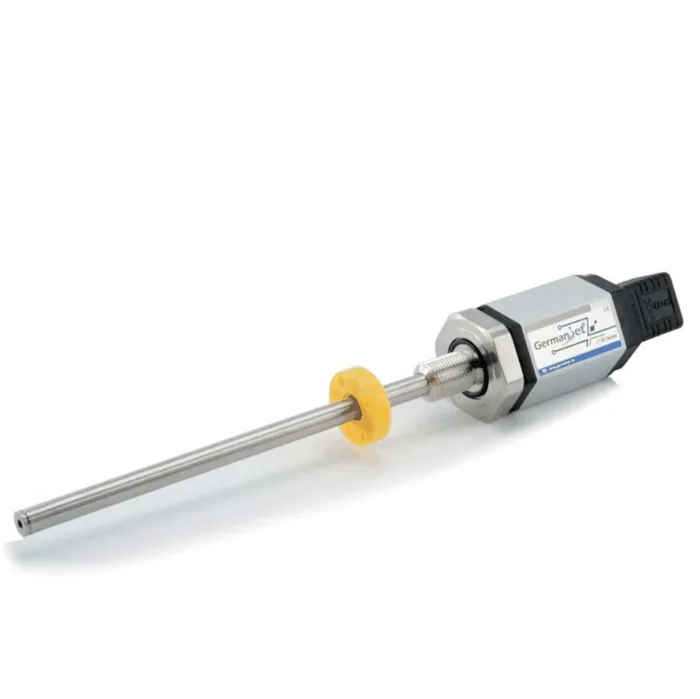
| Magnetostrictive (in-cylinder) | Absolute position | Good (IP67/68) | Low | Cylinder must be deep-bored |
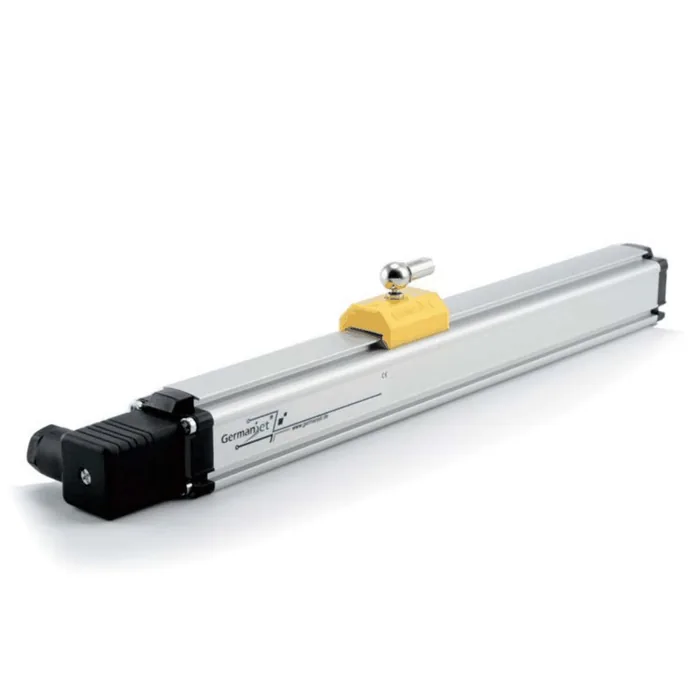
| Magnetostrictive (external / flexible long-stroke) | Absolute position | Good (IP69K optional) | Low | Long spans need support and a guard |
How to choose on long stroke: rigid rod or flexible rod
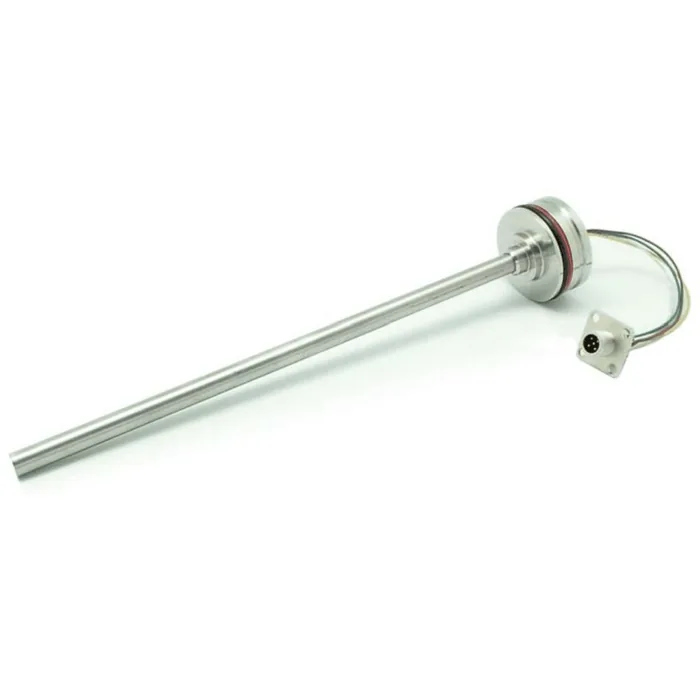
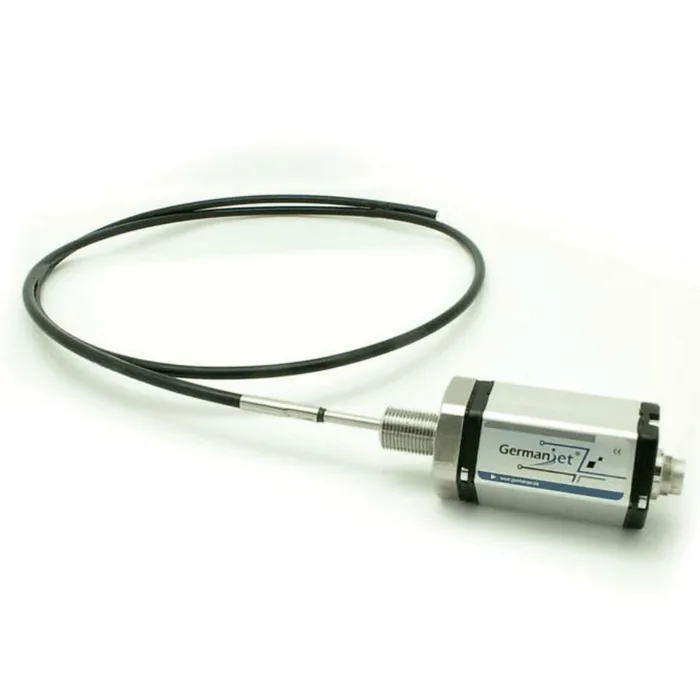
Hoist-cylinder stroke is often of several-metre order. A rigid rod needs intermediate support over a long span and is inconvenient to transport and install; a flexible rod (coilable) is easier to implement on extra-long strokes — see Series 19F flexible long-stroke. Long-range selection must convert the error first: non-linearity is stated as % FS, so 0.02% FS is ±1 mm on a 5 m range. Gate-opening control usually allows centimetre-scale deviation, which is fully adequate at this magnitude; but if the dispatch system records flow against opening in millimetres, the specification basis must be made explicit in advance. External mounting and mobile/wash-down environments can use Series 13 mobile hydraulics (IP69K, 25 g vibration / 100 g shock).
Four engineering details of outdoor deployment
- Waterproofing and condensation: choose IP67 or above connectors with a drip loop, and enter the cable from below; in regions with a large day–night temperature swing, add anti-condensation measures in the enclosure. Water vapour entering the connector is the most common outdoor failure.
- Lightning and surge: gate sites have long, exposed cabling; fit surge protectors on the signal loop, earth the shield at one end, and follow the site code for earth resistance.
- Long-distance transmission: the control room is often hundreds of metres from the gate chamber; analog prefers a 4-20 mA current loop. If a fieldbus is used, check baud rate against cable length and fit terminating resistors correctly (practice in How to Connect Magnetostrictive Displacement Sensors to a Fieldbus).
- Winter low temperature: check the lower operating-temperature limit, not storage temperature; the distinction is in Operating Temperature vs. Storage Temperature.
Similarities and differences with pumping stations and lifts
Inside a water system, the difference between gate hoists and pumping-station cylinders is duty cycle and medium: pumping-station cylinders move infrequently but require long-term on-line monitoring — see Hydraulic Cylinder Stroke Monitoring in Water Pumping Stations; hydraulic-lift cylinder monitoring emphasises safety redundancy and landing accuracy — see Elevator Traction and Hydraulic Lift Cylinder Monitoring. The general principle and selection framework of hydraulic-cylinder position feedback is in Why Choose Magnetostrictive Sensing for Hydraulic Cylinder Position Control.
Practical tips for engineers
- IP65 means a 6.3 mm nozzle spraying water from any direction has no harmful effect; IP67 means no harmful ingress under 1 m immersion.
- Contact-based sensors are typically only IP40/50, whereas non-contact magnetostrictive types can reach IP65 or even IP67 — choose non-contact for high-dust, high-humidity environments.
Frequently Asked Questions
Q: Why is maintenance-free operation emphasised for gate displacement?
Gates are widely distributed and maintenance windows are few, so frequent maintenance is costly. Magnetostrictive sensing is non-contact, wear-free and needs no homing, which suits long-term unmanned duty.
Q: Is position lost after a flood-control power cut outdoors?
No. Absolute position is output, so the original opening is read at power-up and dispatch can resume without homing — critical to flood-season safety.
Q: How is salt-spray corrosion protected against?
Choose IP67/IP69K or higher, route connectors downward, and apply a salt-spray coating if necessary; wet zones can use Series 13.
Related Products
Related Applications
Multi-Industry Application Cases for Magnetostrictive Displacement Sensors
View Details
Series 17 Hydraulic Cylinder Integrated Magnetostrictive Displacement Sensor Application Cases
View Details
Series 18 Profile Magnetostrictive Displacement Sensor Application Cases
View Details