
Automotive Body and Press Shops: Clamp Position and Bottom Dead Centre
Body and press shops use a displacement sensor, the body side for clamp-in-position and the press side for bottom dead centre. Displacement measurement in automotive manufacturing concentrates on two places, the body shop and the press shop. On the body-shop side are clamping and in-position stroke of fixtures, locating pins and press heads, which determine body-assembly accuracy and weld consistency. On the press-shop side are press-slide position and die shut height, which determine part-forming quality and die safety. The shared requirements of both lines are a high cycle rate, high repeatability and strong vibration, so vibration resistance and long-term consistency of displacement feedback are demanding.
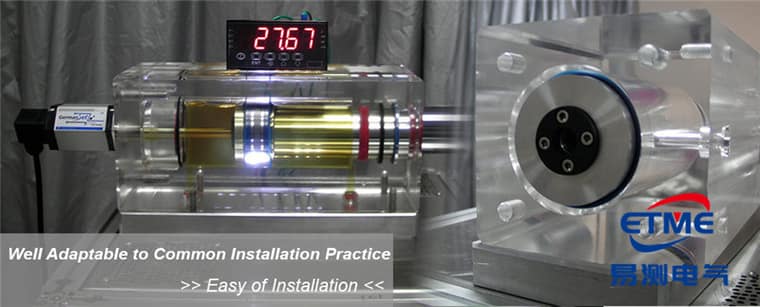
Body shop: fixture and locating stroke
On a body line (spot weld, laser weld, adhesive) the fixture presses the panel onto the locating datum. Displacement feedback is used as the clamp-in-position criterion, for multi-station synchronisation monitoring, and for compensation after wear. Body accuracy is accumulated over many operations; if clamping at a single operation is not in position, the error is passed to the next. Multi-channel sensors of the same model and the same measuring range are recommended, with attention paid to repeatability (typically of the order of ±0.002 mm; see the three accuracy terms). The selection framework for pneumatically or hydraulically driven clamping mechanisms is given in why hydraulic cylinder position control uses magnetostrictive sensing; for cylinder-integrated types see Series 17 cylinder-integrated directly.
Press shop: slide bottom dead centre and shut height
Bottom-dead-centre position of the slide on a mechanical or servo press determines die shut height and part forming. Displacement feedback reads slide absolute position for bottom-dead-centre monitoring, shut-height setting and overload protection. A servo press places higher demands on the position loop; a 1-10 μm resolution grade is recommended (typical non-linearity <0.02% FS; see the three accuracy terms). After a power loss absolute position is retained, so re-zeroing is unnecessary after a die change (see absolute vs. incremental position).
Typical measuring-point layout in automotive manufacturing
| Measuring point | Control objective | Recommended form | Resolution grade | Environmental focus |
|---|---|---|---|---|
| Body-shop fixture clamping | Assembly accuracy | Cylinder-integrated / profile type | 5-20 μm | Spatter, vibration |
| Locating pin / press head | In-position criterion | Profile type | 5-10 μm | Dust, weld slag |
| Press-slide bottom dead centre | Shut height | In-cylinder / integrated | 1-10 μm | Strong vibration, shock |
| Die-change shut-height setting | Rapid changeover | Integrated | 5-20 μm | Oil, vibration |
Installation points in vibration and weld-slag environments
A body shop has weld-slag spatter and vibration; a press shop has periodic high shock. Countermeasures: keep the rod out of the direct weld-slag spray zone; high-vibration stations use Series 13 mobile hydraulic (25 g vibration, 100 g shock), and cylinder-integrated types use Series 17. Specify connectors to IP67 or better (for the meaning of each rating see IP protection ratings). Installation and anti-loosening practice is in installing and commissioning in practice; troubleshooting of abnormalities caused by weld slag is in common-fault troubleshooting.
Interfaces and line integration
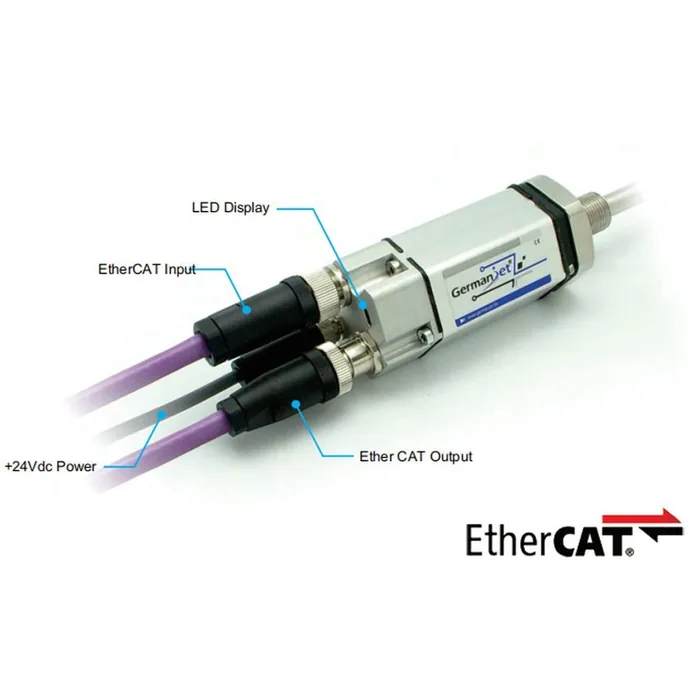
Body and press lines are large and have many axes. Position feedback should preferably use a fieldbus type for centralised management. Multi-axis synchronous sampling should use EtherCAT with distributed clocks (Series 197 EtherCAT; configuration in the practical fieldbus guide). Matching cycle time and refresh rate is covered in matching response time to the control cycle. Similar demand for damping and brake displacement can be compared with high-speed rail and urban transit: damping and brake position.
Engineering application notes
- A 6600-tonne two-platen injection-molding machine used a Series 19, 7600 mm stroke, CAN bus scheme for full-stroke mould-closing position feedback.
- Mould-closing speed on a die-casting machine can reach 10 m/s; a digital-interface model with sufficiently fast response must be specified.
- Steel rolling-mill roll-gap control specifies Series 19 with SSI output; woodworking forming machines and packaging machines (IP67 environments) are often fitted with Series 17/18.
Frequently Asked Questions
Q: Why measure displacement on a body-shop fixture?
Clamp-in-position determines body-assembly accuracy. Multi-station synchronisation monitoring prevents the error being passed downstream.
Q: How is press bottom dead centre measured?
Slide absolute position determines shut height; micrometre-grade resolution safeguards forming. Zero is not lost on power failure, which helps a die change.
Q: How should high vibration be specified?
Specify Series 13, rated 25 g vibration and 100 g shock; for cylinder-integrated mounting specify Series 17. Anti-loosen the magnet bracket.
Related Products
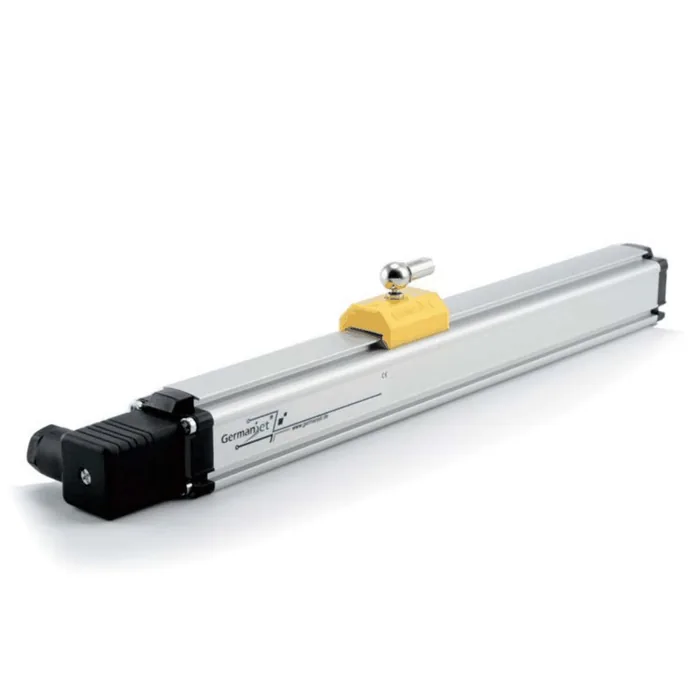
Related Applications
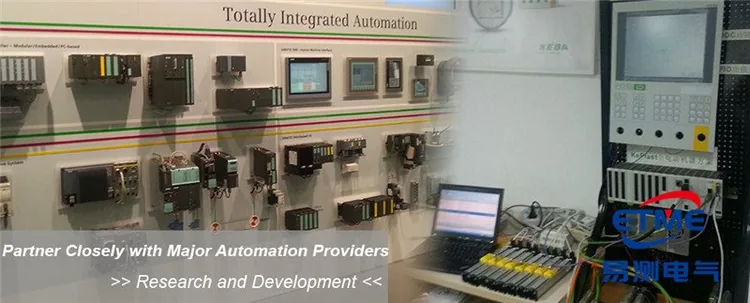
Multi-Industry Application Cases for Magnetostrictive Displacement Sensors
View Details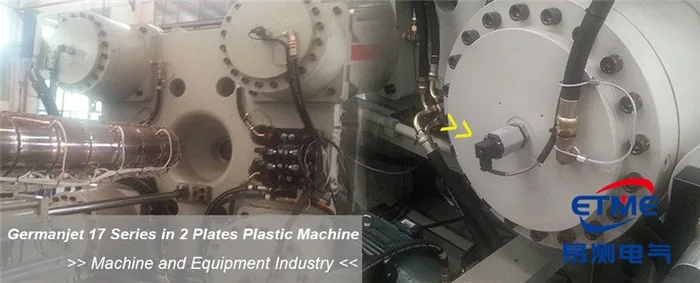
Series 17 Hydraulic Cylinder Integrated Magnetostrictive Displacement Sensor Application Cases
View Details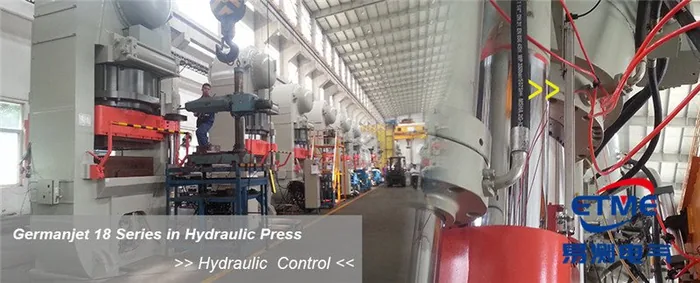
Series 18 Profile Magnetostrictive Displacement Sensor Application Cases
View Details