Water Pumping Stations: Hydraulic Cylinder Stroke and Gate Position Monitoring
Long-stroke outdoor pump-station duty uses a hydraulic cylinder displacement sensor, stressing on-line monitoring and position readable after power loss. Displacement monitoring at a water pumping station and at a gate hoist belong to the same hydraulic-engineering scene, but the emphasis differs: a pumping station stresses long-term on-line monitoring and remote operation — equipment moves infrequently, yet position must be readable accurately at any moment; the pump house is humid, condensation occurs, flooding is possible in the flood season, and staffing is thin. Typical measuring points include blade-adjustment mechanisms (fully adjustable pumps), flap-gate and rapid-gate cylinders, maintenance-gate hoists, and hydraulic-power-unit accumulator stroke.

Functional role of displacement measuring points at a pumping station
On a fully adjustable unit, blade angle is converted from the stroke of the hydraulic adjustment mechanism; it directly affects flow and efficiency and is a key parameter for operational dispatch. Position of the rapid-gate / flap-gate cylinder is used to confirm rapid closure under accident duty and is a safety-related signal. A maintenance-gate hoist has a long stroke and a low motion frequency, but position must be readable immediately after a power loss. The shared requirement of all three measuring points is absolute-position output from a magnetostrictive displacement sensor and long-term maintenance-free operation; the mechanism of absolute position is given in absolute vs. incremental position.
Protection strategy in a humid, condensing environment
Humidity in the pump house and wet-well area is high over the long term. Condensation from day–night temperature difference runs along the cable into the connector — the most common hidden failure path on hydraulic-engineering equipment. The countermeasures are three. First, take a protection rating of IP67 or better; specify IP68 on parts that may be submerged, and IP69K in washdown areas (for what each rating means in practice see what IP65/67/68/69K really mean). Second, route connectors facing down with a drip loop and add a dehumidifier in the cabinet; specify IP68 where parts may be submerged. Third, add dehumidification in the control cabinet. Products to consider include Series 13 mobile hydraulic (IP69K, 25 g vibration / 100 g shock) and, for long-stroke scenes, Series 19F flexible long-stroke.
Measuring-point schemes
| Measuring point | Motion frequency | Stroke | Key requirement | Recommended form |
|---|---|---|---|---|
| Blade-adjustment mechanism | Relatively frequent | Short stroke | Repeatability, resolution | In-cylinder |
| Rapid-gate / flap-gate cylinder | Low (moves in an accident) | Medium stroke | Readable at any time, reliability | In-cylinder or profile type with guard |
| Maintenance-gate hoist | Low | Long stroke | Long range, moisture protection | Flexible long-stroke / profile type |
| Accumulator / hydraulic power unit | Continuous | Short stroke | Long-term stability | Profile type |
Remote monitoring and data retention
Pumping stations are often unattended or thinly staffed, so position data must be sent to the central control or dispatch platform. For long-distance transmission prefer a 4-20 mA current loop. If a fieldbus is used, select baud rate according to cable length and configure terminating resistors correctly; practice is given in the practical fieldbus guide. The practical value of data retention is trend analysis: a gradually lengthening motion time under the same command usually points to hydraulic leakage or mechanism sticking; a slow drift of the fully closed-gate reading may be mechanical wear or calibration drift. Overall schemes for gate-type mechanisms are in water gates and hoists: maintenance-free outdoor long-stroke measurement.
Availability of infrequently moved equipment
Infrequently moved equipment has a counter-intuitive risk: it does not move in ordinary times, and a problem is found only when it really has to move. A regular trial-motion regime should therefore be established, and a full-stroke reading curve recorded during each trial. The selection and pressure-rating framework for hydraulic circuits is given in why hydraulic cylinder position control uses magnetostrictive sensing. Experience from similar environmental and municipal hydraulic equipment is in hydraulic cylinder position in waste compaction equipment.
Practical tips for engineers
- IP65 means a 6.3 mm nozzle spraying water from any direction has no harmful effect; IP67 means no harmful ingress when immersed at 1 m depth.
- Contact-based sensors are typically only IP40 or IP50, whereas non-contact magnetostrictive transducers can reach IP65 or even IP67 — specify a non-contact type in high-dust, high-humidity environments.
Frequently Asked Questions
Q: Are pumping-station and gate displacement schemes the same?
They are similar: both are long-stroke, outdoor and maintenance-free. Pumping-station hoist stroke can use Series 19F flexible long rods or a long profile rod.
Q: How is protection handled in a submerged environment?
Specify IP67/IP69K, with connectors facing down and sealed; confirm compatibility with the immersion medium.
Q: How is dispatch restored after a power loss?
Absolute position is read on power-up at the original opening; dispatch can resume without homing.
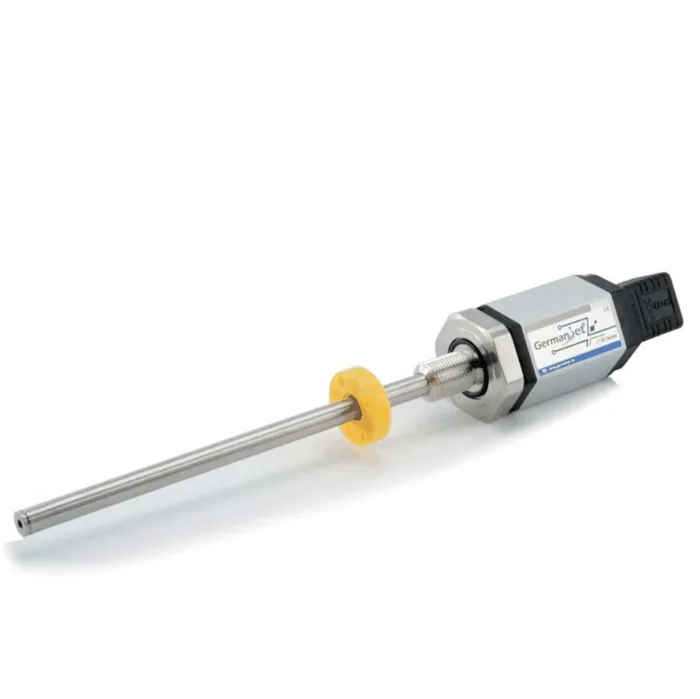
Related Products
Related Applications
Multi-Industry Application Cases for Magnetostrictive Displacement Sensors
View Details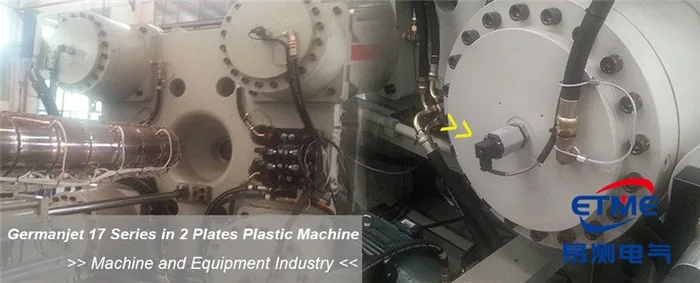
Series 17 Hydraulic Cylinder Integrated Magnetostrictive Displacement Sensor Application Cases
View Details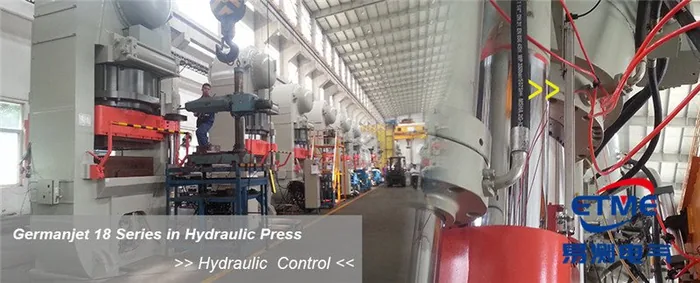
Series 18 Profile Magnetostrictive Displacement Sensor Application Cases
View Details