Waste Compaction: Hydraulic Cylinder Position and In-Cylinder Installation
The heavy, corrosive compaction duty uses a hydraulic cylinder displacement sensor whose installation puts the rod inside a deep piston-rod bore, off media and impact. Displacement measurement on waste compaction equipment (horizontal compaction stations, vertical compaction containers, compacting refuse vehicles) can be summarised by these duty characteristics: high-frequency reciprocation, heavy-load shock, corrosive sewage and leachate, dust and foreign objects, and frequent high-pressure washdown. Ram-stroke feedback is used for reversing control of the compaction cycle, compactness judgement and full-load detection; stroke data are also the basis for equipment wear statistics. Accuracy requirements in this scene are not high (a 50-100 μm grade is sufficient), but the requirements on protection, shock resistance and installation protection approach those of construction machinery.
The role of displacement feedback in the compaction cycle
A typical compaction cycle is “ram advance — pressure rise on obstruction — return — feed again”. If the cycle is judged from the pressure signal alone, “compacted in position” cannot be distinguished from “jammed on a foreign object”. With stroke feedback introduced, the controller can combine a two-dimensional “position + pressure” criterion: pressure rises but position no longer advances, indicating compaction complete or a jam; position advances normally but pressure is abnormally low, which may mean the container is not full or there is a hydraulic leak. Stroke data can also be used to count the effective advance distance of a single compaction as an indirect indicator of compactness.
Corrosion and washdown: the main failure points of a profile-type scheme
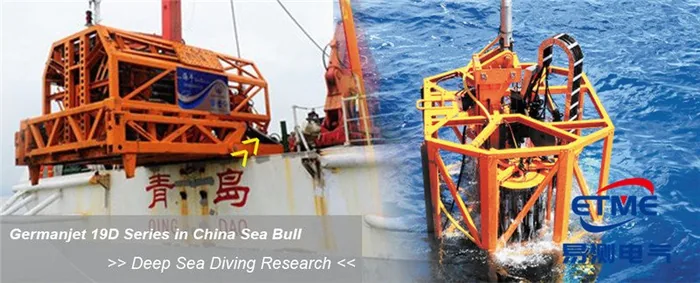
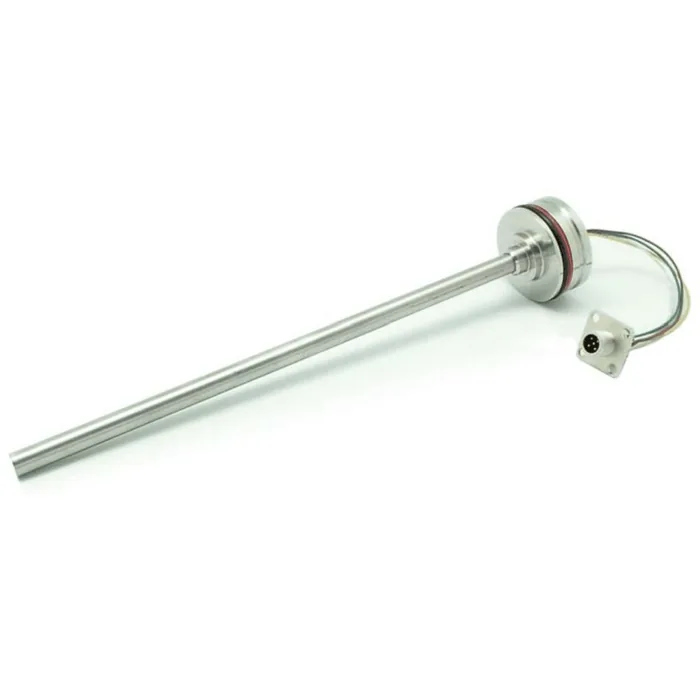
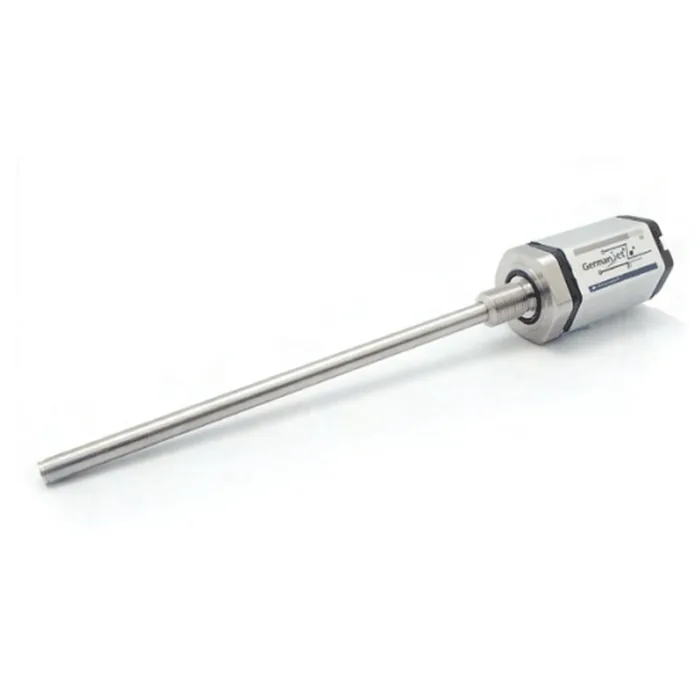
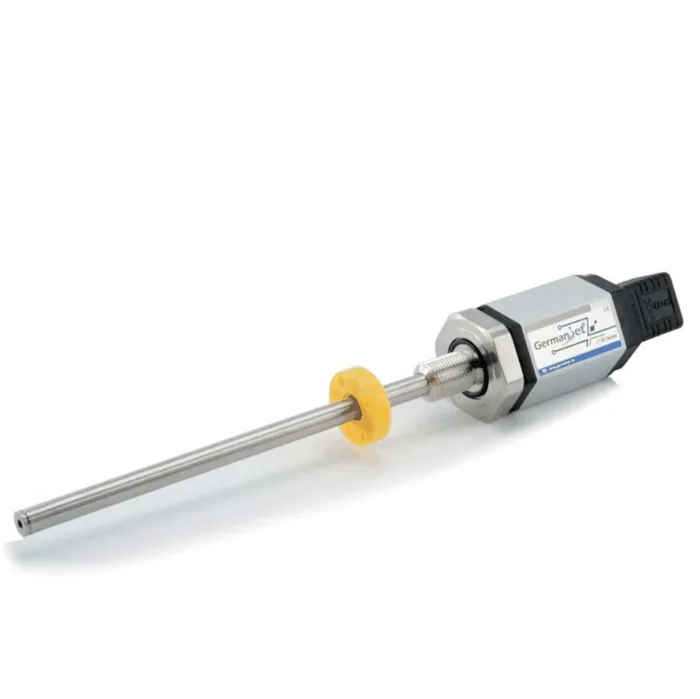
Leachate is corrosive and travels with washdown water. An external rod in this environment is easily enveloped by corrosive liquid and struck by hard objects in the waste, so in-cylinder mounting is the first choice: the installation requirement is a rod fully sealed in a deep bore, clear of leachate and falling waste; depth must cover stroke plus dead zone and meet the 12.7 mm bore lower limit. The rod sits in a deep bore in the piston rod, fully clear of corrosive media and impact. In-cylinder mounting requires a check of pressure rating (by series: Series 16/16R is 350 bar working / 530 bar peak, Series 17/17EX is 350/600 bar, Series 19 in-cylinder is 300/600 bar) and minimum bore (generally ≥12.7 mm). If conditions force a profile type, fit a metal guard and specify a high protection rating; IP69K is recommended at washdown locations (for what the ratings mean see what IP protection ratings really mean). See Series 13 mobile hydraulic (25 g vibration / 100 g shock).
Installation schemes compared
| Scheme | Corrosion resistance | Impact resistance | Retrofit difficulty | Suitability |
|---|---|---|---|---|
| In-cylinder | Good (rod does not contact the medium) | Good | Requires a deep bore in the piston rod | New machines, overhauls |
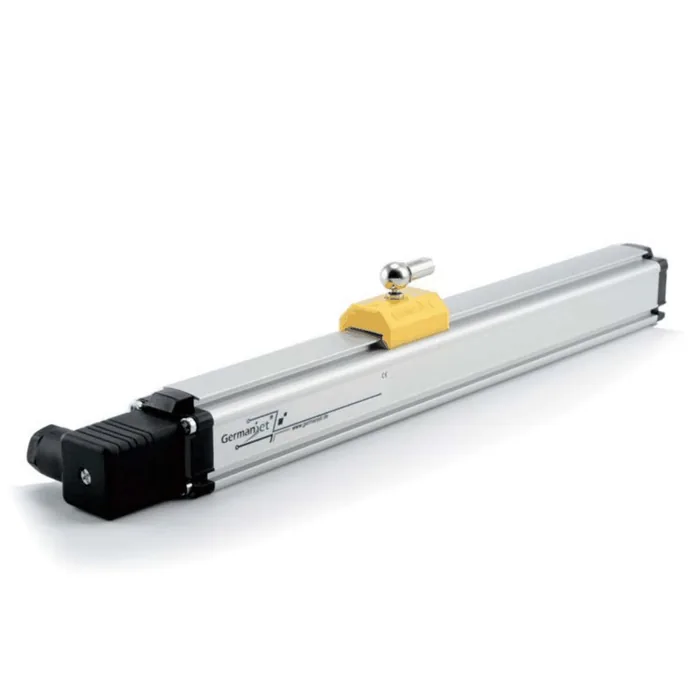
| Profile type with guard | Medium | Medium | Low | Retrofit on in-service equipment |
| Cable-extension (long stroke) (comparison) | Poor (wire rusts and seizes) | Poor | Low | Not recommended |
| Limit switches (comparison) | Medium | Medium | Low | Two-state only, no process data |
The reliability test of high-frequency reciprocation
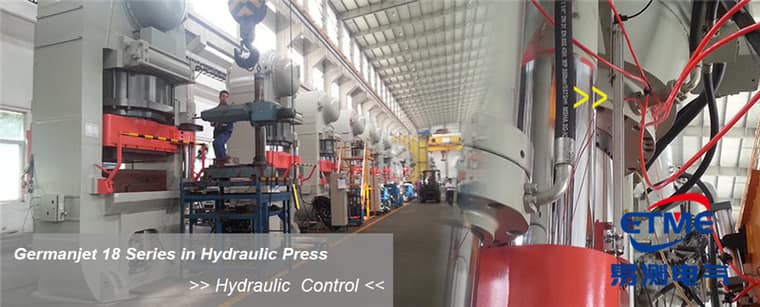
A compaction station runs a high number of cycles per day, and accumulated stroke is huge. This is a clear advantage of non-contact measurement: there is no mechanical friction between the magnet and the rod, so there is no wear-out mode of the contact-based wiper kind. Non-contact magnet-to-rod gap wears nothing, but cracked bracket welds and loose fasteners still fatigue — check mounting, not the wiper. Mechanical installation, however, still fatigues — cracked bracket welds, loosened fasteners, and core breakage where the cable bends outside the energy chain are all common site problems. Installation practice and anti-loosening points are in installing and commissioning in practice; the troubleshooting sequence when readings are abnormal is in troubleshooting: inaccurate readings, jumps, no output.
Interfaces and remote management
Compaction stations are often unattended; position and status data must be sent to the sanitation-management platform. A simple scheme uses 4-20 mA into a local PLC and then uploads; for analog products see Series 191 analog. When diagnostic information must be carried, a fieldbus type can be specified (notes in the practical fieldbus guide). The general selection framework for hydraulic circuits is given in why hydraulic cylinder position control uses magnetostrictive sensing. Experience from similar mobile hydraulic equipment (compacting refuse vehicles) can be compared with construction-machinery cylinder position schemes.
Practical tips for engineers
- For in-cylinder mounting, piston-rod bore lower limit is ≥12.7 mm (Ø10 rod). Series 17 also has a Ø13 mm through-hole + M18×1.5 on the cylinder cap; Series 16 uses Ø18G7. Do not mix pressure ratings: Series 16/16R is 350 bar working / 530 bar peak, Series 17/17EX is 350/600 bar, Series 19 in-cylinder is 300/600 bar.
- The sensor rod inside the cylinder should be protected against wear.
- Series 19 in-cylinder types are rated 300 bar, 600 bar peak; use these figures for selection and pressure testing.
Frequently Asked Questions
Q: What are the difficulties of displacement measurement on compaction equipment?
High dust, heavy load and high shock require dust protection, shock resistance and contamination tolerance. Series 13, IP69K, 100 g shock is a suitable choice.
Q: What is ram position used for?
It is used for stroke limits, a full-container criterion and cycle control. Absolute position without homing supports continuous running.
Q: How is high dust protected against?
Use IP67 or better connectors facing down, and guard the rod. The non-contact construction itself tolerates contamination.
Related Products
Related Applications
Multi-Industry Application Cases for Magnetostrictive Displacement Sensors
View Details
Series 17 Hydraulic Cylinder Integrated Magnetostrictive Displacement Sensor Application Cases
View Details
Series 18 Profile Magnetostrictive Displacement Sensor Application Cases
View Details