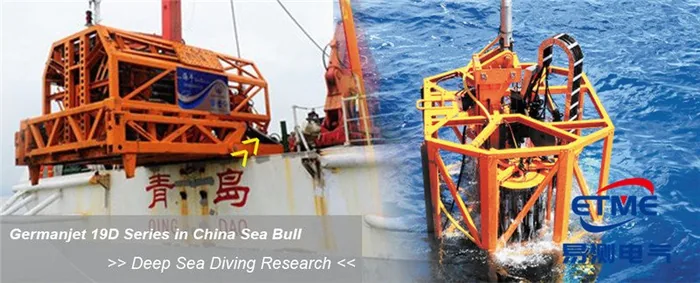
Chemical Reactor Agitator Travel: Intrinsically Safe Displacement Monitoring by Zone
Reactor-area agitator and lid positions use an explosion-proof magnetostrictive displacement sensor, chosen after the zone is set. Measurement demand in a chemical-reactor area concentrates on displacement-class measuring points: agitator-lift mechanisms, vessel-lid opening and closing, valve actuators, and charging-device stroke. These points usually sit in an explosive-gas or dust atmosphere, so selection is the intersection of “measurement requirements + explosion-protection requirements”: first determine the explosion-protection type from the hazardous area, then choose the measuring scheme among products that meet that type. The order must not be reversed.
How the explosion-protection type is decided
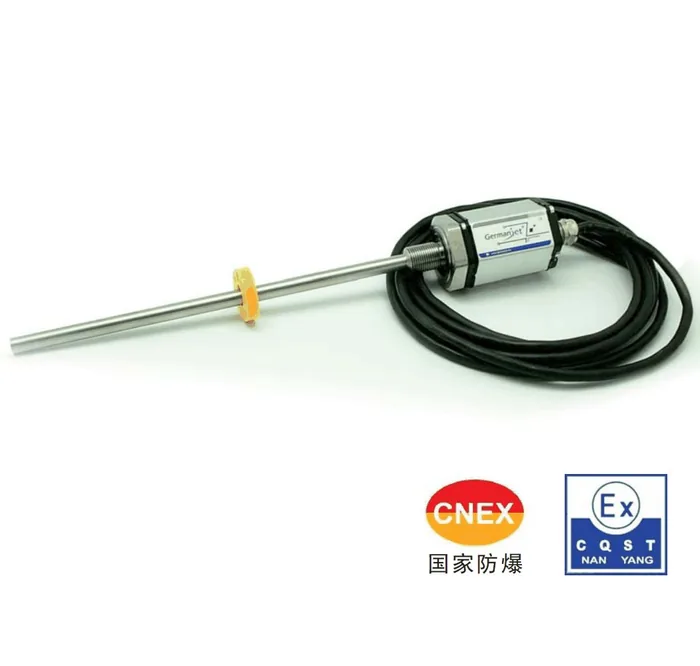
A reactor area is generally classified Zone 1 or Zone 2; some in-vessel spaces may be treated as Zone 0. Corresponding types: Ex ia (usable in Zone 0), Ex ib (Zone 1), Ex d flameproof (Zone 1/2), and Ex tD in dust atmospheres. Low-power equipment such as a magnetostrictive displacement sensor should preferably be intrinsically safe, used with a safety barrier. Loop energy parameters (Uo/Io/Po and Ui/Ii/Pi) and cable distributed capacitance and inductance must be matched item by item. Basic concepts are in explosion-protection basics, the mapping of zones to certifications in explosion-protected area selection, and intrinsically safe wiring and isolating-barrier practice in installing in hazardous areas. For intrinsically safe products see Series 17EX intrinsically safe.
Media compatibility: an item more easily overlooked than explosion protection
Parts in contact with the process medium (protection tube, seals) must be compatible with that medium. Strong acids, strong alkalis, organic solvents and high-temperature heat-transfer fluids attack different materials very differently; the consequence of a wrong material choice is leakage or seizing within weeks. Engineering practice is to obtain a complete media list from the process owner (including trace constituents and cleaning agents), check material compatibility item by item, and confirm the operating-temperature and pressure bounds (for the distinction between operating temperature and storage temperature see operating temperature vs. storage temperature).
Displacement measuring points: agitator lift and vessel-lid mechanisms
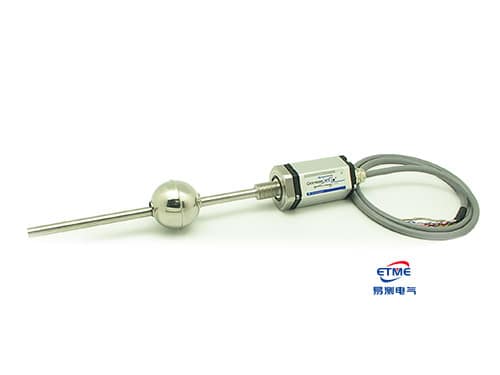
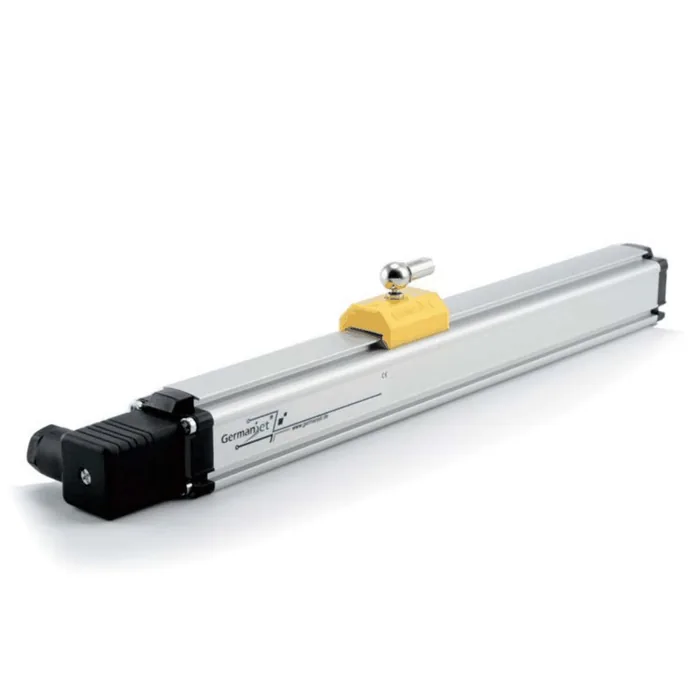
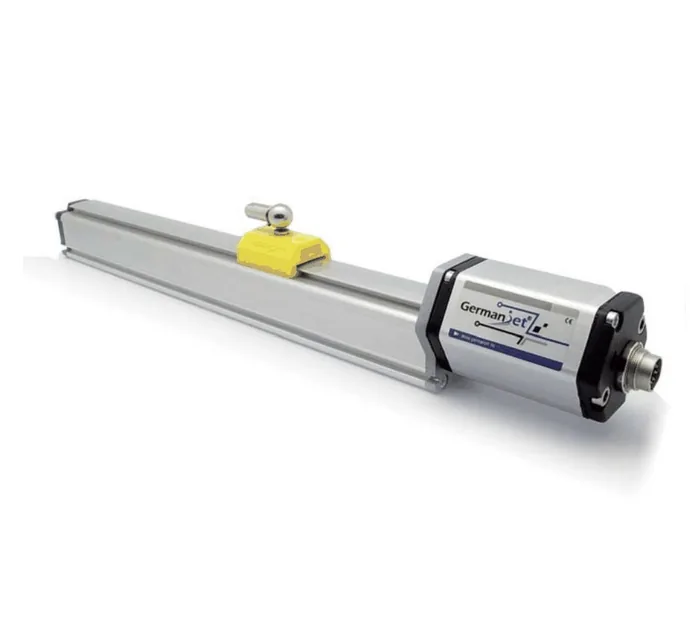
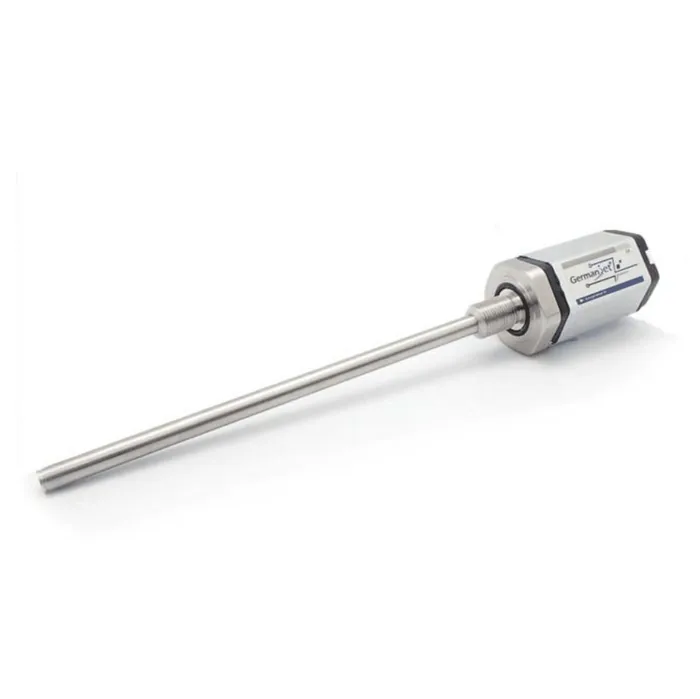
Agitator-lift stroke determines paddle height in the vessel and affects mixing. Position feedback on lid opening/closing and clamping mechanisms is used for safety interlocking and sequence control. These measuring points use a magnetostrictive displacement sensor to give absolute position: zero is not lost on power failure, and re-zeroing is unnecessary after a batch or vessel change. Profile-type mounting can stay outside the in-vessel agitation zone and reduce media contact; cylinder-integrated mounting is more compact. Agitator lift and vessel-lid travel share one intrinsically safe magnetostrictive displacement sensor type, so only one spare-part number and one barrier model are stocked on site. Selection bounds are given in the maintenance-free dividend and the three accuracy terms.
Selection summary
- First fix the hazardous area → explosion-protection type (intrinsically safe preferred, with a safety barrier);
- then select the mounting construction from the motion being measured (profile / in-cylinder / fieldbus);
- check material and media compatibility as a separate item — it must not be omitted;
- use an intrinsically safe type in the hazardous area with compliant wiring, matching energy parameters item by item.
Practical tips for engineers
- Series 19F front dead zone: 50 mm for strokes <8000 mm, 130 mm for strokes >8000 mm; deduct this when calculating the usable stroke at the selection stage.
- Overall sensor length tolerance is +8 mm for strokes <8000 mm, and +15/-5 mm for strokes >8000 mm; this tolerance does not affect the measuring stroke.
- Series 19F has a minimum stroke of 250 mm; specify another series for shorter strokes.
Frequently Asked Questions
Q: What are the key points of intrinsically safe wiring?
Fit an isolating / safety barrier, and match energy parameters (Uo/Io/Po, Ui/Ii/Pi) and cable distributed parameters. In dust atmospheres also consider Ex tD.
Q: How is agitator-shaft displacement measured?
A profile type reads agitator stroke or lift position. Use an intrinsically safe type in the hazardous area with compliant wiring. Cylinder-integrated mounting is more compact but requires careful material selection on the wetted side.
Q: How is material compatibility checked?
Obtain a complete media list from the process owner and check protection-tube / seal materials item by item; do not look only at the main feedstock.
Related Products
Related Applications
Multi-Industry Application Cases for Magnetostrictive Displacement Sensors
View Details
Series 17 Hydraulic Cylinder Integrated Magnetostrictive Displacement Sensor Application Cases
View Details
Series 18 Profile Magnetostrictive Displacement Sensor Application Cases
View Details