
Medical Equipment: Radiotherapy Couch and Operating Table Position
Medical equipment uses a displacement sensor, and couch multi-axis alignment ties directly to treatment quality. Displacement measurement on medical equipment places accuracy and safety at equal height: multi-axis position of a radiotherapy couch or a CT/MR table determines target alignment for irradiation or scanning, and error relates directly to treatment or diagnostic quality; lift and tilt of an operating table determine surgical-field accessibility and patient safety. The shared character of these applications is a clean environment, low noise, repeatable in-position, and position that must not be lost — after a power loss absolute position must be restored reliably.
Radiotherapy / imaging couch: multi-axis positioning and target alignment
A radiotherapy couch typically positions at micrometre grade in longitudinal, lateral, vertical and rotational axes. Displacement feedback reads the absolute position of each axis; the control system uses it to bring the target to isocentre. What matters most here are repeatability (typically of the order of ±0.002 mm; see the three accuracy terms) and long-term stability. A 1-5 μm resolution grade is recommended (typical non-linearity <0.02% FS). After a power loss absolute position is retained, so reset does not require re-homing and target-coordinate drift is avoided (see absolute vs. incremental position).
Operating table: lift, tilt and patient positioning
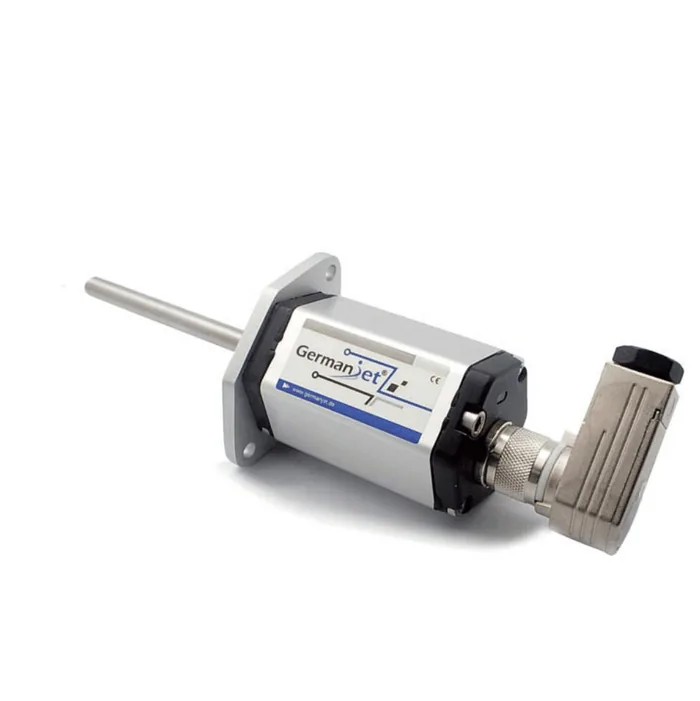
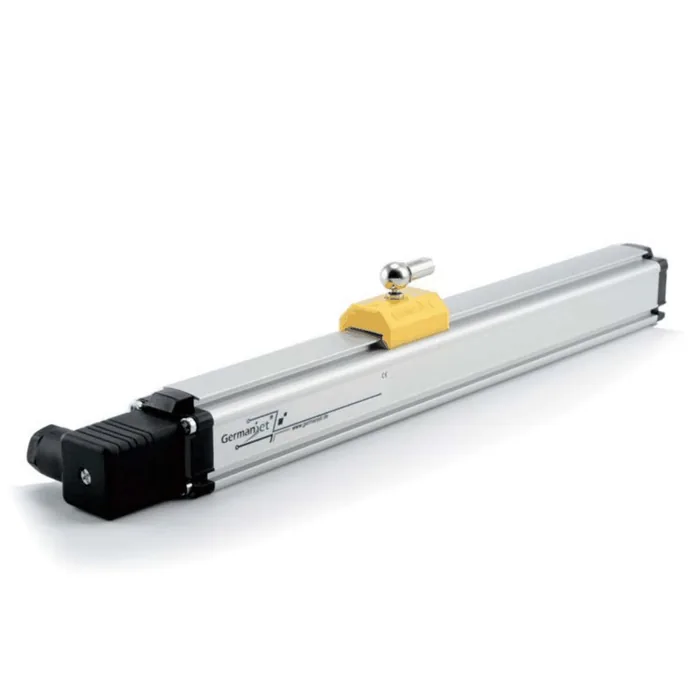
Lift columns, table tilt and translation on an operating table are mostly electrically or hydraulically driven. Displacement feedback is used as the in-position criterion, for multi-position memory, and for anti-pinch and limit safety. These mechanisms have a medium stroke and a modest speed; a 5-20 μm resolution grade is recommended. The selection framework for a hydraulically driven lift column is given in why hydraulic cylinder position control uses magnetostrictive sensing. For a general-purpose type meeting cleanliness and low-noise requirements see Series 12 general-purpose.
Typical measuring-point layout on medical equipment
| Measuring point | Control objective | Recommended form | Resolution grade | Environmental focus |
|---|---|---|---|---|
| Radiotherapy couch longitudinal / lateral | Target alignment | Profile type / integrated | 1-5 μm | Clean, low noise |
| Table vertical / rotation | Isocentre positioning | Profile type | 1-10 μm | Repeatability |
| Operating-table lift column | Patient position / accessibility | In-cylinder / profile type | 5-20 μm | Clean, safety limits |
| Table tilt / translation | Surgical-field angle | Profile type | 5-20 μm | Anti-pinch, limits |
Installation points for cleanliness and safety
A medical environment is concerned with cleanliness and electrical safety rather than high-pressure washdown, so connectors to IP65 or better are sufficient (for the meaning of each rating see IP protection ratings). The displacement sensor itself is non-contact and wear-free, which favours long-term maintenance-free operation. At installation, write a power-up position-validity check into the safety logic, using absolute position to detect early that the table was moved by hand (practice in installing and commissioning in practice). Troubleshooting of abnormal readings is in common-fault troubleshooting.
Interfaces and system integration
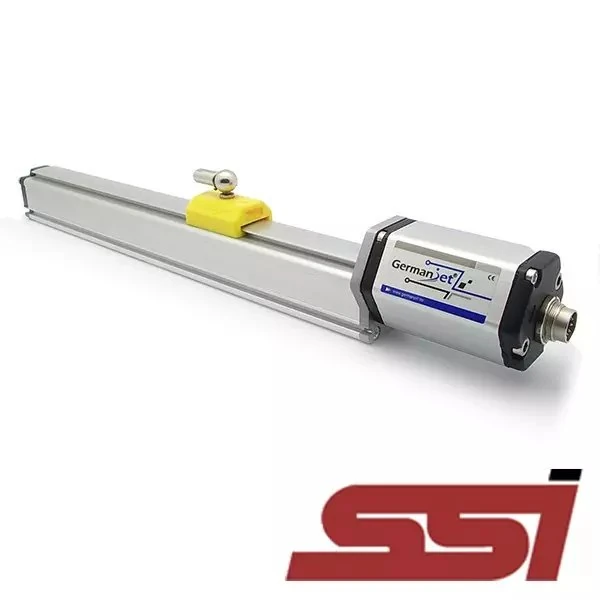
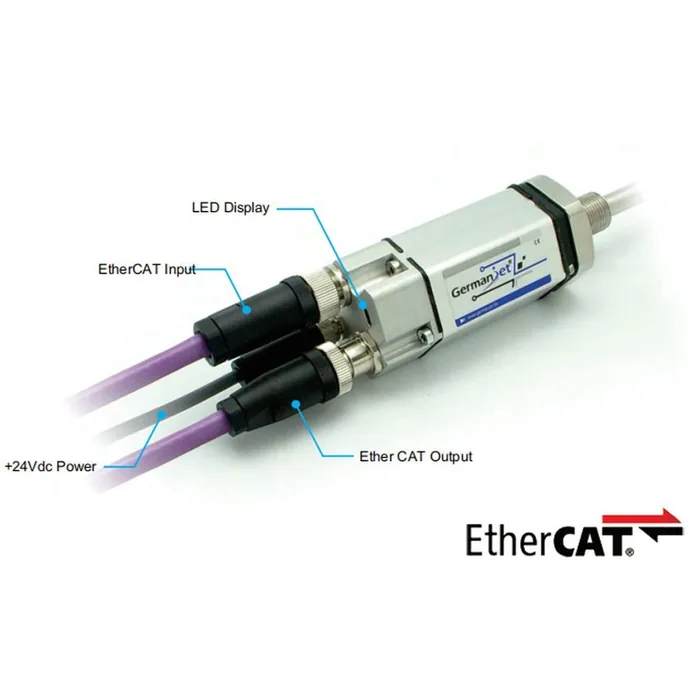
Medical equipment is sensitive to noise and interference. Position feedback may be SSI (deterministic timing, suited to the position loop; see Series 192 SSI digital interface) or a well-isolated fieldbus type; EMC design is covered in electromagnetic compatibility. Multi-axis synchronous sampling should use a fieldbus that supports distributed clocks (Series 197 EtherCAT); configuration is in the practical fieldbus guide. Displacement schemes for semiconductor clean environments can be compared with position measurement in semiconductor cleanroom equipment.
Frequently Asked Questions
Q: Why does a radiotherapy couch emphasise repeatability?
Target-alignment error relates directly to treatment quality. Repeatability of the order of ±0.002 mm is more critical than the non-linearity of a single unit.
Q: Does medical equipment need homing?
Absolute position removes homing, but a power-up position-validity check must still be performed to detect that the table has been moved.
Q: What protection should be specified in a clean environment?
IP69K is not required; IP65 is sufficient, easy to clean and low-noise. Series 12 general-purpose is a suitable choice.
Related Products
Related Applications
Multi-Industry Application Cases for Magnetostrictive Displacement Sensors
View Details
Series 12 General-Purpose Magnetostrictive Displacement Sensor Application Cases
View Details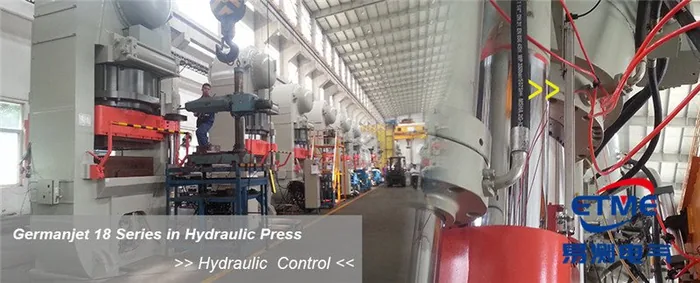
Series 18 Profile Magnetostrictive Displacement Sensor Application Cases
View Details