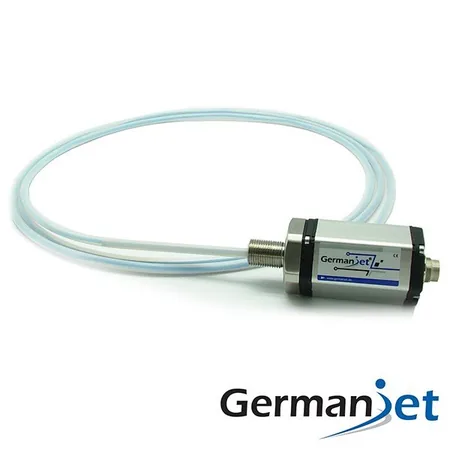
Packaging Machinery: Filling-Piston Stroke and Sealing-Die Positioning
Filling and sealing on packaging machines use a displacement sensor, where filling-side volume accuracy comes straight from stroke (volume = area x stroke). Displacement measurement on packaging machinery concentrates on two places, dosing and sealing. On the dosing side are filling-piston and metering-cylinder stroke, which directly determine the volume accuracy of each pouch or bottle. On the sealing side are closing and positioning of the sealing dies, pillow-pack cut-off knife and case-packer jaws, which determine seal quality and line cycle time. Food and pharmaceutical packaging also require washdown, so the protection-rating requirement is higher.
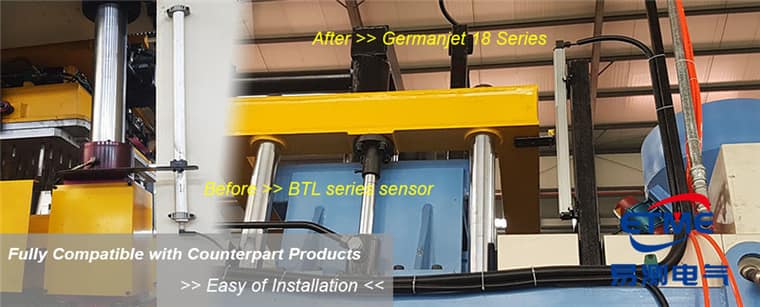
Dosing side: filling volume is determined by stroke
The core formula of piston filling is “volume = cross-sectional area × piston stroke”. Displacement feedback reads the piston absolute position; the controller converts stroke to volume and realises volumetric filling. Accuracy depends on repeatability (typically of the order of ±0.002 mm; see the three accuracy terms) and the resolution grade; 5-20 μm is recommended. Non-linearity must be read together with measuring range (of the order of <0.02% FS; a short range can be better), otherwise the small-volume section is easily misjudged. After a power loss absolute position is retained, so re-zeroing is unnecessary after a batch change and line flush (see absolute vs. incremental position).
Sealing side: die closing and knife positioning
Die closing affects seal strength and appearance; knife position affects pouch length and cut neatness. Displacement feedback is used for closing-position control, synchronisation monitoring on multi-lane machines, and hold-position during dwell. A high-speed line should check whether the refresh rate keeps up with the control cycle (see matching response time to the control cycle). If the drive is a pneumatic or hydraulic cylinder, the selection framework is given in why hydraulic cylinder position control uses magnetostrictive sensing.
Typical measuring-point layout on packaging machinery
| Measuring point | Control objective | Recommended form | Resolution grade | Environmental focus |
|---|---|---|---|---|
| Filling-piston stroke | Volume accuracy | In-cylinder or profile type | 5-20 μm | Food-grade, washdown |
| Sealing-die closing | Seal quality | Profile type / remote-electronics | 5-10 μm | Hot sealing head |
| Pillow-pack knife positioning | Pouch length / cut | Profile type | 5-20 μm | Vibration, dust |
| Case-packer jaw stroke | Alignment cycle time | Profile type | 10-50 μm | Ordinary dry area |
Installation points for washdown and food-grade environments
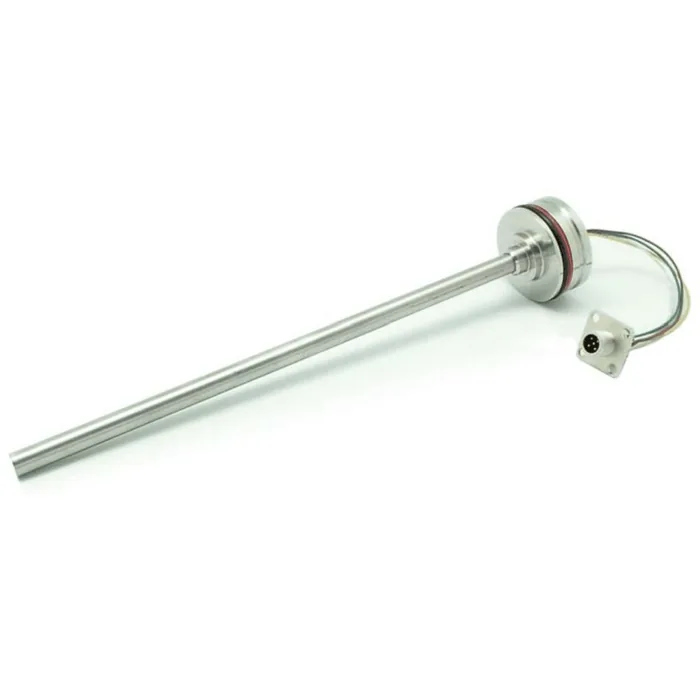
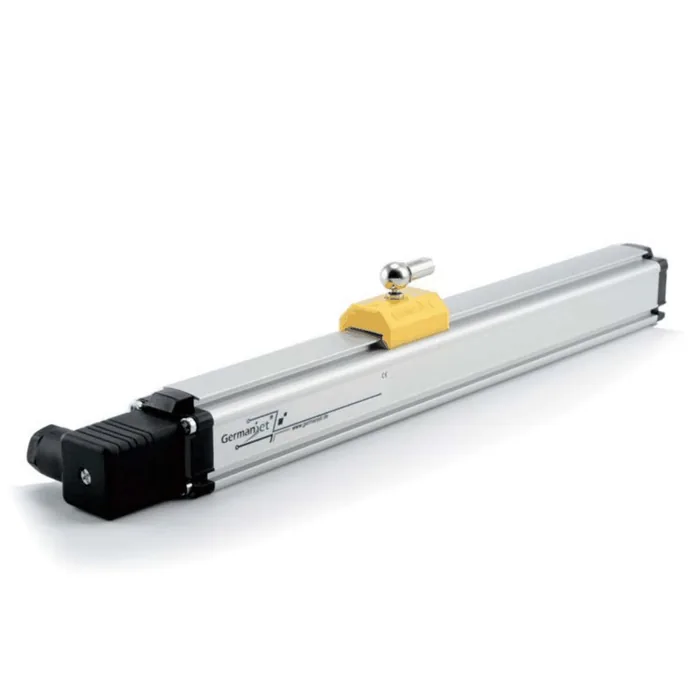
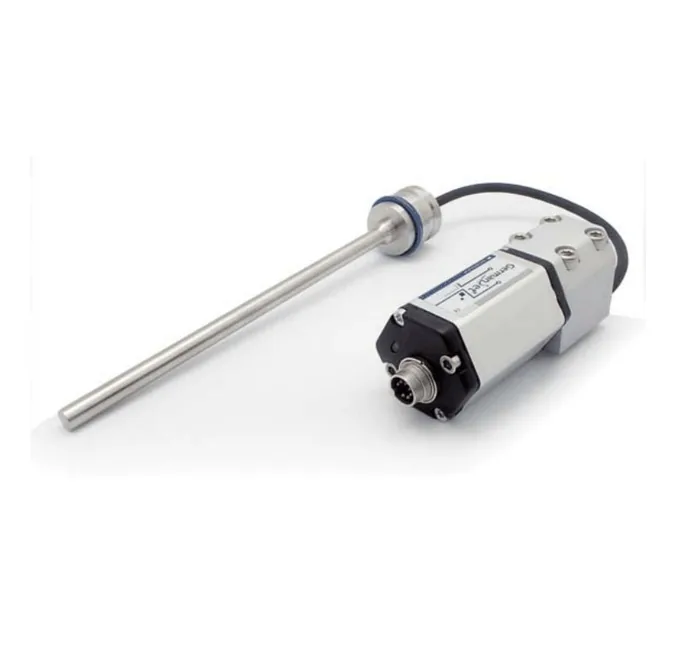
Food and pharmaceutical packaging often have high-pressure hot-water or disinfectant washdown, requiring IP69K protection (for the meaning of each rating see IP protection ratings). Series 13 mobile hydraulic offers IP69K, 25 g vibration and 100 g shock, and is suited to wet areas and vibrating stations; for ordinary dry-area positioning specify Series 18 profile type. Use seals in wash-down-resistant food-grade materials, connectors facing down with a drip loop; IP69K is a hard requirement for hot-water or disinfectant washdown. Cables and connectors must use food-grade resistant materials and be routed downwards. Installation practice is covered in installing and commissioning in practice.
Interfaces and line integration
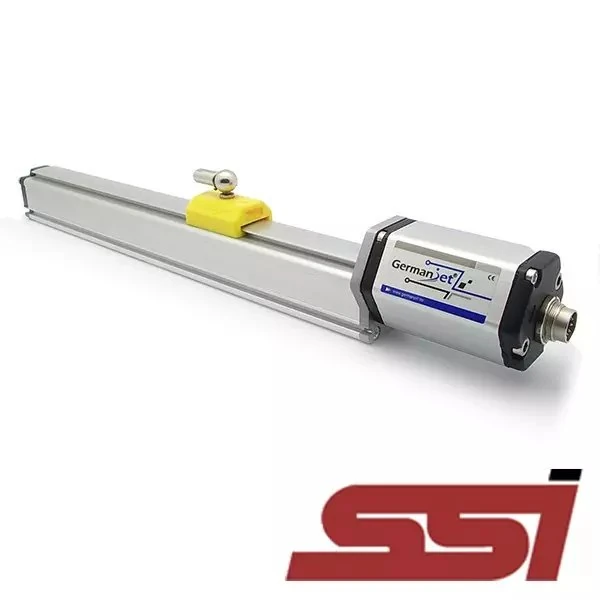
Filling and sealing are often multi-lane in parallel. Position feedback may be a fieldbus type for unified management, or SSI for a highly deterministic position loop (Series 192 SSI digital interface). Synchronous sampling on a high-speed line should use a fieldbus that supports distributed clocks (see the practical fieldbus guide). Robot load/unload and positioning can be compared with industrial robots: seventh-axis and vertical-axis position.
Engineering application notes
- A 6600-tonne two-platen injection-molding machine used a Series 19, 7600 mm stroke, CAN bus scheme for full-stroke mould-closing position feedback.
- Mould-closing speed on a die-casting machine can reach 10 m/s; a digital-interface model with sufficiently fast response must be specified.
- Steel rolling-mill roll-gap control specifies Series 19 with SSI output; woodworking forming machines and packaging machines (IP67 environments) are often fitted with Series 17/18.
Frequently Asked Questions
Q: How is filling volume calculated from displacement?
Volume = cross-sectional area × piston stroke. Displacement reads absolute position and converts it to volume; repeatability determines pouch-to-pouch consistency.
Q: What should be checked when seal strength is uneven?
First use multiple sensors to check the die-parallelism difference, then check temperature; do not first suspect sensor linearity.
Q: What protection should be specified for food washdown?
Specify IP69K, for example Series 13, with connectors facing down and a drip loop. Seals must still be inspected on a regular basis.
Related Products
Related Applications
Multi-Industry Application Cases for Magnetostrictive Displacement Sensors
View Details
Series 18 Profile Magnetostrictive Displacement Sensor Application Cases
View Details
Series 19D Split-Type Process Displacement Sensor Application Cases
View Details