19P External Magnetostrictive Displacement Sensor: Trade-Offs Against Series 18
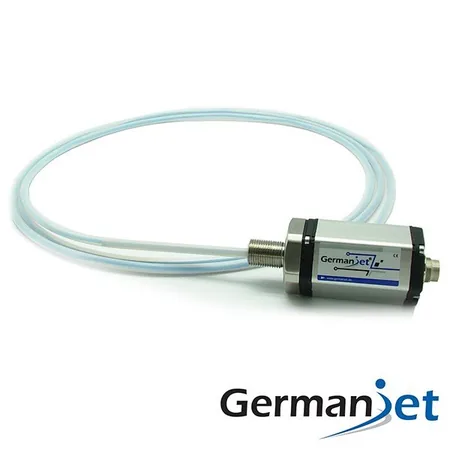
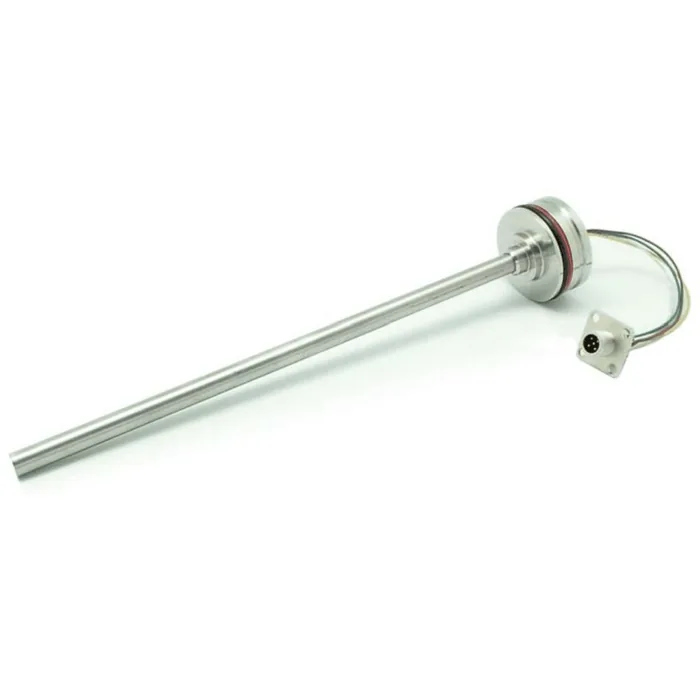
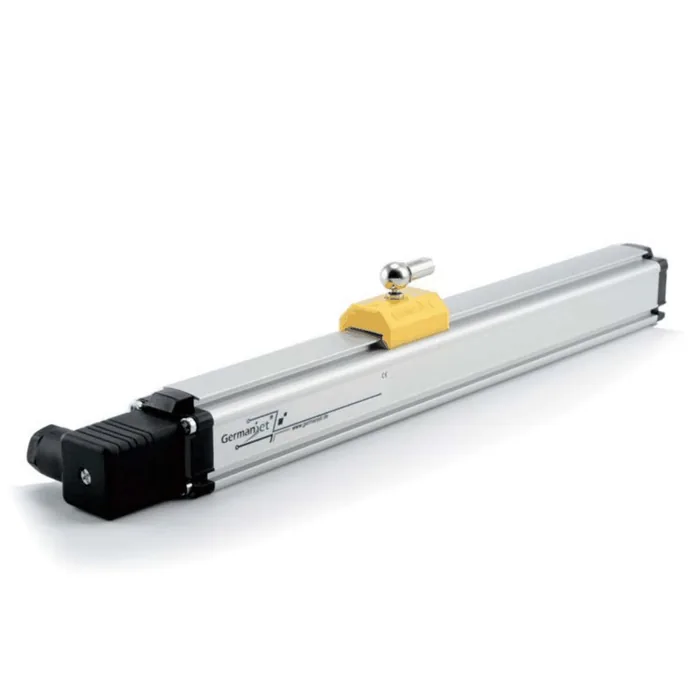
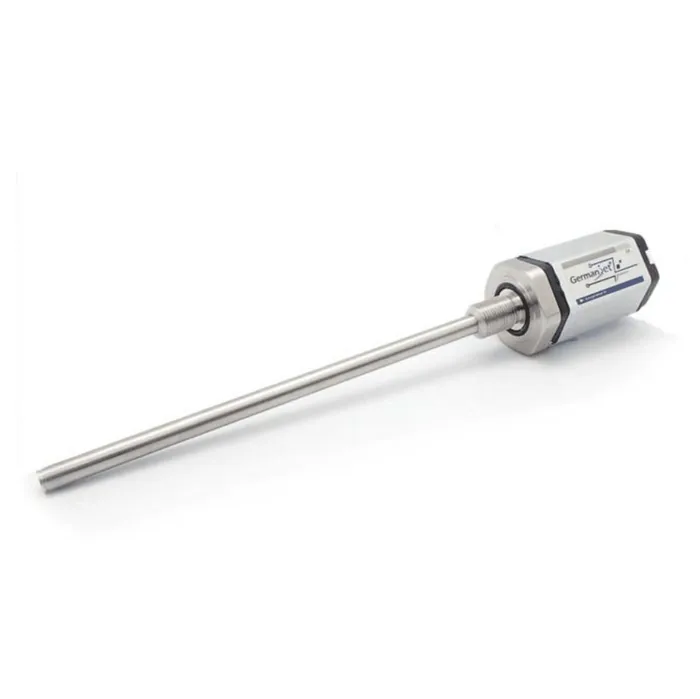
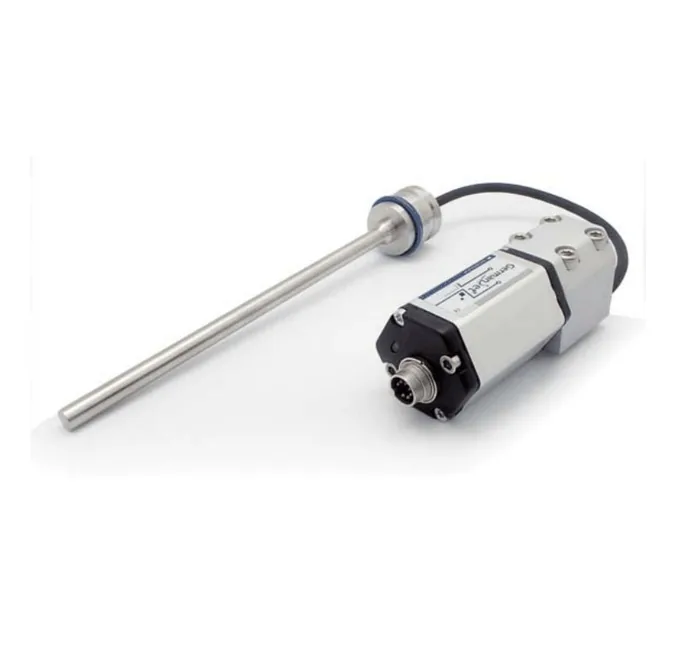
For an external non-contacting absolute reading, the magnetostrictive displacement sensor 19P belongs to the Series 19 platform. 19P is the external model in Germanjet Series 19. It is mounted outside the machine, does not enter the cylinder and does not take pressure, and transfers the linear motion of the measured mechanism to the magnet ring through a follower structure. It overlaps Series 18 in functional positioning: both are external, neither changes the mechanical body, and both are external non-contact absolute sensors (accuracy rows still follow the series catalogue, not a shared 1–100 μm / ±0.002 mm line). The difference is the product platform: 19P belongs to Series 19 and shares a platform with 19H cylinder-integrated, 19D split and 19F flexible; Series 18 is a dedicated external product line, with more fully developed matching schemes for floating type and rail type follower structures.
The trade-off between 19P and Series 18
| Comparison | 19P (Series 19 platform) | Series 18 (dedicated external line) |
|---|---|---|
| Product platform | Series 19, including H/D/P/F forms | Dedicated to external mounting |
| Follower-structure options | Adapted from the platform’s general scheme | floating type / profile-mounted schemes more fully developed |
| Mixing on the same machine | Can unify the platform with 19H / 19D / 19F | Must be mixed with other series |
| Pressure-containing | No | No |
| Mechanical change | Mounting bracket only | Mounting bracket only |
| Measuring performance | Follow the Series 19 catalogue | Series 18 analogue: infinite resolution, non-linearity < ±0.02% FS |
| Replacement downtime | Short; cylinder not stripped | Short; cylinder not stripped |
| Typical application | Several forms mixed on the machine, platform unification | Purely external need, complex follower structure |
The selection logic is similar to the 19H / Series 17 relationship: a single external need with a follower structure that requires fine matching → Series 18; several classes of measuring point on the machine — in-cylinder, external, high-temperature split — and unified spares and procedures wanted → 19P. Structural differences between Series 18 floating type and profile-mounted types are in Series 18 external explained.
Shared risks of the external type: misalignment and bracket resonance
Whether 19P or Series 18 is chosen, the two major risks of external mounting are identical, and both sit on the mechanical side rather than in the sensor itself.
Misalignment. When the motion axis of the measured mechanism is not parallel to the sensing-rod axis, the magnet ring becomes eccentric, appearing as a progressive deviation over certain sections of stroke; in severe cases the follower takes a side load, and long running leads to wear or even seizure. The remedy is a floating link at the connection (ball joint, universal joint, flexible connector) that transmits only axial displacement. Practical methods are in External mounting: how to fix the bracket and rail type so they stay stable.
Bracket resonance. When bracket stiffness is insufficient or the natural frequency falls near a machine excitation frequency, readings show regular jitter in operation and recover when stopped. The diagnostic is “jitter frequency tracks machine speed”. The principle is “short, straight and stiff” — keep the bracket as short as possible, fix it directly to the rigid main structure, and avoid thin-plate cantilevers. Mounting points for vibrating environments are in Installing in vibration: locking and vibration resistance.
These two points are the main source of external-type field problems; changing the sensor will not solve them. General installation and commissioning points are in Installation and commissioning in practice.
Typical uses of 19P
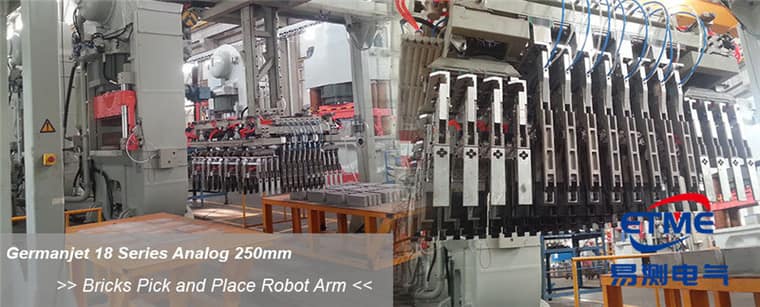
Adding displacement sensing to existing plant. When the existing cylinder is a standard bought-in part and cannot be bored, external is the only feasible path. The full decision for retrofit projects is in Selecting for retrofit of existing plant.
Non-hydraulic linear mechanisms. Linear motion driven by a leadscrew, rail, pneumatic cylinder or rack can equally be measured by an external type. The focus then shifts from pressure rating to whether resolution and repeatability match the controller; the criteria are in The three accuracy figures.
Lines that require fast replacement. External replacement does not need depressurising and draining; downtime is far shorter than for a cylinder-integrated type, and is more friendly to continuous lines with a high availability requirement.
Machines mixing several forms. On the same machine the main cylinder uses 19H cylinder-integrated, auxiliary mechanisms use 19P external, and the high-temperature zone uses 19D split. Platform unification simplifies spares and maintenance procedures; the thinking is in 19H cylinder-integrated explained.
The boundary with Series 13
Series 13 is a mobile-hydraulic in-cylinder / head-integrated type, environmentally reinforced for travelling machines: protection up to IP69K, 25 g vibration resistance, 100 g shock resistance. The boundary is clear:
- Equipment fixed, ordinary environment (indoors, no high-pressure wash-down, no continuous strong vibration) → 19P or Series 18 is sufficient;
- Equipment that itself moves, needs high-pressure water wash-down, has shock loads (construction machinery, agricultural machines, marine) → the Series 13 must be used; see Series 13 mobile hydraulics explained.
Do not try to make an ordinary external type do mobile duty by adding a guard — a guard brings heat-dissipation and trapped-water problems, and vibration and shock resistance are structural capabilities that a cover cannot supply. What protection classes actually mean is in What IP65/67/68/69K actually mean in testing.
Where to turn when the stroke is very long
An external type meets physical limits on a very long stroke: the longer a rigid sensing rod, the greater the sag under self-weight, and transport and installation become more difficult. When the stroke is beyond a reasonable range for a rigid rod, turn to the flexible long-stroke option 19F; see 19F flexible long-stroke explained. Overall thinking for long-stroke selection is in Selecting for long stroke.
See the 19P external product page; horizontal selection across all external options is in Comparing the whole external range: how to choose among 13/18/19P/19F.
Frequently Asked Questions
Q: How should 19P and Series 18 be chosen?
Both are rigid external types, not pressure-containing, Neither takes pressure; accuracy still follows each series catalogue. When the follower structure needs fine matching, choose Series 18, whose floating type and rail type schemes are more fully developed. When the machine has several classes of measuring point — in-cylinder, external, high-temperature split — and unified spares and procedures are wanted, choose 19P, which can share a platform with 19H, 19D and 19F.
Q: Where do external installations most easily go wrong?
Misalignment and bracket resonance, both on the mechanical side; changing the sensor will not solve them. Misalignment causes magnet-ring eccentricity and local-section reading deviation; the remedy is a floating link such as a ball joint or universal joint at the connection. Bracket resonance appears as reading jitter in operation, normal when stopped, with jitter frequency tracking machine speed; the remedy is a short, straight, stiff bracket.
Q: When must Series 13 be used rather than 19P?
Series 13 must be used when any of the following holds: the machine itself moves, high-pressure water-jet wash-down is required, or shock loads are present. Series 13 protection reaches IP69K, with 25 g vibration and 100 g shock resistance. An ordinary external type plus a guard cannot substitute: a guard brings heat-dissipation and trapped-water problems, and vibration and shock resistance are structural capabilities.
Q: Can an external type still be used when the stroke is very long?
The longer a rigid sensing rod, the greater the sag under self-weight, and transport and installation become more difficult. When the stroke is beyond a reasonable range for a rigid rod, turn to the flexible long-stroke option 19F, which can be coiled for transport, routed to site conditions, and does not depend on continuous rigid support. When a rigid scheme will do, still prefer rigid: installation is simpler and cost is lower.
Related Products
Related Applications
Multi-Industry Application Cases for Magnetostrictive Displacement Sensors
View Details
Series 18 Profile Magnetostrictive Displacement Sensor Application Cases
View Details
Series 19D Split-Type Process Displacement Sensor Application Cases
View Details