Glass Machinery: Press Closing Stroke and Tilt-Table Positioning
Glass forming and transfer lines use a displacement sensor, the forming side for thickness and the transfer side for cycle time. Displacement measurement on glass machinery concentrates on two places, the forming line and the transfer line. On the forming side are press-forming machines, the press-bending mechanism of a tempering furnace, and the platen closing stroke of a laminated-glass pre-press, which determine glass thickness, curvature and lamination quality. On the transfer side are linear positioning of the loading table, tilting table and unloading table, which determine load/unload cycle time and alignment accuracy. The shared environment of both lines is sharp glass cullet, high temperature at some stations, and moisture in the washing section, so mechanical protection and contamination resistance of displacement measurement are higher than on ordinary light-industry equipment.
Forming line: press-forming stroke and consistency
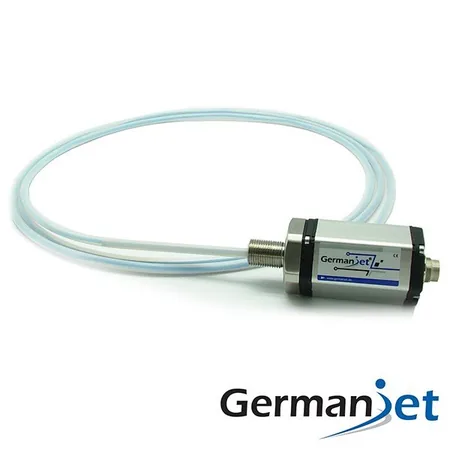
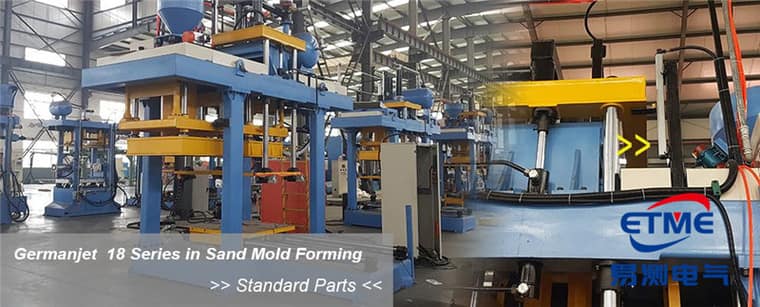
In press forming (for example pressed glassware, tumblers and plates) the finished thickness and shape are determined by the mould closing position. Displacement feedback serves three purposes: closing-position control, parallelism monitoring on multi-point parallel presses, and hold-position monitoring during the dwell. If the positions of the press heads on a large-format press are inconsistent, regional thickness deviation appears across the sheet, so multi-channel sensors of the same model and the same measuring range are recommended, with attention paid to channel-to-channel consistency rather than the figures of a single unit; the rationale is given in resolution, repeatability and non-linearity. High-temperature stations require a check of operating temperature; keep the electronics head away from the heat source and, where necessary, specify a remote-electronics construction (see operating temperature and storage temperature).
Transfer line: tilting and loading-table positioning
Tilting tables and loading/unloading tables are mostly servo- or pneumatically driven linear or oscillating mechanisms, with native feedback from the motor encoder. Fitting a magnetostrictive displacement sensor that measures the actuator end directly eliminates transmission backlash and provides absolute position — after a power loss the table position can be confirmed without homing, which is critical for load/unload alignment and anti-collision logic (see absolute vs. incremental position). For positioning applications a 5-20 μm resolution grade is recommended, and the refresh rate should be checked against the control cycle (see matching response time to the control cycle).
Typical measuring-point layout on glass machinery
| Measuring point | Control objective | Recommended form | Resolution grade | Environmental focus |
|---|---|---|---|---|
| Press-forming closing stroke | Thickness / curvature consistency | In-cylinder or remote-electronics profile | 10-20 μm | High temperature, radiant heat |
| Laminated-glass pre-press platen | Lamination position | In-cylinder | 20-50 μm | Interlayer film, moisture |
| Tilting-table positioning | Alignment and cycle time | Profile type | 5-20 μm | Glass cullet |
| Loading / unloading table stroke | Load/unload alignment | Profile type | 5-10 μm | Dust, moisture |
Installation points for cullet and the washing section
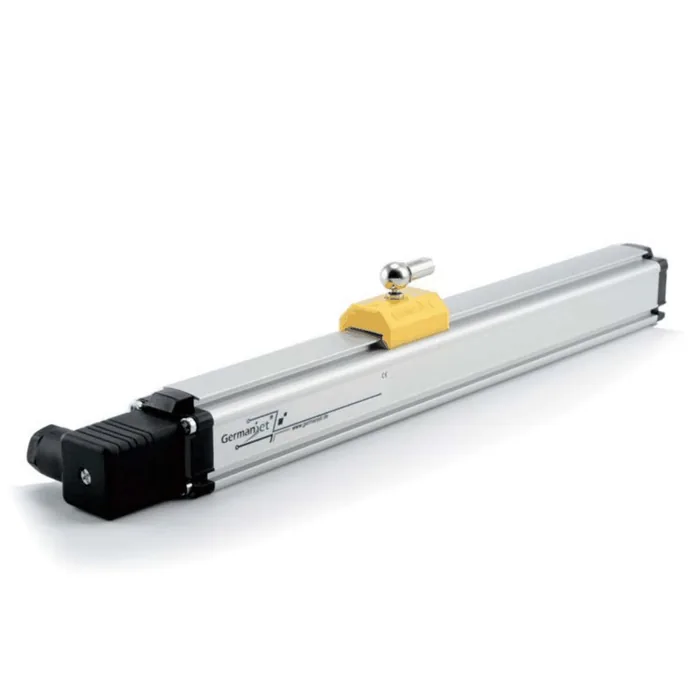
Glass cullet is sharp, scores the rod surface easily, and jams between the magnet and the rod. Countermeasures: keep the rod out of the direct cullet-fall zone below and, where needed, fit a transparent protective sleeve; specify IP67 connectors routed downwards (for the meaning of each rating see IP protection ratings). If the washing section requires high-pressure washdown, see Series 13 mobile hydraulic (IP69K, 25 g vibration, 100 g shock); for ordinary dry-area transfer positioning specify Series 18 profile type. Installation practice is covered in installing and commissioning in practice.
Interfaces and line integration
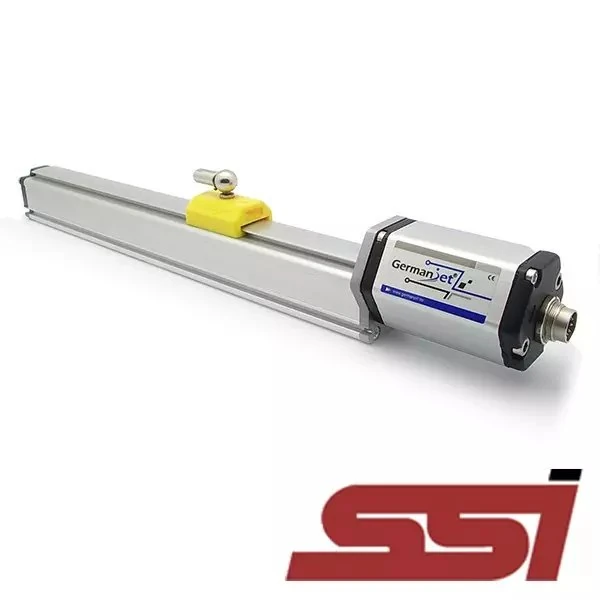
A glass line often contains several presses and transfer tables. Position feedback may be a fieldbus type for centralised management, or SSI for the position loop (Series 192 SSI digital interface). The selection framework for hydraulically driven press forming is given in why hydraulic cylinder position control uses magnetostrictive sensing. Similar pressing demand on woodworking hot presses can be compared with woodworking machinery: press stroke and feed positioning.
Practical tips for engineers
- Series 19F front dead zone: 50 mm for strokes <8000 mm, 130 mm for strokes >8000 mm; deduct this when calculating the usable stroke at the selection stage.
- Overall sensor length tolerance is +8 mm for strokes <8000 mm, and +15/-5 mm for strokes >8000 mm; this tolerance does not affect the measuring stroke.
- Series 19F has a minimum stroke of 250 mm; specify another series for shorter strokes.
Frequently Asked Questions
Q: What determines glass press-forming thickness?
The mould closing position. Multi-point sensors of the same model monitoring parallelism keep sheet thickness consistent.
Q: Does a tilting table need homing?
An absolute-position sensor needs no homing: table position is known on power-up, which helps load/unload alignment and safe anti-collision.
Q: How is glass cullet protected against?
Keep the rod out of the cullet-fall zone and fit a transparent sleeve; use IP67 or better connectors facing down. Specify Series 13, IP69K, in wet areas.
Related Products
Related Applications
Multi-Industry Application Cases for Magnetostrictive Displacement Sensors
View Details
Series 18 Profile Magnetostrictive Displacement Sensor Application Cases
View Details
Series 19D Split-Type Process Displacement Sensor Application Cases
View Details