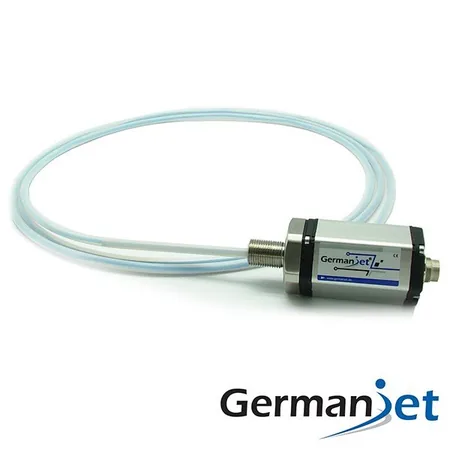
Read a Magnetostrictive Displacement Sensor Datasheet Without Falling for Its Traps
Reading a magnetostrictive displacement sensor datasheet, the pitfall is not failing to understand a parameter but the assumption behind it. The most common mistake is overlooking the conditions under which the figures hold. Range is not the same as mechanical length versus usable electrical stroke; non-linearity is a percentage of full scale, not an absolute millimetre figure; resolution is a distinguishable increment, not accuracy; operating temperature and storage temperature are two different ratings; an IP class corresponds to specific test conditions, not a promise that “any water is harmless”. This article explains how to read five groups of parameters — range, the three accuracy terms, temperature, protection, and interface/update rate — and the traps in each. Definitions of the three accuracy terms are in The Three Accuracy Terms of Magnetostrictive Sensors: Resolution, Repeatability and Non-Linearity.
Range: mechanical length is not usable stroke
The datasheet usually quotes a “measuring stroke”, but the sensor’s overall length = usable stroke + dead zones at both ends + electronics-head length + mounting flange/thread section. The end dead zones are the signal launch/receive and damping regions of the waveguide; once the position magnet enters them the reading is unusable, so the ordered stroke must include margin and must not be ordered as “exactly equal to the mechanical stroke”. Causes and how to measure dead zones are in Dead Zones at Both Ends of the Effective Range: Why the Rod Must Not Bottom Out.
Another common error is equating “ordered stroke” with “cylinder stroke”. For in-cylinder mounting you must also allow for the depth of the piston clearance bore, the magnet mounting thickness and the space at the cylinder base. The full calculation is in Practical Selection Calculations: Working Out Stroke, Installation Space and Output.
The three accuracy terms: each corresponds to a different error source
Resolution answers “how fine can it see”. Germanjet offers steps of 1 / 2 / 5 / 10 / 20 / 50 / 100 μm. If a datasheet says “Infinite resolution”, it means that in principle the resolving power is limited only by the timing circuit and can be extremely high; in practice units are supplied in steps, and it must not be read as “infinitely high accuracy”.
Repeatability answers “how stable is the reading when returning to the same point”; it can typically reach the order of ±0.002 mm, and is better on short ranges. Closed-loop positioning is most sensitive to this term.
Non-linearity answers “how far the reading over the full stroke departs from an ideal straight line”; typical <0.02% FS. The key is that % FS is relative to full scale: 0.02% FS is ±0.02 mm on 100 mm and ±0.8 mm on 4000 mm. Whenever you see % FS, convert it immediately to an absolute millimetre value on this project’s range, otherwise the figures are not comparable.
Temperature parameters: three quantities that are easily confused
A datasheet has at least three temperature-related items, with completely different meanings: operating temperature (the permitted ambient range while powered and measuring), storage temperature (the permitted range for unpowered storage/transport, usually wider), and temperature coefficient (zero or span drift for a given temperature change). A common misreading is to treat storage temperature as operating temperature, causing the electronics head to be derated or to fail in a hot environment. The distinctions are in Operating Temperature vs. Storage Temperature.
Hydraulic applications must also distinguish medium temperature from ambient temperature: the in-cylinder rod is immersed in oil while the electronics head is exposed to air outside the cylinder — two independent constraints, either of which may be exceeded. How to handle the dual constraint is in High-Temperature Selection: The Dual Constraint of Oil Temperature and Ambient Temperature; for a remote-electronics solution see Series 19D split type.
Protection class and mechanical ratings
The two digits after IP correspond to dust and water test conditions. IP65 is protection against water jets, IP67 against short-term immersion, IP68 against continuous immersion (depth and duration to be agreed separately), and IP69K against high-temperature, high-pressure water wash-down. Note that IP68 and IP69K are not inclusive of each other; if both are required they must be confirmed separately on the datasheet. Vibration and shock resistance are independent ratings; for example Series 13 mobile hydraulics is rated 25 g vibration, 100 g shock and IP69K. What the protection classes actually mean is in IP65/67/68/69K Is Not a Numbers Game.
In-cylinder types also need pressure rating and minimum bore: pressure ratings are by series (16: 350/530 bar, 17: 350/600 bar, 19 in-cylinder: 300/600 bar), and the piston-rod clearance bore is at least ≥12.7 mm (Ø10 rod). Bore requirements are in Cylinder Bore Machining Requirements; for products see Series 16 cylinder-integrated.
Quick reference for easily misread parameters
| Parameter | Datasheet wording | Correct reading | Typical consequence of misreading |
|---|---|---|---|
| Range | Measuring stroke XXX mm | Usable electrical stroke, excluding end dead zones and electronics-head length | No reading at the end of stroke after installation |
| Resolution | 1–100 μm selectable / Infinite | Smallest distinguishable increment; not accuracy | Taking resolution as accuracy |
| Repeatability | Order of ±0.002 mm | Scatter of round-trip readings at the same point; a measure of consistency | Treating it as absolute error |
| Non-linearity | <0.02% FS | Must be multiplied by this project’s range to obtain mm | Actual error on long ranges far exceeds expectation |
| Operating temperature | Ambient temperature range | Permitted range while powered and measuring | Mixing with storage temperature leads to derating |
| Medium temperature | Oil temperature | Constraint on the immersed rod, in parallel with ambient temperature | Watching only one item overheats the electronics head |
| Protection class | IP65/67/68/69K | Corresponds to specific test conditions, not a general waterproof promise | IP67 used in high-pressure wash-down admits water |
| Pressure rating | By series: 16 is 350/530, 17 is 350/600, 19 in-cylinder is 300/600 | Compare with system peak pressure, not working pressure alone | Pressure spikes breach the seal |
| Minimum bore | ≥12.7 mm | Lower limit of the piston-rod bore (Ø10 rod); also check coaxiality and depth | Bore too small to install |
| Update rate | Varies with range | Falls on long ranges; must match the control cycle | Closed loop reads data from the previous cycle |
| Output | 4-20 mA / 0-10 V / SSI / fieldbus | Confirm profile version and configuration files | Mismatch discovered only at configuration |
Interface and update rate
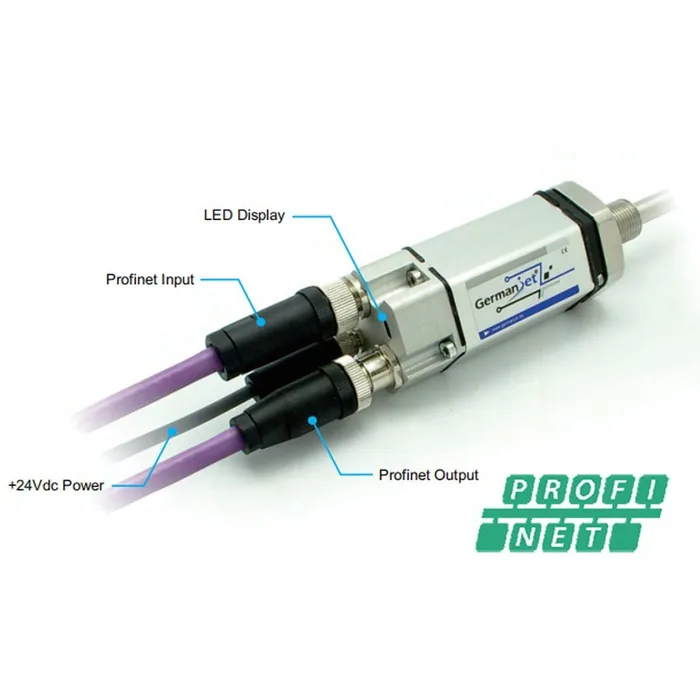
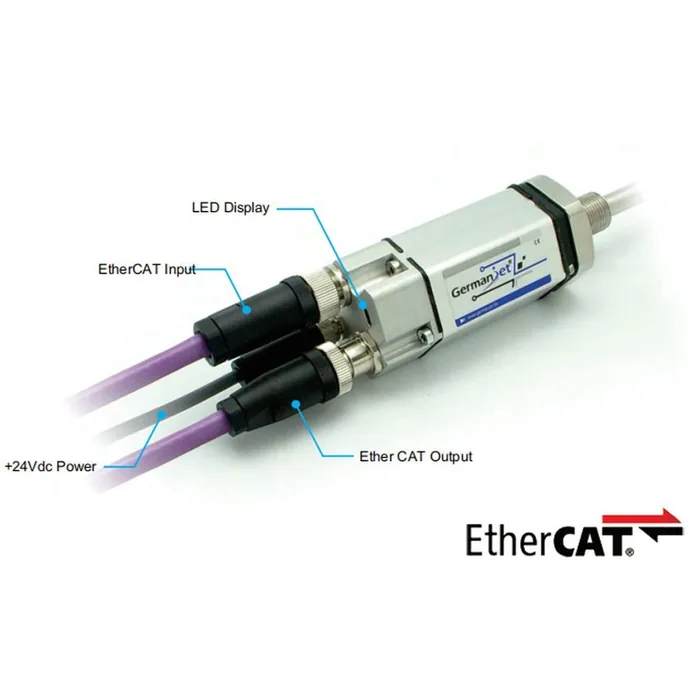
The interface column is not only “what is supported” but also the profile and configuration files: CANopen must confirm compliance with the DSP406 encoder profile; Profibus needs a GSD file; EtherCAT needs an XML slave description and confirmation of DC distributed-clock support; PROFINET must confirm IRT support; SSI is also optional. Update rate falls as range increases and must be calculated together with the controller scan cycle; matching is covered in Matching Response Time and Refresh Rate to the Control Cycle. Fieldbus models include Series 197 EtherCAT and Series 199PROFINET.
Practical tips for engineers
- Series 19F front dead zone: 50 mm for stroke <8000 mm, 130 mm for stroke >8000 mm. Always deduct this when calculating the usable measuring stroke.
- Overall sensor length tolerance: +8 mm for stroke <8000 mm, +15/−5 mm for stroke >8000 mm; this tolerance does not affect the measuring stroke.
- Series 19F minimum stroke is 250 mm; for shorter strokes choose another series.
Frequently Asked Questions
Q: Is the measuring stroke on the datasheet the usable stroke?
No. Overall sensor length equals usable stroke plus the dead zones at both ends, electronics-head length and mounting-section length. Once the position magnet enters an end dead zone the reading is unusable, so the ordered stroke must add margin on both sides of the maximum working stroke and must not be ordered as exactly equal.
Q: What does Infinite resolution mean?
It means that in principle the resolving power is limited only by the timing circuit and can be extremely high; it must not be read as infinitely high accuracy. Units are supplied in steps, commonly 1/2/5/10/20/50/100 μm. Resolution only answers how fine the sensor can see; it is not accuracy.
Q: How should I convert 0.02% FS?
Multiply by this project’s range to obtain the absolute error. 0.02% FS is ±0.02 mm on a 100 mm range and ±0.8 mm on a 4000 mm range. Convert % FS to millimetres at once and discuss thereafter in millimetres.
Q: Can operating temperature and storage temperature be used interchangeably?
No. Operating temperature is the permitted ambient range while powered and measuring; storage temperature is the permitted range for unpowered storage and transport and is usually wider. Treating storage temperature as operating temperature will derate or fail the electronics head in heat. Hydraulic applications must also distinguish medium temperature from ambient temperature.
Q: What extra parameters must in-cylinder types be checked against?
Pressure rating and minimum bore. Common pressure ratings are 300 bar and 600 bar; compare with the system pressure peak, not working pressure alone. The piston-rod bore is at least 12.7 mm; also check depth and coaxiality.
Related Products
Related Applications
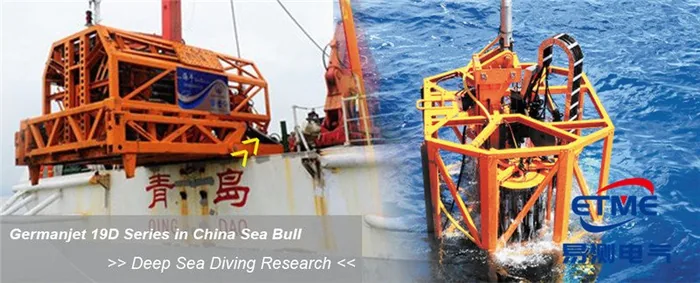
Series 19D Split-Type Process Displacement Sensor Application Cases
View Details
Series 19H Cylinder-Integrated Process Displacement Sensor Application Cases
View Details
Series 19P External Rod Process Displacement Sensor Application Cases
View Details