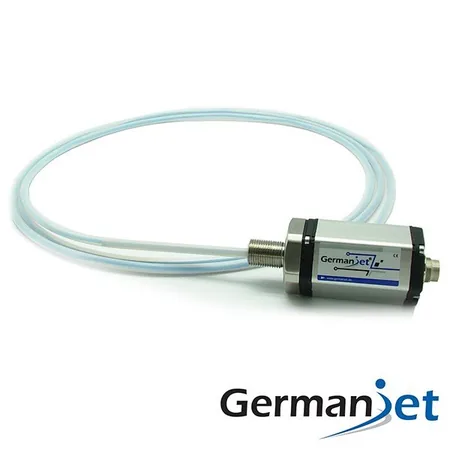
SSI Displacement Sensor Jumps After a Longer Cable: Drop the Clock to Match Length
After a longer SSI cable, occasional huge numbers on an SSI displacement sensor are a timing problem; drop the clock, not the bit length. After an SSI cable is lengthened or the cabinet is moved, position occasionally jumps to a huge number. Do not change the bit length first, and do not swap the rod first. On a long run the clock edge does not arrive cleanly — drop the rate to match the length. Series 16 SSI is 162; Series 19 is 192. The electrical table is the same; the mechanics are not. See 162 vs 192. Timing: Series 192 SSI.
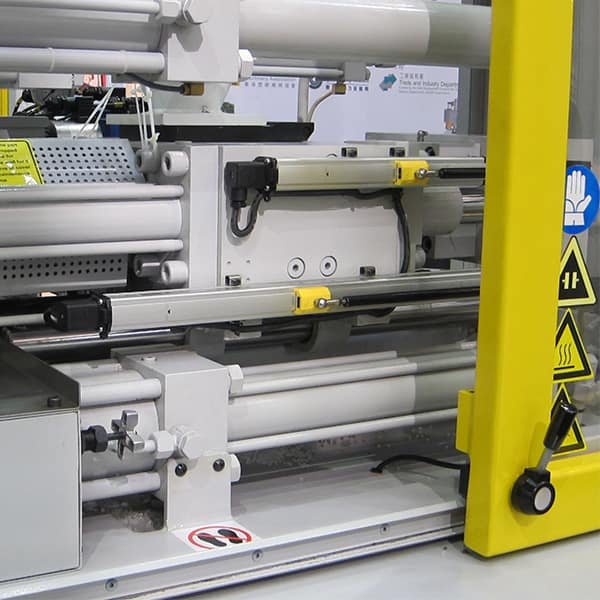
Read the symptom first
- Occasional huge numbers, even at rest, worse after a longer cable or a cabinet move → drop the clock to the cable length, and check the gap between two reads.
- Jumps all the way along the stroke, but patterned → first check Gray versus binary on both sides. See SSI timing and Gray code.
- Quiet at rest, jumps only when moving → mechanics and magnet first. See signal jump troubleshooting.
Length versus maximum rate (same for 162 and 192)
| Cable length | Max data rate |
|---|---|
| < 3 m | 1000 kBd |
| < 50 m | 400 kBd |
| < 100 m | 300 kBd |
| < 200 m | 200 kBd |
| < 400 m | 100 kBd |
Minimum clock spacing 48 μs. Count the whole run from sensor to master including drag chain; beyond 50 m do not insist on 1 MBd, step down to 400 kBd. Count the whole cable, not the stub inside the cabinet. Beyond this pairing, edges degrade, the sample point walks, and you get occasional bad frames.
What to drop on site
- On the motion card or PLC SSI master, step the clock / baud down one notch and see whether the jumps go.
- Do not insist on 1 MBd beyond 50 m.
- Twist clock pair and data pair separately; do not twist clock+ with data+. Earth the shield at the controller. See shield earthing.
- Leave enough time between two reads. Too fast eats residual bits from the previous frame and also jumps large.
Match the connector to the output. SSI commonly uses D70; do not mix it with analogue plugs. See matching the connector.
Still wrong after the rate drop
Once the rate matches the cable, master and sensor still need the same bit length, Gray or binary, and clock frequency. Do not write 162 as 192. Output types: eight interfaces compared.
Frequently Asked Questions
Q: Do 162 and 192 share the cable table?
Electrically yes: the same length versus maximum rate, and 48 μs minimum clock spacing. 162 is Series 16 in-cylinder; 192 is Series 19. Do not mix the mechanics or the pressure figures.
Q: After lengthening the cable, readings occasionally jump huge. What first?
Drop the SSI clock to the whole cable length. Longer cable, lower allowed rate. Do not start by changing bit length or replacing the sensor.
Q: Rate is down and it still jumps all along the stroke?
Check Gray versus binary and bit length on both sides. A coding mismatch looks patterned; that is not the same as edge degradation on a long cable.
Q: Only two metres inside the cabinet — why drop the clock?
Count the whole run from sensor to master, including drag chain and tray. Measuring only the cabinet stub treats a 100 m job as 2 m at 1 MBd.
Related Products
Related Applications
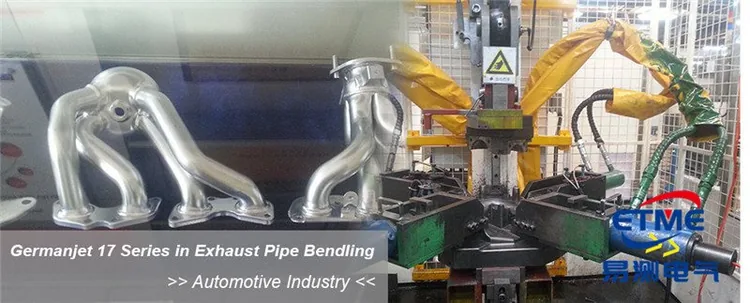
Series 16 Hydraulic Rod Magnetostrictive Displacement Sensor Application Cases
View Details
Multi-Industry Application Cases for Magnetostrictive Displacement Sensors
View Details
Series 19D Split-Type Process Displacement Sensor Application Cases
View Details