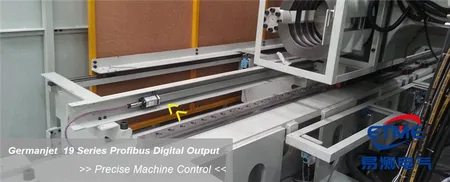
Magnetostrictive output signals compared: eight interfaces and their trade-offs
The pros and cons of a magnetostrictive displacement sensor output are about the electrical layer: how many cores, noise immunity and diagnostics. A magnetostrictive displacement sensor turns magnet position into an electrical signal for the controller. Germanjet electrical outputs are these types: 4-20 mA current, 0-10 V voltage, SSI, Start-Stop, CANopen, Profibus DP, EtherCAT and PROFINET. The interface does not change measuring capability. It changes how the data travel: how many cores, noise immunity, whether diagnostics ride along, and how many axes share one cable. The tables below compare advantages and disadvantages. Look at the controller ports first, then stroke and mounting.
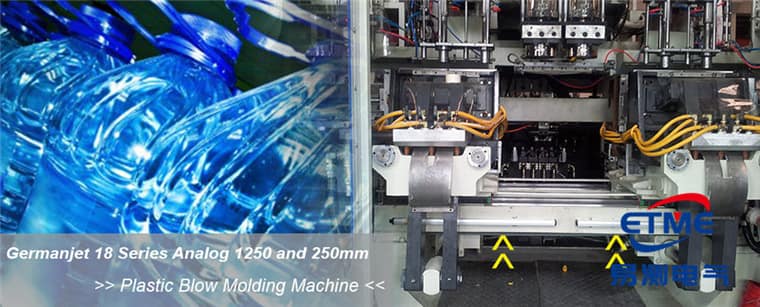
Eight outputs on one table
| Output | Type codes | Advantages | Disadvantages | Fits |
|---|---|---|---|---|
| 4-20 mA current | 161 / 184 / 185 / 191 / 121 | Broken wire is not zero; long cable stays stable; almost every PLC has an analogue input | Resolution capped by the PLC A/D; one pair per axis; no status word | Single axis, retrofit, analogue channels only |
| 0-10 V voltage | 160 / 180 / 190 / 120 | Simple wiring; older machines often have a voltage input | Broken wire looks like zero; more sensitive to noise and earth potential | Legacy voltage inputs |
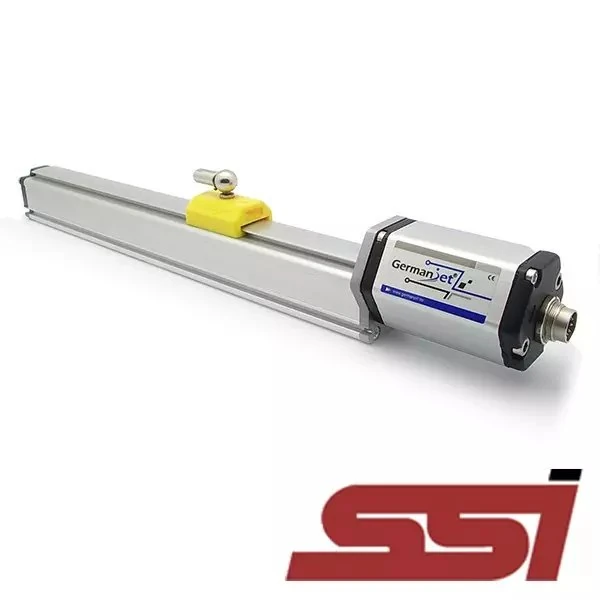
| SSI | 162 / 192 | Digital and noise-tolerant; bit length and Gray code are configurable | Still point-to-point; longer cables force a lower baud | Motion cards, single-axis digital loops |
| Start-Stop | 183 / 193 | Very small interface; timing sits in the controller | Needs a fast timer; speed-of-sound drift is compensated on the PLC | Controllers with a native timer port |
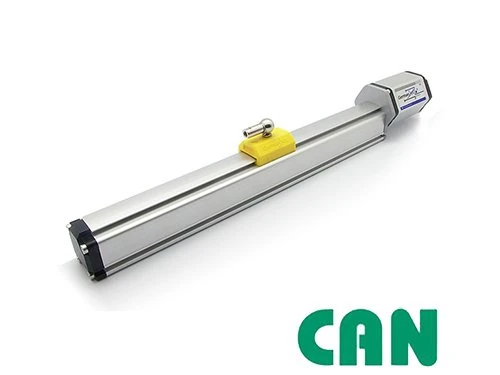
| CANopen | 194 | Several axes on one twisted pair; EMCY can report a fault unsolicited | Less bandwidth than industrial Ethernet; 120 Ω at both ends | Mobile hydraulics, native CAN |
| Profibus DP | 195 | A Siemens installed backbone can keep its cable; mature GSD | Master–slave polling; rarely chosen for a new line | S7-300 / 400 retrofit |
| EtherCAT | 197 / 198 | Short cycles; DC can align multi-axis samples | Needs an EtherCAT master; IN/OUT order is mandatory | Fast multi-axis sync |
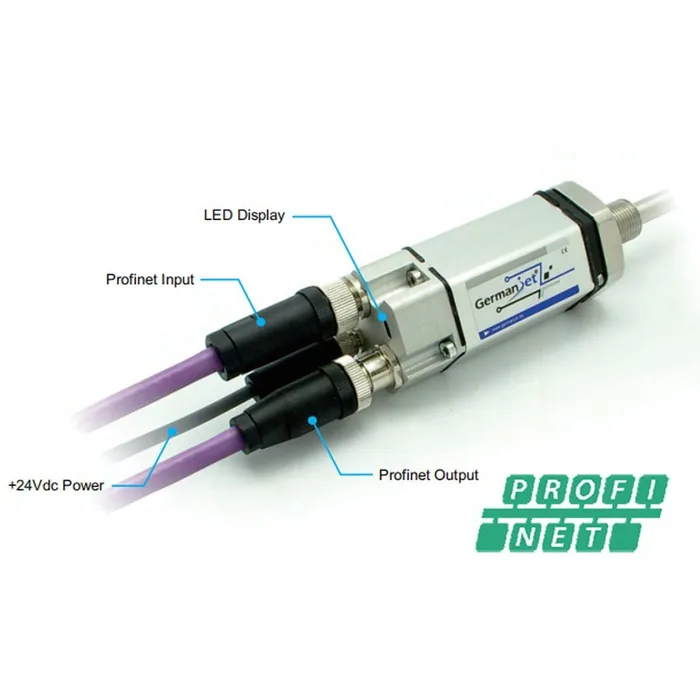
| PROFINET | 199PROFINET | The on-board PN port is the controller; IRT | An RJ45 is not automatically a real-time master | New S7-1200 / 1500 lines |
How type codes map to series: 160 / 161 / 162, 180–185, 190–199. Product matrix: analogue vs digital.
4-20 mA current
Series 16 uses 161; Series 19 often 191; Series 18 uses 184 / 185 (reversed span). Series 12 current is 121 (16-bit D/A).
Advantages
- Live zero: a broken wire is not “position at zero”.
- Voltage drop on a long cable does not change the current.
- Almost every PLC has an analogue input, so retrofit cost stays low.
Disadvantages
- Resolution is capped by the PLC A/D. Extra bits on the sensor do not lift that ceiling.
- One pair per axis; cabinet wiring grows quickly with axis count.
- No status word; faults other than a broken loop need a separate check.
The coarse analogue-versus-fieldbus split is in 4-20 mA or fieldbus. PLC stuck at zero: analogue reading at zero.
0-10 V voltage
Series 16 uses 160; Series 19 uses 190; Series 18 uses 180. Series 12 code 120 is listed as infinite resolution (limited by the controller A/D).
Advantages
- Wiring is simpler than a current loop.
- A stock of older machines only has a voltage input.
Disadvantages
- A broken wire and a true zero cannot be told apart.
- More sensitive to noise, earth potential and contact resistance; current is more stable on a long run.
Prefer current when the controller can take it.
SSI
Point-to-point digital: RS-422 clock and data. 162 is Series 16 in-cylinder; 192 is Series 19. The electrical figures are the same set; the mechanics are not. See 162 vs 192.
Advantages
- Digital transmission, clearly more noise-tolerant than analogue.
- Bit length and binary / Gray code are configurable; motion cards often already have the port.
- Still one cable per axis, lighter to configure than a fieldbus.
Disadvantages
- No multi-drop; cables and ports scale with axes.
- Longer cables force a lower baud — distance and rate trade off.
How to drop the clock after a longer cable: SSI length versus rate.
Start-Stop
Series 18 uses 183; Series 19 uses 193. See Start-Stop.
Advantages
- A very small interface: the sensor only issues start and stop pulses.
- Timing sits in the controller, so the electronics head does less work.
Disadvantages
- The controller needs a fast enough timer.
- Speed of sound drifts with temperature; compensation belongs on the PLC.
CANopen (194)
The physical layer is a CAN differential pair, not RS-485. 194 is CANopen; position objects follow DSP406. Detail: 194. Versus Profibus: CANopen vs Profibus.
Advantages
- Mobile and hydraulic controllers often have a native CAN port.
- Several axes share one twisted pair.
- EMCY can report a fault without waiting to be polled.
Disadvantages
- Less bandwidth than industrial Ethernet; cycles are not as short as EtherCAT.
- Baud versus length is a hard trade-off; 120 Ω is required at both ends.
Profibus DP (195)
The physical layer is RS-485. Detail: 195.
Advantages
- A Siemens S7-300 / 400 backbone can keep its cable.
- GSD configuration is mature; standard diagnostic telegrams are easy to read on site.
Disadvantages
- Master–slave polling; no EtherCAT-style distributed clock.
- New projects rarely choose it on purpose — it mainly keeps an old master alive.
EtherCAT (197 / 198)
197 is a dual-port daisy chain; 198 is a single M12 when space is tight. Detail: 197, 198. Versus PROFINET: PROFINET vs EtherCAT.
Advantages
- Processing-on-the-fly; cycle time follows data volume, which suits short multi-axis cycles.
- DC can align sample instants across axes.
- Slaves forward frames, so the sensor segment usually needs no extra switch.
Disadvantages
- You need an EtherCAT master. A Siemens on-board PN port is not an EtherCAT master.
- IN → OUT order is mandatory; a reversal shows up as a wrong sequence or a stuck Init.
PROFINET (199)
Detail: 199PROFINET.
Advantages
- The on-board PN port on S7-1200 / 1500 is the controller, so a new line joins cleanly.
- Switches are allowed, which keeps cabinet wiring and later extra stations more flexible than a pure daisy chain.
- IRT can align multi-axis samples; diagnostics and device names fit Siemens plants.
Disadvantages
- An RJ45 on the CPU is not a PROFINET real-time master. Many ports are only for program download.
- A non-Siemens controller needs a separate master, which is not always cheaper than EtherCAT on a master you already have.
The four-bus table is comparing the whole fieldbus range.
How to choose
- Analogue input, single axis or retrofit → prefer 4-20 mA; use 0-10 V only if that is the only input.
- Motion card already has SSI, still one axis, need digital noise immunity → SSI.
- The controller times the pulses itself and the interface must stay small → Start-Stop.
- Mobile machine, hydraulic controller with CAN → 194.
- Siemens S7-300 / 400 installed backbone → 195.
- Fast multi-axis sync and an EtherCAT master already present → 197 / 198.
- New Siemens S7-1200 / 1500 line → 199.
Whatever port the controller has, that is the output the sensor should use. Fix the output type before stroke and mounting.
Frequently Asked Questions
Q: Is analogue less accurate than fieldbus?
The interface does not change measuring capability. It only changes how data reach the controller. Use the ports you have, the axis count, and whether you need diagnostics.
Q: 4-20 mA or 0-10 V?
Prefer 4-20 mA when the controller can take current: a broken wire is not zero, and a long cable stays more stable. Use 0-10 V only on legacy voltage inputs.
Q: SSI versus fieldbus?
SSI is still point-to-point, one cable per axis; motion cards often already have the port. A fieldbus shares one cable across axes and can carry diagnostics, but it must match the controller master.
Q: Stroke first or output first?
Confirm the output can join the controller, then stroke and mounting. Type codes are listed in 160 / 161 / 162, 180–185, 190–199.
Related Products
Related Applications
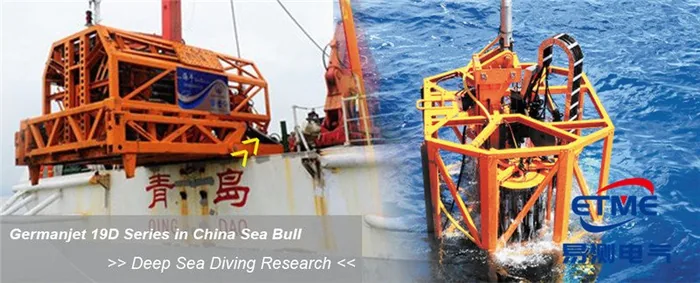
Series 19D Split-Type Process Displacement Sensor Application Cases
View Details
Series 19F Flexible Process Displacement Sensor Application Cases
View Details
Series 19H Cylinder-Integrated Process Displacement Sensor Application Cases
View Details