Magnetostrictive Displacement Sensor Series 198: Single-M12 EtherCAT Savings and Trade-Offs
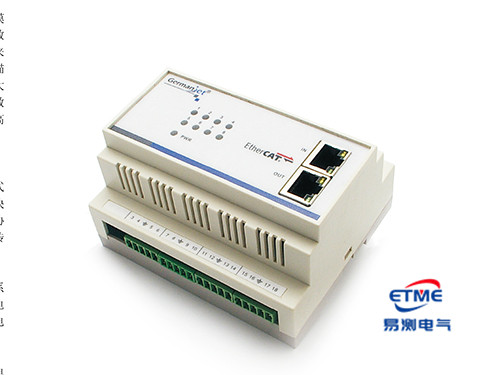
Series 198 is the compact version in Germanjet’s EtherCAT magnetostrictive displacement sensor line. Its core feature is a single M12 interface that combines power and communications in one outgoing connection. It shares the same EtherCAT communication mechanism as Series 197 — processing-frame on-the-fly, ESI configuration, DC distributed clocks. The difference is electrical interface form: fewer connectors, less outgoing-cable space, simpler field assembly and routing. It suits limited installation space, dense machine nodes, and a wish to reduce the total of harness and connectors.
The practical gains of a single combined interface
A conventional EtherCAT slave needs at least three interfaces: power, network IN and network OUT. On a machine with densely placed sensors, that means space for three connectors and the bend radius of three cables at each sensor’s outgoing end. The Series 198 single-M12 combined scheme produces quantifiable gains in three respects:
- Fewer connectors. Connectors are among the highest-failure-rate items on an industrial site — oxidation, water ingress, loosening, mis-mating. As the total number of connectors falls, the probability of a chain fault falls with it;
- Outgoing-cable space reduced. In a tight mounting position, whether it will fit often depends on outgoing-end space rather than the sensor body size;
- Assembly and service hours reduced. Saving one or two mating and dressing operations per sensor on a volume machine adds up to appreciable hours.
This is not “better performance”; it is “a more economical integration form”. Measuring performance matches Series 197: absolute position output; resolution steps of 1 / 2 / 5 / 10 / 20 / 50 / 100 μm; repeatability of the order of ±0.002 mm; typical non-linearity <0.02% FS.
Series 198 versus Series 197
| Comparison | Series 198 single-M12 compact | Series 197 standard EtherCAT |
|---|---|---|
| Interface form | Single M12 combining power and communications | Power and network interfaces separate |
| Total connectors | Fewer | More |
| Outgoing-cable space | Small | Larger |
| Communication protocol | EtherCAT | EtherCAT |
| Configuration method | Import ESI (XML) then scan | Import ESI (XML) then scan |
| Synchronisation | DC distributed clocks | DC distributed clocks |
| Measuring performance | Resolution 1–100 μm, repeatability of the order of ±0.002 mm | As left |
| Dependence on special cable | Higher; matching combined cable required | Lower; general industrial network and power cables |
| Typical application | Tight space, dense nodes, volume machines | Ordinary space, site-made cables |
Note the penultimate row: a single-interface scheme depends more strongly on special cable. Ordinary network cable cannot be substituted on site at short notice; spare-parts management must include the cable. That is an easily missed operating-cost item at selection. EtherCAT mechanisms and commissioning methods themselves are in Series 197 EtherCAT explained.
Where the wiring saving is actually realised
Close-packed multi-axis machines. Multi-cylinder side-by-side hydraulic presses and multi-station special-purpose machines have small sensor spacing. A three-interface scheme may not physically fit; the single M12 is a feasibility question, not an optimisation.
Sensors on moving or rotating parts. Cables must follow the motion or run in a drag chain; fewer cores mean longer flex life and less drag-chain occupancy.
Volume machine supply. On OEM volume production, connectors and hours saved per machine scale with quantity, harness standardisation rises, and assembly error rate falls.
Modular equipment that is frequently stripped. Fewer mating operations when changing moulds or stations, and lower risk of mis-mating.
Conversely, if installation space is generous, the site is used to making its own cables, or the spare-parts system cannot conveniently manage special cable, the Series 197 standard type is more robust.
Configuration and commissioning points
The Series 198 configuration flow is the same as a standard EtherCAT slave: import the ESI file → the master scans the bus → match slaves → configure PDO mapping and cycle time → enable DC → enter Operational. Which level of the state machine it stays at points to the corresponding problem class; the mapping is in EtherCAT slave configuration: XML and distributed clocks.
The compact type has two extra notes:
First, power and communications share a connector, so faults couple. A poor connector contact may appear as loss of supply and loss of communications at the same time. When investigating, do not look only at the network layer; first confirm that supply voltage is normal at the connector.
Second, the M12 protection class depends on whether it is locked. If it is not fully tightened, protection is as good as none, and water will enter in wash-down or damp conditions. M12 selection and seal maintenance are in Selecting waterproof M12 connectors and maintaining seals; what protection classes actually mean is in What IP65/67/68/69K actually mean in testing.
Relation to other interface options
If the control system is not an EtherCAT master, the Series 198 wiring saving does not arise, and the matching system should be used: Siemens PROFINET systems choose 199PROFINET (see 199PROFINET explained); mobile-machinery CAN systems choose Series 194 CANopen; existing Profibus lines choose Series 195. For a single axis that does not need fieldbus, Series 192 SSI is simpler.
See the Series 198 single-M12 EtherCAT product page; horizontal fieldbus comparison is in Comparing the whole fieldbus range; the interface-class selection framework is in Analog vs. digital across the whole range; overall configuration for multi-axis synchronisation is in Selecting for multi-axis synchronisation.
Practical tips for engineers
- Standard PUG cable diameter is 6 mm; minimum bend radius >24 mm — do not route below this radius.
- For fieldbus cables use shielded twisted pair (3×2×0.2 mm); a matching Fieldbus Terminator must be fitted at the end of the bus.
Frequently Asked Questions
Q: What is the difference between Series 198 and Series 197?
They share the same EtherCAT communication mechanism and measuring performance; the difference is electrical interface form. Series 198 uses a single M12 combining power and communications, with fewer connectors, less outgoing-cable space and simpler assembly. Series 197 has separate power and network interfaces, can use general industrial network and power cables, and is more convenient for site-made cables.
Q: In which applications is the single-M12 wiring saving actually realised?
Mainly close-packed multi-axis machines (a three-interface scheme may not physically fit), sensors on drag-chain or follower parts (fewer cable cores mean longer flex life), volume machine supply (connectors and hours saved per machine scale with quantity), and modular equipment that is frequently stripped.
Q: What should be watched when choosing a single-M12 scheme?
Two points: first, dependence on special cable is strong — ordinary network cable cannot be substituted on site at short notice, and the spare-parts list must include the cable; second, power and communications sharing a connector couples faults — a poor contact may appear as loss of supply and loss of communications at the same time, so investigation should first measure supply voltage at the connector.
Q: How is the protection class of an M12 connector guaranteed?
It depends on locking to the specified torque. If it is not fully tightened, protection is as good as none, and water will enter quickly in wash-down or damp conditions. Ageing of the seal also causes protection to fail and should be a scheduled maintenance item. Point the cable exit downward where possible, or form a drip loop.
Related Products
Related Applications
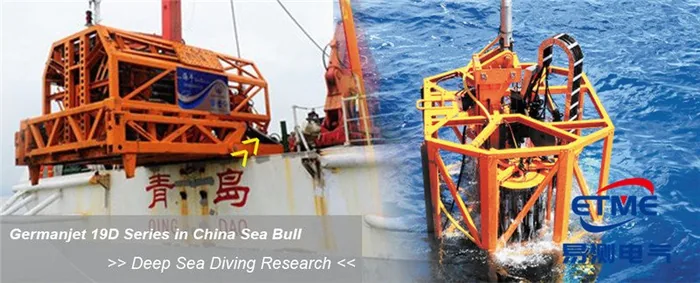
Series 19D Split-Type Process Displacement Sensor Application Cases
View Details
Series 19F Flexible Process Displacement Sensor Application Cases
View Details
Series 19H Cylinder-Integrated Process Displacement Sensor Application Cases
View Details