Magnetostrictive Displacement Sensor on Industrial Ethernet: PROFINET vs EtherCAT
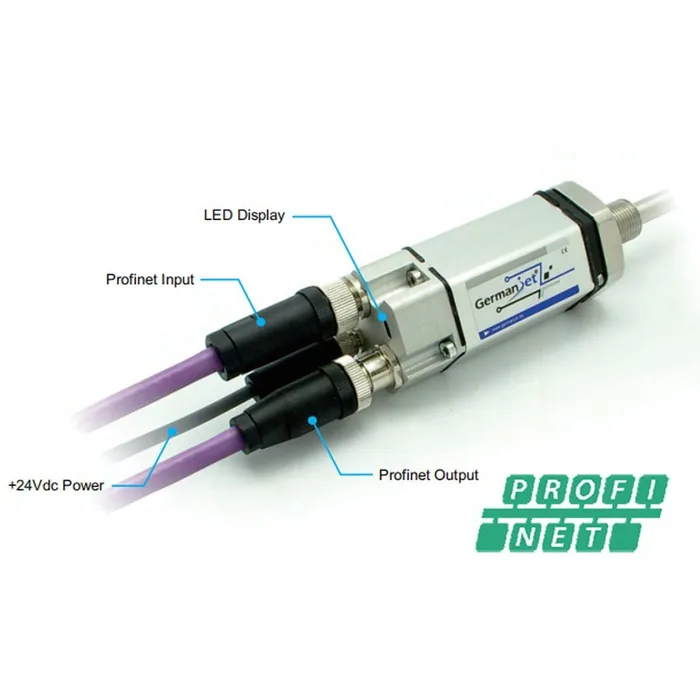
PROFINET is controller and device, EtherCAT is master and slave; the first question is which master the PLC already carries. For position feedback on industrial Ethernet, Germanjet includes two types: 199PROFINET and 197 / 198 EtherCAT. The roles differ: PROFINET is controller and device; EtherCAT is master and slave. The first test is still whether the PLC has that master. See which fieldbus does my PLC support.
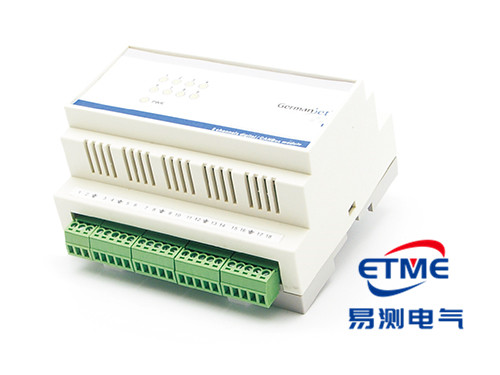
PROFINET (199) — advantages
- The on-board PN port on Siemens S7-1200 / S7-1500 is the controller, so a new line is cheap to join.
- Switches are allowed, which keeps cabinet wiring and later extra stations more flexible than a pure daisy chain.
- IRT can align multi-axis sample times on Siemens motion or hydraulic synchronisation.
- Diagnostics, device names and topology detection help when a unit is swapped.
- Configuration uses GSDML, the same habit as TIA Portal.
PROFINET — disadvantages
- An RJ45 on the CPU is not a PROFINET real-time master. Many ports are only for program download and ordinary TCP.
- A non-Siemens controller needs a master card or licence; that is not always cheaper than choosing EtherCAT on a master you already have.
- In IRT the topology is locked; a cable change must be reflected in the project.
- The shortest scan is usually longer than EtherCAT processing-on-the-fly — enough for most cylinder loops, but check the master on very short motion cycles.
Configuration and device names: 199PROFINET explained, IRT and device names.
EtherCAT (197 / 198) — advantages
- The Ethernet frame walks the slaves and is read/written on the fly; cycle time follows data volume, not “one frame per station”.
- DC distributed clocks align sample instants across axes, cleaner than a polling bus.
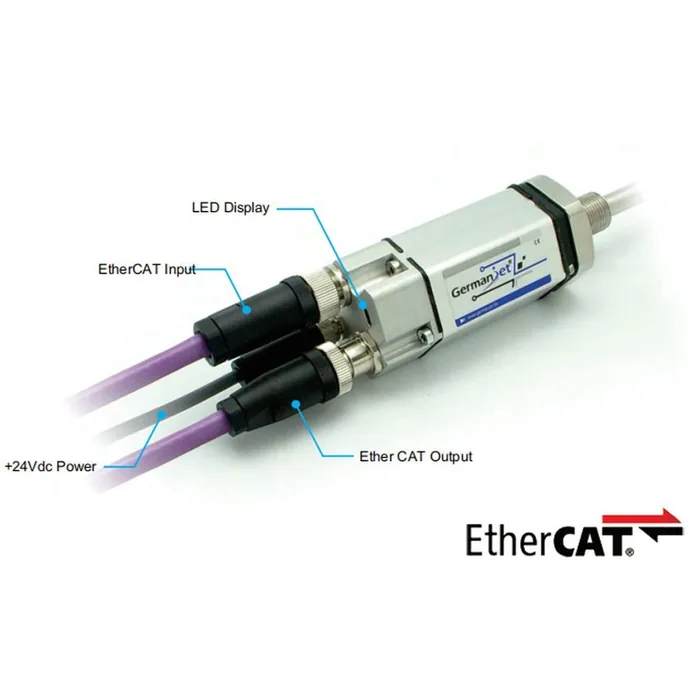
- Slaves forward frames, so the sensor segment usually does not need its own switch.
- No terminating resistor; leave the last slave OUT open.
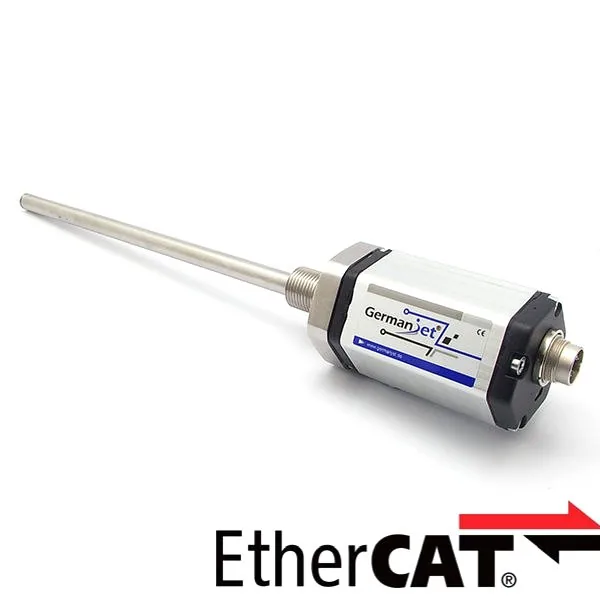
- 198 is a single M12 — one less port when nodes are dense.
EtherCAT — disadvantages
- You need an EtherCAT master (motion controller, IPC master, or a licensed soft PLC). A Siemens on-board PN port is not an EtherCAT master.
- IN → OUT order is mandatory; a reversal shows up as a wrong sequence or a stuck Init.
- A bus cycle shorter than the sensor update rate only rereads the same position. Update rate follows stroke; see refresh rate and control cycle.
- Connectors are often M12 D-coded; do not mix with analogue A-coded or SSI D70. See matching the connector.
Slave and DC: 197, 198, DC and jitter.
Side by side
| PROFINET (199) | EtherCAT (197/198) | |
|---|---|---|
| Roles | Controller ↔ device | Master ↔ slave |
| Typical master | S7-1200 / 1500 | Motion controller / IPC |
| Synchronisation | IRT | DC |
| Topology | Switch or line | IN/OUT daisy chain |
| Description file | GSDML | ESI (XML) |
| Terminating resistor | Not required | Not required |
| First choice when | New Siemens line | Fast multi-axis sync |
An RJ45 on the CPU is not automatically a PROFINET real-time master or an EtherCAT master; confirm it before ordering 199 or 197. Four-bus table: comparing the whole fieldbus range. Output types: output signals compared.
Frequently Asked Questions
Q: Does a network port on the PLC mean I can buy 199 or 197?
Not from the RJ45 alone. Confirm a PROFINET controller or an EtherCAT master. Many ports are only for programming and ordinary TCP.
Q: Does EtherCAT still need a switch?
The sensor segment is usually IN/OUT daisy-chained; you do not add a switch per rod. PROFINET more often uses switches.
Q: How do 197 and 198 differ?
Both are EtherCAT. 198 is a single M12; 197 is two-port daisy-chain. Protocol and DC are the same family; the difference is the connector and space.
Q: On a new Siemens line, should I still look at EtherCAT?
If the master is S7-1200/1500, choose 199. If the master is already an EtherCAT motion controller, do not add a PROFINET gateway just to stay in a Siemens habit.
Related Products
Related Applications
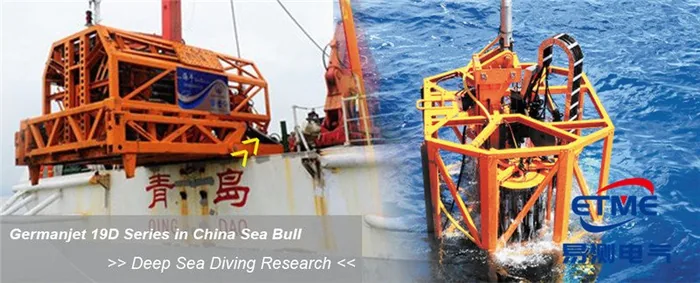
Series 19D Split-Type Process Displacement Sensor Application Cases
View Details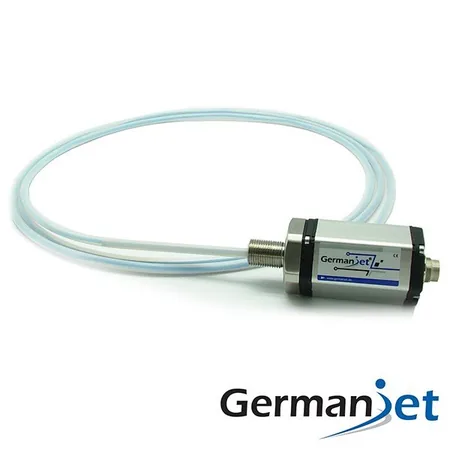
Series 19F Flexible Process Displacement Sensor Application Cases
View Details
Series 12 General-Purpose Magnetostrictive Displacement Sensor Application Cases
View Details