2026-02-24 · Technical Insights
Waveguide Material: Why Iron-Nickel Magnetostrictive Alloy
Why iron-nickel alloy for magnetostrictive displacement sensor waveguide? It fixes sound speed near 2830 m/s, drift and echo fatigue, to judge life.

Germanjet news, technical articles and resources
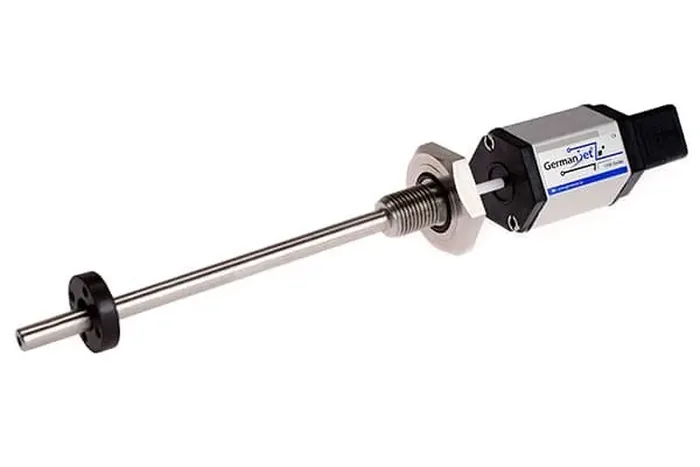
Why iron-nickel alloy for magnetostrictive displacement sensor waveguide? It fixes sound speed near 2830 m/s, drift and echo fatigue, to judge life.
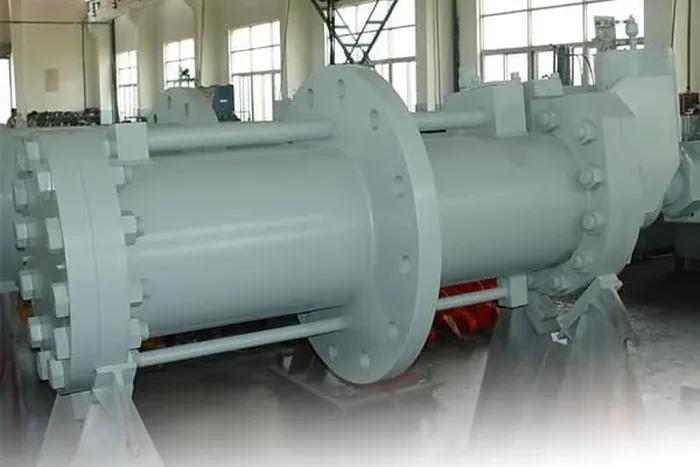
IP65, IP67, IP69K are not higher-is-better. For a magnetostrictive displacement sensor the digits rate solids and water: jets, immersion, wash-down.
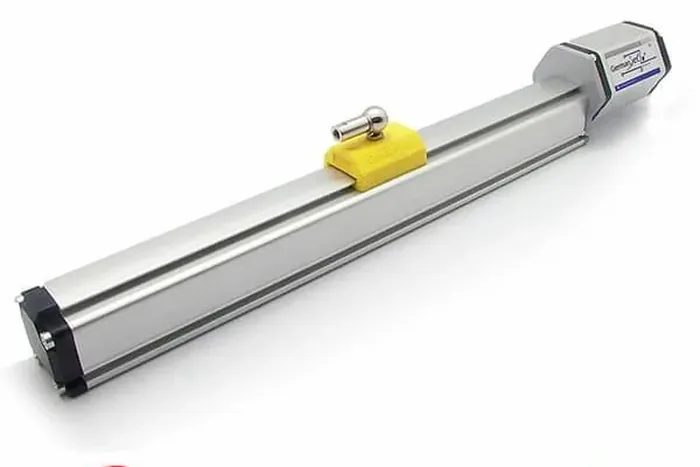
Strong alternating fields distort the echo of a magnetostrictive displacement sensor. Fix: screened pair, single-end earth, 20 cm from power cables.
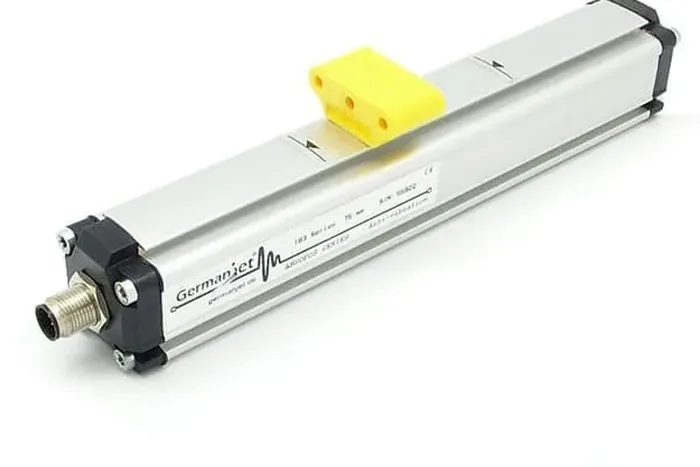
Per-unit calibration sets this magnetostrictive displacement sensor to spec; dead-zone compensation lives in firmware, and on-site zero needs setting.

No output or jumps? The magnetostrictive displacement sensor head splits into pulse drive, echo detection, processing, output. Match block to fault.

The ring magnet is not stronger-is-better. For a magnetostrictive displacement sensor, weak remanence loses the echo; match remanence, gap, mount.
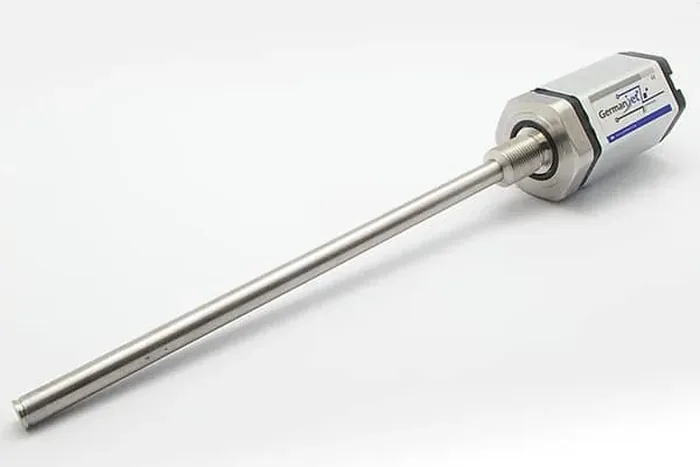
Storage temperature is survival unpowered only. A magnetostrictive displacement sensor is accurate over operating temperature, head narrower than rod.

Several magnets on one rod: a magnetostrictive displacement sensor reads 2-4 positions in echo order, but Series 19 needs 76 mm minimum spacing.

Refresh rate must beat the control cycle of a magnetostrictive displacement sensor. Wave travel grows with range, so long-stroke units refresh slower.
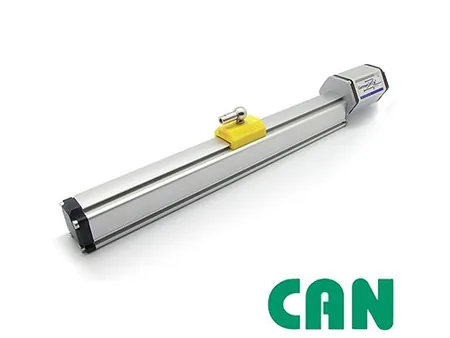
Stuck on CANopen Node-ID and PDO mapping? This fieldbus guide for a magnetostrictive displacement sensor covers Node-ID, PDO not SDO and 120-ohm ends.
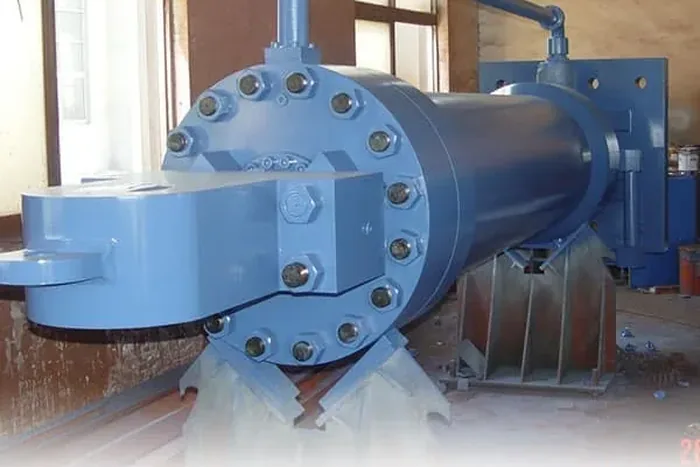
Does a magnetostrictive displacement sensor need warm-up? The head self-heats and settles in about 30 min; then steady temperature stops drifting.
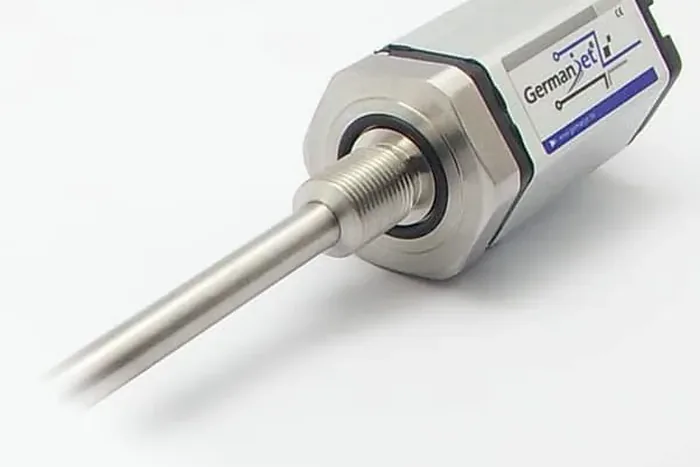
Every stroke end hides a dead zone on a magnetostrictive displacement sensor. Never guess 30 mm - take Series 16, 17 and 19F blind-zone figures.