Technical Articles & News

Germanjet news, technical articles and resources

Technical Articles (Page 2)

Magnetostrictive vs. Draw-Wire Displacement Sensors: Cylinder-Integrated or External Wire?

Magnetostrictive vs. Draw-Wire Displacement Sensors: Cylinder-Integrated or External Wire?

Comparing magnetostrictive and draw-wire displacement sensors on operating principle, accuracy, service life, mounting style and measuring range, with selection advice for cylinder-integrated and external wire applications.

How Many Displacement Sensors Does One Injection Molding Machine Need? A Complete Plan for Injection, Clamping and Ejection

How Many Displacement Sensors Does One Injection Molding Machine Need? A Complete Plan for Injection, Clamping and Ejection

An injection molding machine normally needs position measurement at three points — injection, clamping and ejection — and more on high-end full closed-loop models. This article sets out how many displacement sensors each station needs and how to select them.

Why Do Magnetostrictive Displacement Sensor Prices Vary So Much? Six Factors Behind the Quote

Why Do Magnetostrictive Displacement Sensor Prices Vary So Much? Six Factors Behind the Quote

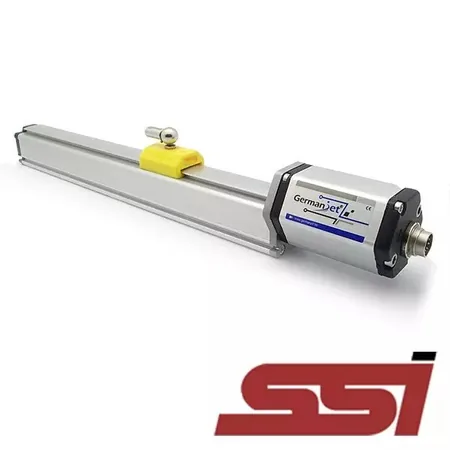
Two magnetostrictive displacement sensors can differ in price by several times. This article breaks down the six core factors: stroke, accuracy, output interface, protection, certification and brand.

Quick Selection Table: Stroke, Accuracy, Output and Protection on One Page

Quick Selection Table: Stroke, Accuracy, Output and Protection on One Page

The full Germanjet magnetostrictive range on one page: stroke, accuracy, output signal, protection class and typical applications for the 12 / 13 / 16 / 17 / 18 / 19 series, for fast comparison.

Checking a Magnetostrictive Displacement Sensor with a Multimeter: 5 Steps to Locate the Fault

Checking a Magnetostrictive Displacement Sensor with a Multimeter: 5 Steps to Locate the Fault

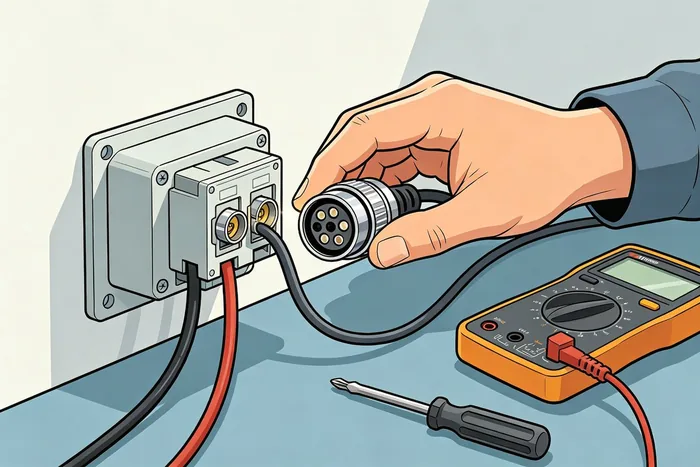
Without dismantling the machine or returning the unit, use a multimeter in five steps to judge whether a magnetostrictive displacement sensor is good: check supply, output, insulation and the magnet, and decide whether the fault is in the body or the installation.

Digital Twins: Position Data as the Basis of the Physical Mapping

Digital Twins: Position Data as the Basis of the Physical Mapping

The twin model must be in the same state as the physical asset, and position is the first variable; four data requirements and deployment forms.

IIoT and Edge Computing: An Architecture for Getting Position Data to the Cloud

IIoT and Edge Computing: An Architecture for Getting Position Data to the Cloud

Four layers with distinct responsibilities — the field layer produces data, the control layer uses it, the edge layer filters it and the platform layer analyses it — plus the path to the cloud.

Smart Sensors: The Trend Towards Self-Awareness Through Self-Diagnostics

Smart Sensors: The Trend Towards Self-Awareness Through Self-Diagnostics

Being smart means reporting whether you can be trusted; the four levels of self-diagnostics and where the boundary with functional safety lies.

Magnetostrictive Displacement Sensors: Core Components and Selection Evaluation Dimensions

Magnetostrictive Displacement Sensors: Core Components and Selection Evaluation Dimensions

From waveguide material and high-precision timing circuits to calibration firmware and certification compliance — the real thresholds in magnetostrictive displacement sensors, plus a selection framework that goes beyond the parameter table.

Green Manufacturing and Energy: The Hidden Benefits of Maintenance-Free Operation

Green Manufacturing and Energy: The Hidden Benefits of Maintenance-Free Operation

The green benefit is not in sensor power consumption but in the full life-cycle account of less downtime, less scrap and fewer replacements.

Standards and Certification: How to Read Functional Safety SIL

Standards and Certification: How to Read Functional Safety SIL

SIL assesses the whole safety loop rather than an individual sensor; the relationship between standards and the limits of what redundancy can do.

How to Network Displacement Sensors Under Industry 4.0

How to Network Displacement Sensors Under Industry 4.0

Networking is not just adding an Ethernet port: the three layers of meaning — value, parameters and status — and the field-level connection path.

Browse Pages