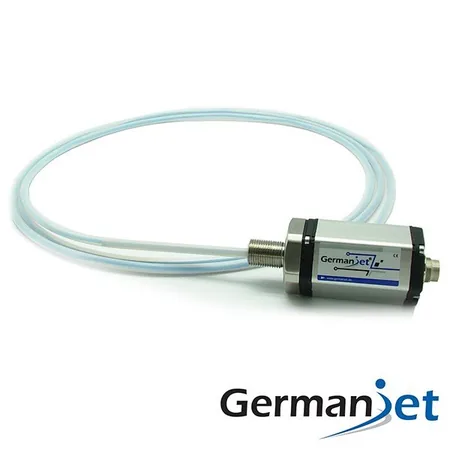
How to Choose Among Five In-Cylinder Magnetostrictive Displacement Sensor Models
Cylinder-integrated magnetostrictive displacement sensors have five selectable models: 16, 16R, 17, 17EX, 19H. They are all in-cylinder non-contact absolute sensors with piston-rod bore ≥12.7 mm (Ø10 rod). Accuracy and pressure are by series: 16/16R 16-bit D/A, 350/530 bar, cap Ø18G7; 17/17EX analogue infinite resolution, 350/600 bar, M18×1.5; 19H 300/600 bar. Do not write 1–100 μm / ±0.002 mm as one shared row. Selection therefore cannot rest on comparing data sheets; it must filter layer by layer on constraints: first explosion protection, then redundancy, then integration method and platform need, and only then ordinary adaptation.
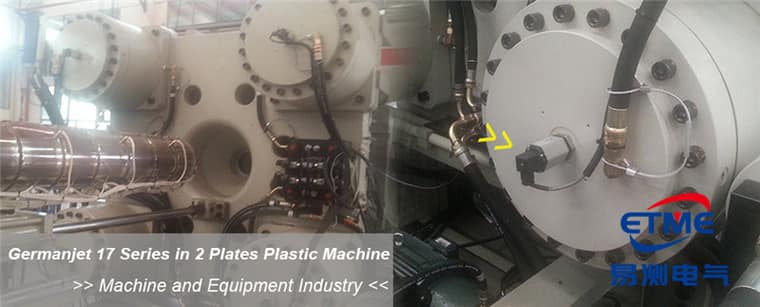
Five cylinder-integrated products compared
| Dimension | 16 | 16R | 17 | 17EX | 19H |
|---|---|---|---|---|---|
| Core positioning | General cylinder-integrated | Redundant dual output | Hydraulic-cylinder integrated | Intrinsically safe explosion-protected | Series 19 platform cylinder-integrated |
| Number of outputs | 1 channel | 2 independent | 1 channel | 1 channel | 1 channel |
| Explosion protection | No | No | No | Intrinsically safe Ex ia / ib | No |
| Degree of integration | Wide adaptation surface | As 16 | High; cylinder must reserve the interface | As 17, plus explosion-protection constraints | Platform general interface |
| Pressure rating | 350 / 530 bar | 350 / 530 bar | 350 / 600 bar | 350 / 600 bar | 300 / 600 bar |
| Bore requirement | ≥12.7 mm (Ø10 rod; Series 16 cap Ø18G7, Series 17 M18×1.5) | ≥12.7 mm (Ø10 rod; Series 16 cap Ø18G7, Series 17 M18×1.5) | ≥12.7 mm (Ø10 rod; Series 16 cap Ø18G7, Series 17 M18×1.5) | ≥12.7 mm (Ø10 rod; Series 16 cap Ø18G7, Series 17 M18×1.5) | ≥12.7 mm (Ø10 rod; Series 16 cap Ø18G7, Series 17 M18×1.5) |
| External accessories | None | Controller needs 2 inputs + comparison logic | None | Safety barrier/isolator required | None |
| Interface options | Wide (analog/SSI/fieldbus) | Matching dual channel | Wide | Constrained by IS energy limiting | Wide |
| Platform synergy | — | — | — | — | Can unify with 19D/19P/19F |
| Typical application | Ordinary hydraulic-cylinder position closed loop | Safety-related position on presses, lifting | OEM volume supply, tight space | Flammable-gas hazardous area | Several forms mixed on the machine |
First filter: explosive-gas atmosphere, intrinsically safe magnetostrictive displacement sensor 17EX
This is the non-negotiable first item. Once the mounting point is classified as an explosive-gas hazardous area, the intrinsically safe 17EX must be chosen; the other four, however well they fit in performance, cannot be used. And “we bought an intrinsically safe sensor” does not mean the loop is intrinsically safe — a safety barrier/isolator must be fitted at the same time, and Uo≤Ui, Io≤Ii, Po≤Pi, Co≥Ci+cable capacitance, Lo≥Li+cable inductance must be checked item by item.
Full deployment of an intrinsically safe loop is in 17EX intrinsic safety explained; the basic distinction of explosion-protection types is in Intrinsic safety, flameproof and dust explosion protection distinguished; mapping of areas to certification is in Selecting for hazardous areas; wiring rules are in Installing in hazardous areas: intrinsically safe wiring and isolation barriers.
Second filter: dual-channel redundancy on a magnetostrictive displacement sensor
If distortion of that position signal could injure people or cause major equipment damage (press slide position, lift height, mould-clamp position), choose 16R. Redundancy solves the failure mode “a slowly drifting wrong reading cannot be found” — with a single channel the controller has no comparison reference and can only treat the wrong value as truth.
When choosing 16R the comparison logic on the controller must be planned at the same time: tolerance-band width, duration criterion and fault-response action; none of the three can be omitted. Hardware redundancy without matching software comparison is equal to no redundancy. See Series 16R redundant cylinder-integrated explained; basic redundancy concepts are in What redundant output is; comparison methods for a dual-sensor scheme are in Redundant installation: how to compare and check two sensors.
Third layer: integration method and platform need for the magnetostrictive displacement sensor
After the first two layers, 16, 17 and 19H remain. The criterion is mechanical integration and machine planning:
- Cylinder customisable to the sensor interface, and volume supply → Series 17. Highest integration, least external protrusion, good assembly consistency. The cost is that substitutes are limited by the interface; see Series 17 explained.
- Several classes of measuring point on the machine — in-cylinder, external, high-temperature split — and unified spares and procedures wanted → 19H. Same platform as the 19D split type, 19P external type and 19F flexible type; see 19H cylinder-integrated explained.
- Cylinder already frozen, or a wider adaptation surface needed → Series 16. Highest adaptation flexibility; the default cylinder-integrated choice; see Series 16 explained.
Three hard constraints common to all cylinder-integrated types
Bore. Piston-rod minimum diameter ≥12.7 mm (Ø10 rod; Series 16 cap Ø18G7, Series 17 M18×1.5), bore depth covering the full stroke plus non-measuring-section allowance; the key figure is straightness, not wall finish (the sensing rod does not contact the wall). On a small rod diameter with high side load, strength margin after boring may be insufficient — that is a mechanical problem, and choosing a sensor will not solve it. Machining requirements are in Bore machining requirements for cylinder-integrated sensors.
Pressure rating. Choose 350/530 bar (16), 350/600 bar (17), 300/600 bar (19H) on system peak pressure, not on the relief-valve set point. Pressure shocks from reversing, emergency stop and sudden load change can be well above the set point. Calculation methods are in Selecting for high-pressure cylinders.
Oil temperature. Cylinder-integrated types are immersed in hydraulic oil for long periods, so oil temperature is the working temperature. When oil temperature is high, check the specification and consider speed-of-sound temperature drift; see Speed-of-sound temperature drift and compensation and Operating temperature vs. storage temperature. If the specification is exceeded, consider the same-platform 19D split type to move the electronics head out of the high-temperature zone; see 19D split type explained.
When a cylinder-integrated type should not be chosen at all
The greatest cost of a cylinder-integrated type is that replacement means depressurising, draining and stripping the cylinder. The following cases should turn to an external option:
- The cylinder is a standard bought-in part and cannot be bored;
- Equipment availability requirement is high and stripping-cylinder downtime cannot be accepted;
- Retrofit of existing plant; the mechanical body must not be touched;
- Mobile machinery working outdoors, with poor field repair conditions.
Selection of external options is in Comparing the whole external range: how to choose among 13/18/19P/19F; overall decision for retrofit projects is in Selecting for retrofit of existing plant. Background on magnetostrictive sensing in hydraulic equipment is in Why choose magnetostrictive sensing for hydraulic cylinder position control.
Practical tips for engineers
- For in-cylinder mounting, piston-rod bore lower limit is ≥12.7 mm (Ø10 rod). Series 17 also has a Ø13 mm through-hole + M18×1.5 on the cylinder cap; Series 16 uses Ø18G7. Do not mix pressure ratings: Series 16/16R is 350 bar working / 530 bar peak, Series 17/17EX is 350/600 bar, Series 19 in-cylinder is 300/600 bar.
- The sensing rod inside the cylinder should be protected against wear.
- Series 19 cylinder-integrated types are rated 300 bar, 600 bar peak; use these figures for selection and pressure testing.
Frequently Asked Questions
Q: There are five cylinder-integrated displacement-sensor models. How should one be chosen quickly?
Filter in three layers. First layer: is it an explosive-gas atmosphere? If so, the intrinsically safe 17EX must be chosen. Second layer: is dual-channel redundancy needed? If so, choose 16R. Third layer: look at integration method and platform need — customisable cylinder and volume supply, choose 17; several forms mixed on the machine, choose 19H; other ordinary duty, choose Series 16 with the widest adaptation surface.
Q: How do the figures of the five cylinder-integrated products differ?
All are in-cylinder absolute sensors with piston-rod bore ≥12.7 mm. Do not write 1–100 μm / ±0.002 mm as one shared accuracy row. Pressure: 16/16R 350/530 bar, 17/17EX 350/600 bar, 19H 300/600 bar. Differences sit in explosion protection, number of outputs, integration and platform, so selection cannot rest on comparing data sheets.
Q: What constraints are common to all cylinder-integrated types?
Three: on the bore, piston-rod bore ≥12.7 mm, bore depth covering the full stroke plus allowance, with straightness rather than finish the key; on pressure rating, choose on system peak pressure rather than the relief-valve set point; on oil temperature, the sensor is immersed in hydraulic oil for long periods so oil temperature is the working temperature — if the specification is exceeded, consider the 19D split type to move the electronics head out.
Q: When should a cylinder-integrated type not be chosen?
Four cases should turn to external: the cylinder is a standard bought-in part and cannot be bored; equipment availability requirement is high and stripping-cylinder downtime cannot be accepted; retrofit of existing plant must not touch the mechanical body; mobile machinery working outdoors with poor field repair conditions. The greatest cost of a cylinder-integrated type is that replacement means depressurising, draining and stripping the cylinder.
Related Products
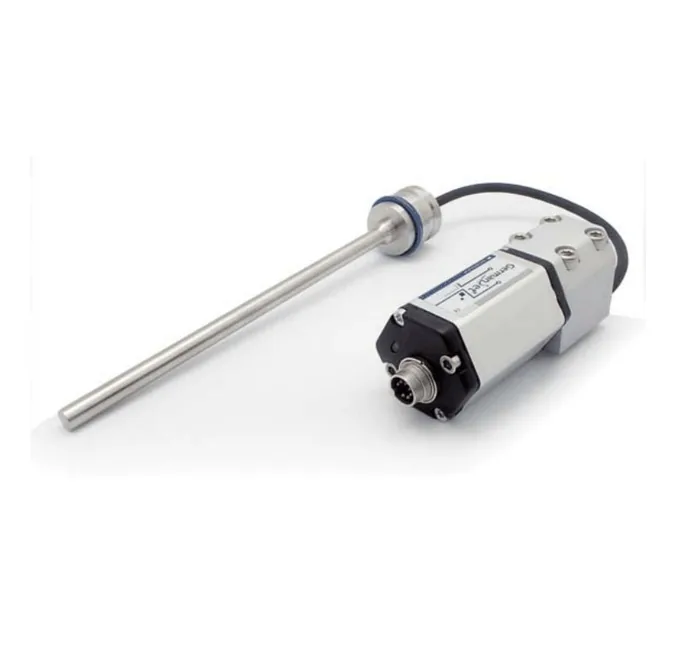
Series 19 D-Type Split
View Product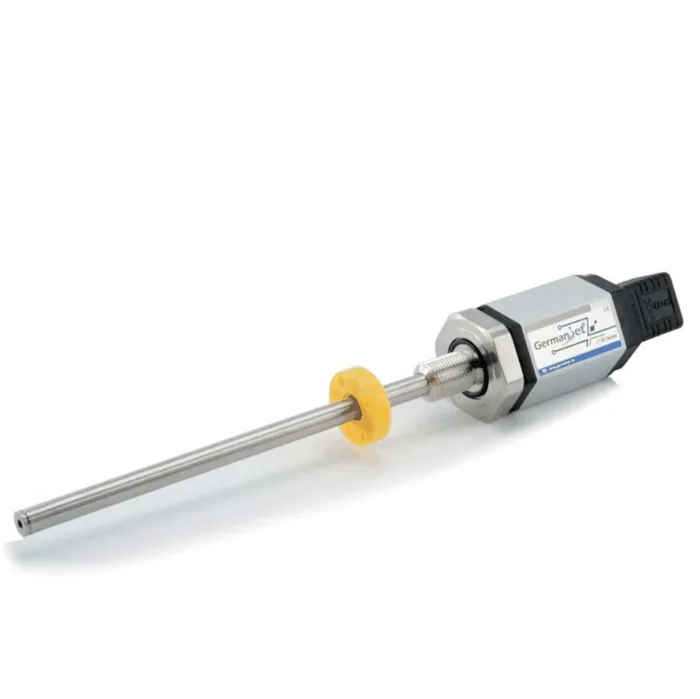
Series 17 Hydraulic Cylinder Integrated
View Product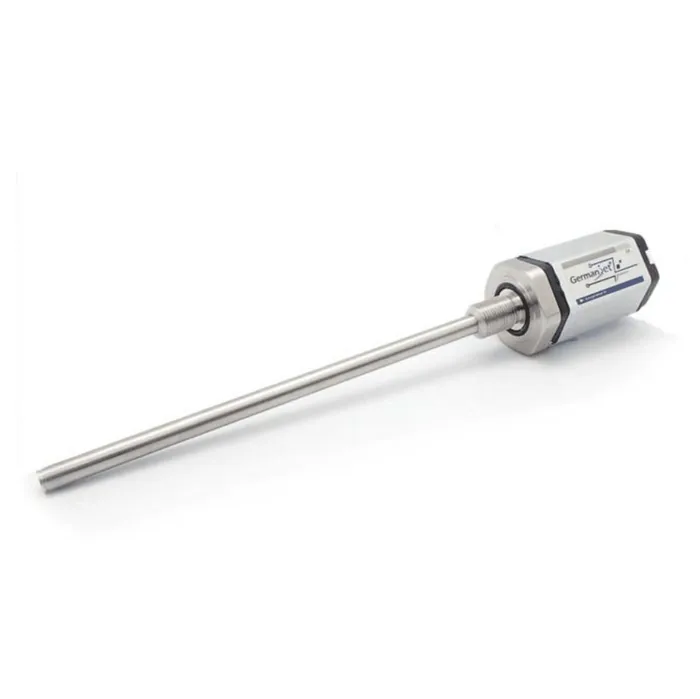
Series 19 H-Type Built-in Cylinder
View Product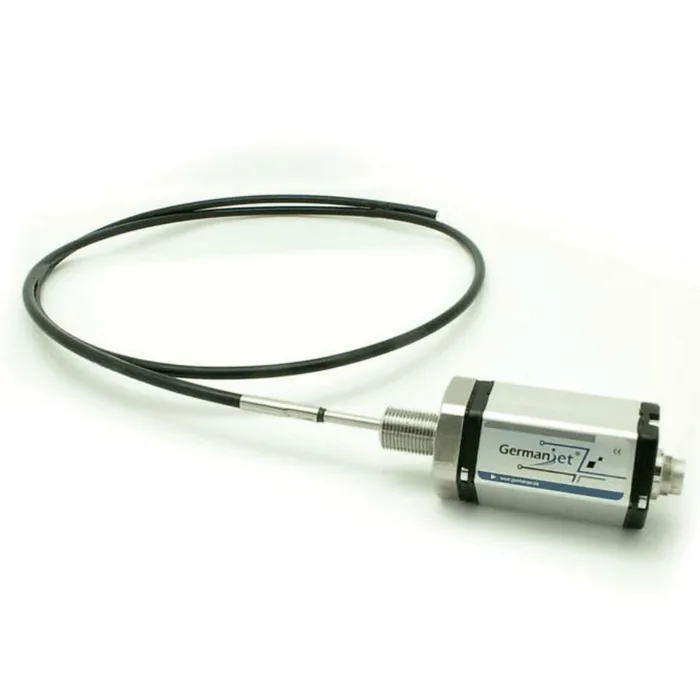
Series 19F Flexible Long-stroke
View ProductRelated Applications
Multi-Industry Application Cases for Magnetostrictive Displacement Sensors
View Details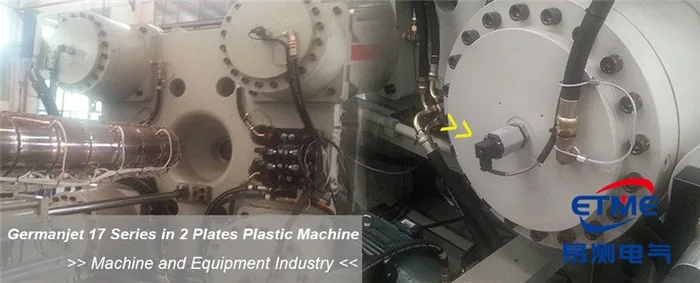
Series 17 Hydraulic Cylinder Integrated Magnetostrictive Displacement Sensor Application Cases
View Details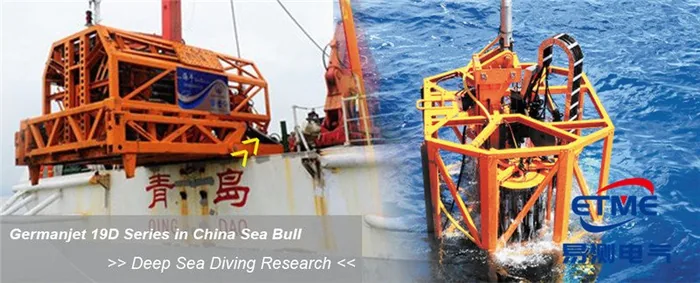
Series 19D Split-Type Process Displacement Sensor Application Cases
View Details